 Stefani Rindus
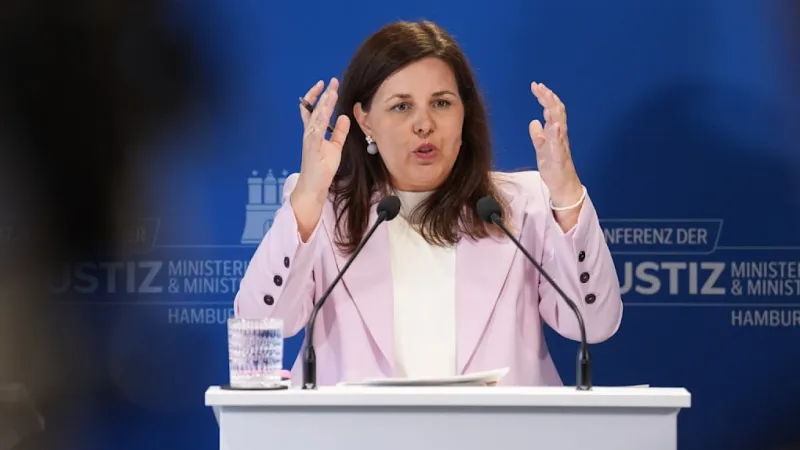
Hamburg – Several prominent politicians in Hamburg, Germany, including current and former Green Party leaders, are voluntarily repaying significant social security contributions after the German pension insurance demanded approximately 130,000 Euros from the party. The demand arose from years of misclassifying board members as recipients of expense allowances rather than salaried employees, thereby neglecting mandatory social security payments.
The German pension insurance authority, known as the Deutsche Rentenversicherung, initiated the claim against the Green Party following an audit. The investigation revealed that for an extended period, individuals holding leadership positions within the party organization were compensated through expense allowances, a practice typically reserved for volunteers or those incurring costs on behalf of an organization, not for regular employment.
This classification discrepancy meant that the requisite employer and employee contributions to the social security system – covering pension, health, unemployment, and long-term care insurance – were not adequately paid. The cumulative shortfall, according to the Rentenversicherung, amounts to the substantial figure of 130,000 Euros.
In a move to address the financial deficit and uphold their commitment to compliance, several incumbent and former top-ranking Green Party officials have stepped forward. They are voluntarily contributing funds to cover the outstanding social security payments, signaling an effort to rectify the long-standing administrative oversight.
The decision by individual politicians to shoulder these costs underscores a broader principle of accountability. While the initial responsibility for correct classification and payment rests with the employing entity, in this case, the party, the voluntary repayments by individuals aim to prevent further financial strain on the party coffers and ensure that the contributions are ultimately made.
Germany's social security system is fundamental to its welfare state, funded by mandatory contributions from both employers and employees. Misclassifying an individual's employment status can have significant legal and financial repercussions, not only for the organization but also potentially for the individuals involved, affecting their pension entitlements and other social benefits.
The Green Party in Hamburg now faces heightened scrutiny regarding its internal financial management and human resources practices. This incident prompts questions about the diligence exercised in adhering to labor laws and social security regulations, vital for any organization, political or otherwise.
The voluntary repayment effort is a pragmatic step towards resolving the immediate financial liability. However, the broader implications for the party's reputation for transparency and sound governance are considerable. Such an event can influence public trust and electoral perceptions, particularly for a party that often champions ethical conduct.
This situation is not isolated, as discussions surrounding pension systems and their financial stability are a constant in German politics. Indeed, the ongoing debate around how to ensure the long-term viability of the national pension system is a defining challenge for the current coalition government, as highlighted in related news concerning German Pension Reform.
Observers note that while the voluntary payments mitigate the immediate financial impact on the party, they also bring to light the complexities political organizations face in navigating intricate employment and social security laws. It serves as a stark reminder of the need for meticulous administrative oversight in all sectors.
The exact number of politicians involved in the voluntary repayment scheme has not been fully disclosed, but it includes individuals who held influential roles during the period in question. Their willingness to contribute personally emphasizes a desire to rectify the situation without further burdening the party or its current membership.
The case highlights a critical aspect of organizational responsibility: ensuring that all individuals providing services, whether as employees or otherwise, are correctly categorized for tax and social security purposes. Errors in this area, even if unintentional, can lead to substantial liabilities and reputational damage.
Ultimately, the Green Party leadership is working to ensure full compliance moving forward, revising its internal processes to prevent similar misclassifications. The voluntary contributions by its leaders underscore a concerted effort to uphold financial integrity and adhere to the rigorous standards expected of public figures and political entities.
This development is expected to foster renewed discussion within Hamburg's political landscape regarding the financial practices of various parties and the stringent application of social security statutes to political organizations across the board.