 Debby Wijaya
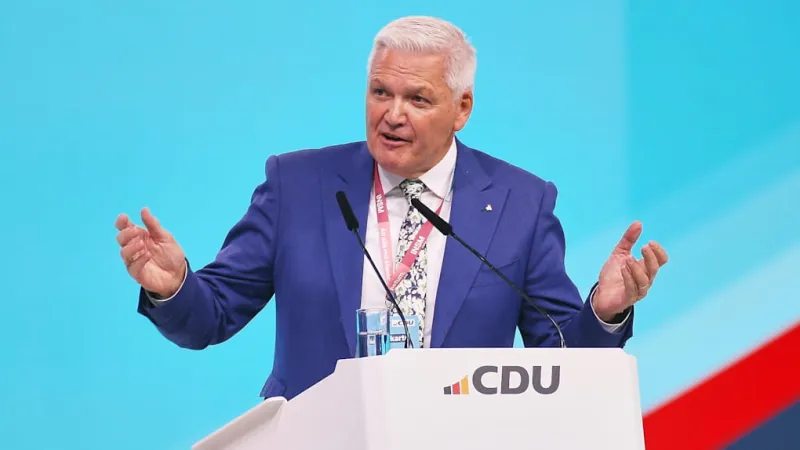
BERLIN – Germany's crucial pension reform has emerged as a make-or-break issue for the stability of the ruling coalition, with the Senioren-Union, an influential conservative seniors organization, declaring its outcome will significantly shape the government's future. Hubert Hueppe, the organization's chairman, advocated for younger generations to begin their professional lives earlier, framing this as a vital step towards securing the nation's retirement system.
Hueppe underscored the profound stakes, stating directly: "The pension reform will also decide the fate of this coalition." This declaration positions the contentious legislative effort at the core of the government's continued viability and public mandate.
The Senioren-Union, a key voice within German conservative politics, holds sway in advocating for the interests of retirees while simultaneously grappling with the demographic realities that challenge the nation's social security framework. Its pronouncements carry weight, reflecting a significant segment of the electorate's concerns.
At the heart of the crisis lies Germany's rapidly aging population and persistently low birth rates. These trends place an increasing burden on the country's pay-as-you-go pension system, where contributions from the current workforce are immediately disbursed to existing retirees.
Hueppe's specific proposal for earlier workforce entry aims to broaden the contribution base and extend the working lives of citizens. Such a policy, if implemented, would necessitate a reevaluation of educational pathways, vocational training, and labor market integration strategies for young adults.
The ruling coalition, comprised of a diverse spectrum of political parties, faces formidable internal divisions on the optimal approach to addressing the looming pension crisis. Consensus-building promises to be a complex undertaking, fraught with ideological differences and competing priorities.
Economists consistently highlight the necessity of a robust and expanding workforce to sustain both economic growth and the integrity of Germany's social security systems. The discussion around pension reform is intrinsically linked to broader debates concerning productivity and labor market dynamics, including issues like those explored in Germany Forfeits Prosperity: Womens Part-Time Work Undermines Economic Potential.
Beyond Hueppe's proposition, other political factions have put forward a range of alternative solutions. These include potentially raising the statutory retirement age, increasing mandatory contributions, or exploring innovative models that incorporate capital market investments to diversify pension funding.
Public opinion remains acutely sensitive to any proposed changes, as pension reform directly impacts the financial security and long-term planning of every German citizen. This inherent sensitivity transforms the issue into a highly charged political battleground.
Historically, successive German governments have grappled with the intricate challenges posed by demographic shifts and the long-term sustainability of the pension system. The current debate echoes these past struggles, but with amplified urgency given current projections.
A failure by the current coalition to forge a viable consensus and enact meaningful, effective reform could indeed jeopardize its unity and undermine its mandate to govern. Such an outcome might lead to heightened political instability, potentially triggering early elections or a significant reshuffling of political power.
Germany's predicament mirrors that of several other European nations contending with similar demographic pressures and the imperative to modernize their social welfare structures. The solutions adopted in Berlin could offer valuable lessons, or cautionary tales, for its neighbors.
The long-term implications extend beyond mere fiscal arithmetic, touching upon fundamental questions of intergenerational fairness, social solidarity, and the fundamental compact between different segments of society.
Ultimately, the outcome of the pension reform debate will not only shape the financial landscape for millions of Germans but will also serve as a definitive test of the current government's capacity for strategic leadership and its ability to navigate one of the nation's most complex challenges.