 Dorry Archiles
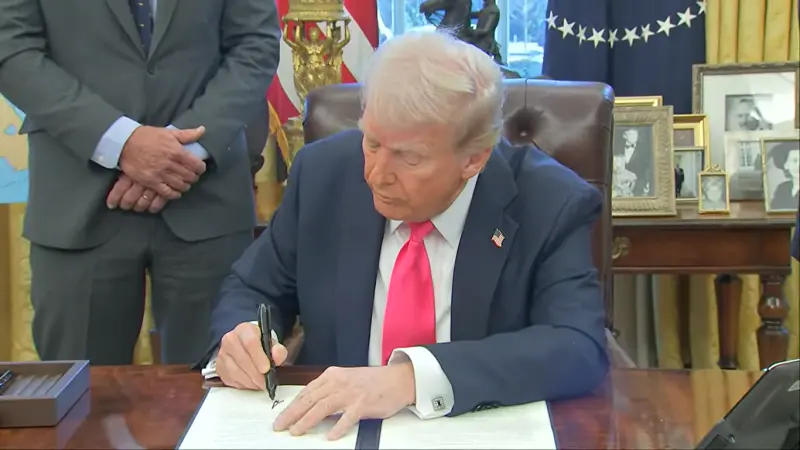
WASHINGTON — President Donald Trump this week formally ended a 165-year-old presidential tradition by directing his signature to appear on newly printed dollar bills, making his the first U.S. president to have his personal autograph feature directly on federal currency. The unprecedented move, executed following an official directive, signifies a deliberate break from historical norms that have kept presidential signatures off banknotes since the mid-19th century.
The White House confirmed Monday that the Bureau of Engraving and Printing has begun incorporating President Trump’s signature onto the redesigned plates for various denominations. This action fundamentally alters a long-standing practice where only the signatures of the Secretary of the Treasury and the Treasurer of the United States adorned the nation’s paper money.
Historically, the absence of a president’s signature on U.S. currency stemmed from several deeply rooted principles. One primary reason was to reinforce the non-partisan nature of the nation’s economic and financial instruments, ensuring that currency transcended individual political administrations.
Another significant factor was the clear demarcation of governmental roles. The Treasury Department, specifically the Secretary and Treasurer, is constitutionally charged with managing the nation’s finances and minting currency, while the President serves as head of the executive branch.
Early congressional debates and subsequent practices established this division, aiming to prevent the politicization of money and to emphasize the permanence of the currency as a symbol of national economic stability, rather than a transient political statement.
Sources within the Trump administration, who spoke on background, suggested the President views this initiative as a direct reflection of his commitment to accountability and a desire to personally underscore the strength of the American economy during his tenure. The move is framed internally as a bold, modern approach to presidential legacy.
“The President believes that every piece of American currency should bear the mark of the leader responsible for the nation’s economic prosperity,” a senior White House official stated, emphasizing the symbolic weight of the decision. “This is about connecting the President directly to the prosperity he has cultivated.”
Economists and historical scholars have responded with a mix of intrigue and caution. Dr. Evelyn Reed, a financial historian at Georgetown University, noted, “This is an extraordinary departure from a tradition that has served to insulate our currency from the ebb and flow of political cycles. The implications, both symbolic and practical, warrant careful observation.”
Critics argue the change could set a problematic precedent, potentially intertwining the office of the presidency too closely with the tangible instruments of national finance. Concerns were raised about the potential for future presidents to use currency as a personal branding tool, blurring institutional lines.
However, supporters of President Trump hail the decision as yet another example of his willingness to challenge established norms and streamline federal processes. They argue that a presidential signature provides a clear identifier of the administration under which the currency was issued.
The new bills, featuring President Trump’s signature, are expected to enter general circulation within the next few months. The exact denominations to be affected first were not immediately specified, but Treasury officials indicated a phased rollout beginning with the most widely used notes.
The Bureau of Engraving and Printing is reportedly accelerating production to accommodate the design changes, ensuring a smooth transition. Public education campaigns are also anticipated to inform citizens about the upcoming alteration to their everyday currency.
This marks one of the most visible and tangible changes to U.S. currency in decades, underscoring President Trump’s distinctive approach to leadership and his determination to leave an indelible mark on the nation’s institutions, right down to its dollar bills.
The long-term effects of this historic shift in currency design remain to be seen, but its immediate impact is undeniable: the end of a tradition upheld by more than three dozen presidents over a century and a half.