 Angela Stefani
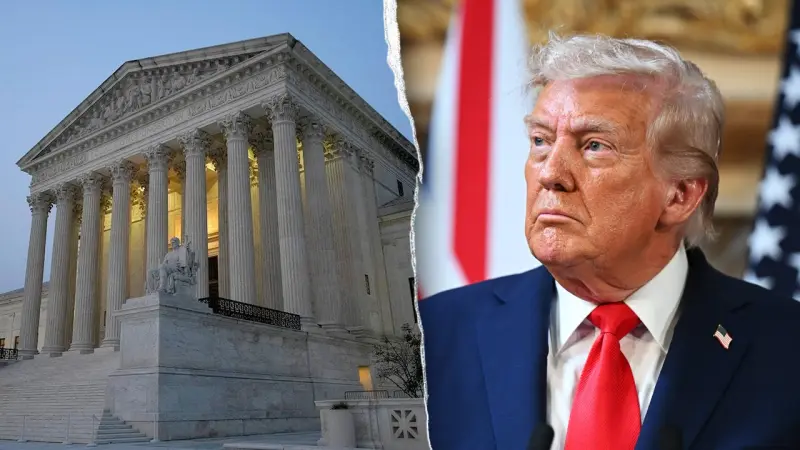
WASHINGTON — A federal appeals court has decisively rejected President Donald Trump's administration's contentious policy designed to prevent migrants from claiming asylum at the U.S. southern border, a ruling that immediately paves the way for a likely and significant Supreme Court showdown.
The D.C. Circuit Court of Appeals delivered the unanimous opinion late Tuesday, upholding a lower court injunction against the policy. The court found that the administration's rule likely violates long-standing federal immigration law, which explicitly grants individuals the right to seek asylum irrespective of their entry method into the United States.
President Trump had championed the policy as a crucial measure to curb what his administration describes as an overwhelming surge of economic migrants and to restore order to border processes. The rule, implemented in early 2026, aimed to disqualify individuals from asylum eligibility if they had not first sought protection in a country they transited through on their way to the U.S. border.
Legal challenges were swift and vociferous. A coalition of civil rights and migrant advocacy groups immediately sued, arguing that the policy fundamentally undermined both domestic and international humanitarian law. They asserted that the administration was attempting to unilaterally rewrite immigration statutes that Congress had established.
The appellate court, in its 65-page opinion, underscored that the Immigration and Nationality Act clearly states that any foreign national “who is physically present in the United States or who arrives in the United States (whether or not at a designated port of arrival and including an alien who is brought to the United States after having been interdicted in international or United States waters) may apply for asylum.”
Justice Department officials, speaking off the record, indicated that the administration views the ruling as a judicial overreach and intends to seek an emergency appeal to the Supreme Court. This move is expected to occur within days, pressing the nation's highest court to weigh in on one of President Trump's signature immigration enforcement initiatives.
“This decision validates the core principle that asylum is a right, not a privilege to be dispensed with by executive fiat,” stated Eleanor Vance, legal director for the American Civil Liberties Union, one of the organizations challenging the policy. “We are prepared to defend this essential protection at every level of the judiciary.”
The appeals court also emphasized that the administration failed to adequately demonstrate that the current asylum system constitutes a “massive national security crisis” sufficient to override established statutory protections. This rejection of the executive branch's expansive interpretation of its authority sets a critical precedent.
The ongoing legal saga represents a significant test for President Trump's immigration agenda, which has consistently prioritized border enforcement and restrictions on legal immigration pathways. His administration has repeatedly clashed with federal courts over its attempts to implement stricter border controls.
Should the Supreme Court agree to hear the case, it would mark one of the most high-profile immigration disputes of President Trump's second term, with profound implications for thousands of asylum seekers currently at or approaching the U.S. southern border. The legal outcome could redefine the scope of presidential power in immigration matters for years to come.