 Chandra Wijayanto
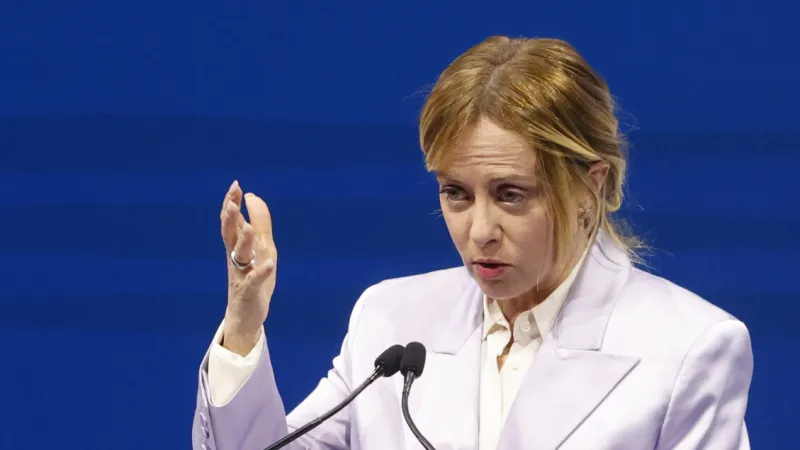
ROME — Italian Prime Minister Giorgia Meloni's Fratelli d'Italia (FdI) party has solidified its lead over the opposition Partito Democratico (PD) following recent municipal elections, according to a new Ipsos poll. The survey reveals that while Meloni maintains a significant advantage over PD leader Elly Schlein, this primacy is critically dependent on the enduring influence and presence of General Roberto Vannacci, whose impact continues to resonate deeply within the Italian right-wing coalition.
The Ipsos findings, released this week, underscore a complex political calculus where the outcome of local polls subtly reshapes national sentiment. Meloni's FdI, a cornerstone of the current government, benefits from her strong personal approval ratings and the perception of governmental stability despite various challenges, both domestic and international. The party's electoral base appears to be robust, yet not entirely immune to shifts in political personalities.
General Vannacci, a controversial figure who rose to prominence through his outspoken views and subsequent foray into politics, has emerged as a linchpin for the right. The Ipsos analysis explicitly states that without the galvanizing effect Vannacci provides, the right-wing bloc would likely cede its dominant position. His ability to mobilize specific segments of the electorate, particularly those aligned with nationalistic and traditionalist values, proves indispensable for FdI's sustained advantage.
The methodology employed by Ipsos, a respected international market research and polling firm, provides a snapshot of public opinion derived from a broad sample of Italian voters. These post-election polls are crucial for understanding how local results translate into broader national political trends and voter confidence in leading parties and their figures.
The recent wave of municipal elections across Italy, while inherently focused on local governance, often serves as a barometer for national political tides. These contests, ranging from small communes to major cities, reflect localized discontents and affirmations that collectively contribute to the national political mood. For FdI, their performance in these elections, coupled with Vannacci's appeal, paints a picture of a cohesive and influential right.
On the opposing side, Elly Schlein and the Partito Democratico face an uphill battle to bridge the gap with Meloni's coalition. While Schlein has worked to revitalize the center-left, the Ipsos poll suggests her efforts have not yet translated into a decisive lead over the incumbent right. The PD's challenge lies in consolidating a diverse voter base and articulating a compelling alternative vision for Italy's future that can rival the right's current momentum.
Further underscoring Vannacci's burgeoning influence, a significant development highlighted by the Ipsos data is the rapid growth of FnV, which now boasts approximately 80,000 registered members. While the precise nature and formal affiliation of FnV with established parties remain subjects of ongoing political analysis, this substantial surge in membership clearly indicates a powerful public resonance with the general's platform and ideology, suggesting a distinct, albeit aligned, movement forming around him within the broader right-wing ecosystem.
Vannacci's journey from a career military officer to a prominent political personality is testament to the evolving dynamics of Italian politics. His candid, often provocative, statements on social and cultural issues have polarized public opinion but have also garnered fervent support from a segment of the population that feels unrepresented by traditional political discourse. This populism, whether intentional or not, positions him as a significant force in the current political landscape.
Political analysts suggest that Vannacci's unique appeal lies in his ability to articulate sentiments that many voters feel are overlooked or dismissed by mainstream parties. His rise reflects a broader trend in European politics where non-traditional figures can quickly gain traction by tapping into deep-seated societal concerns and identities. This phenomenon forces established parties to adapt or risk losing segments of their electorate.
Looking ahead, the sustained influence of figures like Vannacci could reshape electoral strategies for upcoming national and European parliamentary elections. The right-wing coalition, led by Meloni, must balance integrating such powerful individual figures without fragmenting its broader unity. The imperative for FdI is to harness this energy without ceding control of its core political agenda.
The center-left, conversely, faces the daunting task of counteracting this multifaceted right-wing appeal. Developing a cohesive narrative that effectively addresses voter concerns while offering a credible alternative to the current government's direction will be crucial for Schlein and the PD. Their success hinges on mobilizing their base and attracting swing voters who may be swayed by populist sentiments.
This political landscape also holds implications for Italy's role within the European Union. A strong and stable right-wing government, bolstered by popular figures like Vannacci, can project a particular stance on EU policies, especially concerning immigration, national sovereignty, and economic priorities. Such internal political shifts invariably influence Italy's external relations and its contributions to the broader European agenda.
Ultimately, the Ipsos poll serves as a powerful reminder that while party affiliations remain important, individual personalities and their capacity to connect with voter sentiment play an increasingly decisive role in modern Italian politics. The Meloni-Schlein dynamic, now inextricably linked with the Vannacci factor, sets the stage for future electoral contests that promise to be as intriguing as they are impactful.