 Chandra Wijayanto
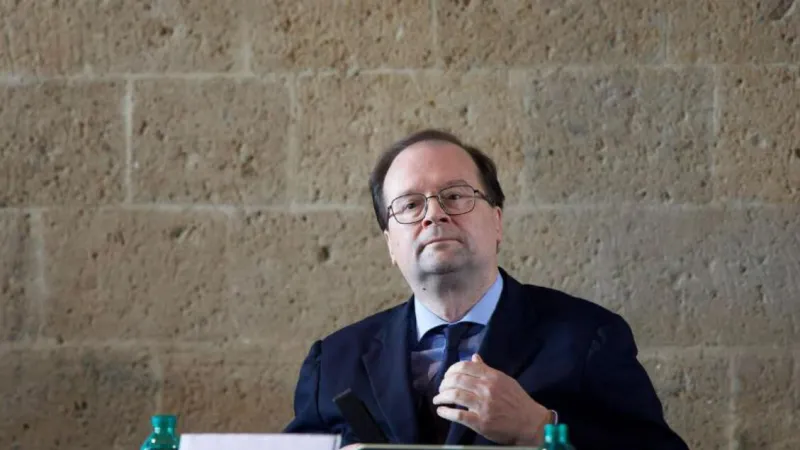
ROME – The Russian Ambassador to Italy this week vehemently dismissed accusations from Italian political circles, labeling as "obvious falsehoods" claims that Russia is solely culpable for current global disorder. The envoy simultaneously reiterated Moscow's readiness for dialogue with Rome, contingent on Italy abandoning its perceived hostile stance.
Speaking from the Russian embassy, the Ambassador stated, "They accuse us of being guilty of all current world order problems. We are open to dialogue with Italy but it must renounce its hostile attitude." This assertive declaration directly addresses a long-standing point of contention between Russia and several Western European nations.
The accusations, often voiced by what the Ambassador referred to as "High Roman Hills" – a likely euphemism for Italian governmental and establishment figures – reflect a broader European sentiment regarding Russia's role in various international crises. These sentiments have intensified amidst ongoing geopolitical realignments and military conflicts.
Observers note that Italy, as a key member of the European Union and NATO, has largely aligned itself with Western policies condemning Russian actions, particularly in Eastern Europe. This alignment has resulted in a significant cooling of previously robust bilateral relations, impacting economic ties and diplomatic engagements.
The Ambassador's insistence on a change in Italy's "hostile attitude" suggests that Moscow views Rome's current foreign policy as an impediment to constructive engagement. This stance underscores Russia's consistent demand for a more accommodating approach from its European counterparts before meaningful diplomatic progress can be made.
The call for dialogue, while seemingly a conciliatory gesture, comes with a clear precondition. Moscow appears unwilling to engage in discussions unless the perceived accusatory tone from Italian officials is tempered or outright abandoned. This reflects a broader diplomatic strategy often employed by Russia in its interactions with Western powers.
Such exchanges highlight the deep ideological chasm that has widened between Russia and much of the European bloc. Issues ranging from energy security to regional conflicts contribute to a complex web of distrust and blame that complicates the path toward de-escalation and normalization.
Italy, like many other European nations, has been grappling with the economic fallout and security implications stemming from the protracted geopolitical tensions. The energy crisis and inflationary pressures, for instance, are frequently attributed in part to the disruptions caused by these international disagreements.
The statement from the Russian Ambassador echoes previous pronouncements from Moscow, which routinely rejects what it perceives as one-sided blame for global instability. Russia maintains that a multilateral approach is necessary to address intricate world order problems, not unilateral condemnation.
Indeed, the European Union has imposed extensive sanctions on Russia, a move that Moscow views as part of the "hostile attitude" hindering dialogue. These measures, including an oil price cap, have been a core component of the EU's response to geopolitical events. Readers can learn more about these measures in articles like EU Sanctions Russia, Freezes Oil Price Cap Amid Truce Calls.
For Italy, navigating this delicate diplomatic landscape means balancing its commitment to allied solidarity with its historical economic interests with Russia. Finding a path that satisfies both domestic and international obligations remains a significant challenge for the government in Rome.
The Ambassador's latest remarks serve as a stark reminder of the ongoing diplomatic deadlock. While the door to dialogue is theoretically open, the specific conditions laid out by Moscow suggest that a significant shift in Italy's foreign policy orientation would be required to cross the threshold.
The international community will closely watch whether Rome responds to this overture, and if any softening of stance could lead to a renewed, albeit cautious, diplomatic engagement. The implications for wider European security and economic stability are substantial.
As 2026 progresses, the dynamics between Russia and its European neighbors, including Italy, continue to shape the broader global political narrative. Statements like these are not isolated incidents but rather integral parts of an ongoing, high-stakes diplomatic chess match.
This situation underscores the urgent need for robust, yet careful, diplomacy. The challenge for both sides lies in finding common ground without compromising fundamental principles or perceived national interests. The path to resolution, if one exists, appears fraught with complex prerequisites.