 Dodi Irawan
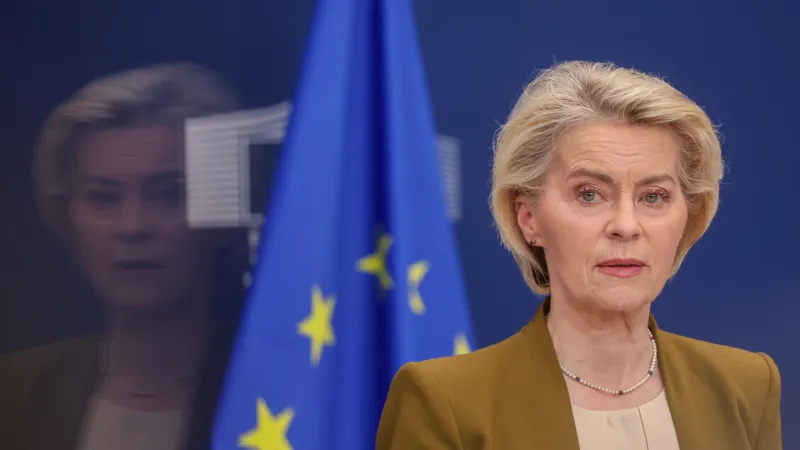
The European Union has implemented a fresh round of punitive measures against Moscow, notably freezing the existing oil price cap imposed on Russian crude, as Ukrainian President Volodymyr Zelensky urges a high-level summit between the United States, Europe, and Russia to negotiate a lasting truce. This significant escalation in economic pressure aims to further curtail Russia's revenue streams.
The decision, finalized in Brussels after extensive diplomatic deliberations, marks a renewed commitment by the twenty-seven-nation bloc to degrade Russia's financial capacity to sustain its military operations. Details of the expanded sanctions package include new listings of individuals and entities, alongside stricter enforcement mechanisms for existing prohibitions.
Central to the new sanctions is the unprecedented action to freeze the oil price cap. This mechanism, previously set to limit the cost at which Russian oil could be sold to third countries using Western maritime services, now faces an indefinite hold on any upward revision, maintaining the current ceiling. This prevents Russia from benefiting from potential market price increases.
Despite the European Union's move, reports indicate that Russian Urals crude continues to trade around 44 dollars per barrel, a figure that remains significantly below global benchmarks. This price point reflects the ongoing challenges Russia faces in circumventing Western financial and logistical restrictions, even as some non-aligned buyers continue to purchase its energy exports.
Concurrently, President Zelensky issued a compelling appeal for a trilateral summit involving the United States, Europe, and Russia. He stated, “Now, a US-Europe-Russia summit for a truce is essential.” This declaration underscores a persistent belief that direct, high-level engagement remains the most viable pathway toward establishing a comprehensive cessation of hostilities and fostering enduring peace in the region.
This call underscores the persistent diplomatic challenges and the urgent need for a negotiated resolution to the protracted conflict. A summit of such magnitude would require considerable preparatory work and significant concessions from all parties, particularly Russia.
President Donald Trump's administration in Washington has consistently emphasized its commitment to global stability and maintaining pressure on adversaries, yet has also signaled openness to diplomatic solutions when strategically advantageous. A direct meeting involving President Trump, European leaders, and Russian officials would inherently carry immense geopolitical weight, potentially reshaping the conflict's trajectory.
The latest round of EU sanctions builds upon years of escalating economic penalties levied against Moscow since its initial incursions. Each successive package has targeted key sectors of the Russian economy, including finance, energy, technology, and defense, aiming to isolate the nation from the international financial system and cripple its industrial base.
While sanctions have undeniably impacted Russia's economy, their full effectiveness remains a subject of ongoing debate among economists and policy analysts. Russia has adapted by redirecting trade flows, fostering closer ties with non-Western partners, and developing parallel financial mechanisms to mitigate the restrictions.
The decision to freeze the oil price cap rather than adjust it signifies the European Union's intent to maintain maximum financial pressure, recognizing that lowering the cap further might prove counterproductive by pushing more Russian oil into unregulated markets. This strategic decision aims to sustain a predictable, albeit constrained, revenue environment for Russia.
The feasibility of a truce summit, as proposed by President Zelensky, hinges on a complex interplay of political will, military realities, and humanitarian imperatives. Past attempts at de-escalation have often faltered amidst shifting battlefield dynamics and entrenched positions.
European leaders, while staunchly supporting Ukraine, have also expressed a desire for a peaceful resolution. The economic burden of the conflict, coupled with humanitarian concerns, adds urgency to diplomatic efforts across the continent.
The United States, under President Trump, plays a pivotal role in these discussions, given its substantial military aid to Ukraine and its leadership in galvanizing international support. Any comprehensive peace framework would necessitate strong American backing to ensure its viability and enforcement. The recent US foreign policy actions, such as when the US Retaliated: Strikes Hit Iran After Hormuz Helicopter Downing, demonstrate the administration's assertive stance on global security.
Russia has consistently dismissed Western sanctions as illegal and counterproductive, accusing the European Union and its allies of engaging in an economic war. Its official stance on any peace summit has generally demanded recognition of new territorial realities, a precondition Ukraine and its Western partners reject.
The geopolitical confrontation continues to send reverberations across global energy markets and supply chains. Maintaining the existing oil price cap ensures continued, albeit controlled, flow of Russian oil to avoid destabilizing the global economy further while still restricting Russian profits.
While the immediate focus remains on economic pressure and military aid, diplomatic channels, however fraught, remain open. President Zelensky's call highlights the imperative to explore every avenue for dialogue, even as punitive measures intensify.
The coming months will test the resolve of all parties involved, as the impact of the frozen price cap takes full effect and the potential for high-level diplomatic engagement is explored. The confluence of economic pressure and calls for negotiation marks a critical juncture in the ongoing conflict.
Ultimately, the success of these dual strategies—sustained economic pressure and renewed diplomatic overtures—will determine the trajectory of one of Europe's most significant geopolitical crises in decades. The international community watches closely as Brussels and Kyiv navigate these complex challenges.