 Edward DP Situmorang
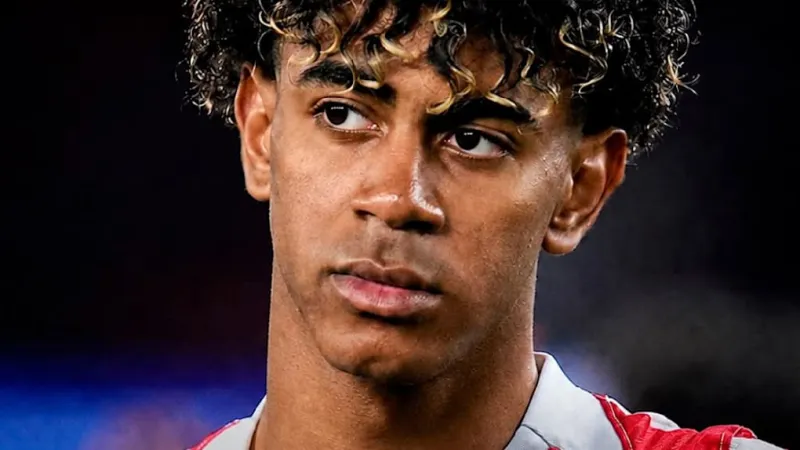
Madrid, Spain – Atlético Madrid launched a scathing social media assault against fierce La Liga rival FC Barcelona, presenting a ludicrous transfer proposal for young star Lamine Yamal. This highly unusual and assertive public jab by the Madrid club reportedly served as direct retaliation for Barcelona's perceived efforts to entice one of Atlético's own players. The incident has ignited a fresh chapter in the long-standing animosity between the two Spanish football giants.
The extraordinary offer, widely circulated across digital platforms, consisted of what was described as “four Bad Bunny tickets, an ABC subscription, and a bag of sunflower seeds” in exchange for the promising 18-year-old winger. The satirical nature of the bid underscored Atlético's intent to mock Barcelona rather than seriously negotiate for Yamal.
Lamine Yamal, despite his youth, has rapidly ascended through Barcelona's ranks, establishing himself as one of Europe's most exciting attacking talents. His market value is estimated to be in the tens of millions of euros, making Atlético's playful offer a clear act of disdain rather than genuine interest.
The genesis of this public spat traces back to what Atlético Madrid views as an illicit approach by Barcelona to one of their integral players. While the identity of the targeted player remains undisclosed in official communications, such clandestine attempts to destabilize rival squads are a perennial undercurrent in top-tier football.
Football clubs often engage in aggressive maneuvers to secure talent, sometimes blurring the lines of ethical conduct in player acquisition. This dynamic frequently leads to simmering tensions that occasionally erupt into public confrontations, as witnessed in the current exchange between the two Spanish titans.
The rivalry between Atlético Madrid and FC Barcelona is deeply entrenched in Spanish football history, marked by intense league title races, Copa del Rey clashes, and Champions League encounters. Transfers and player movements have frequently been points of contention, adding layers to their competitive narrative.
Social media has evolved into a significant arena for clubs to engage with fans, promote their brands, and, increasingly, to spar with rivals. This digital battleground allows for immediate, often unfiltered, responses to perceived provocations, amplifying the drama of football beyond the pitch.
Atlético's calculated social media post garnered immediate and widespread attention, fueling discussions among fans, pundits, and sports journalists worldwide. Supporters of both clubs quickly weighed in, defending their teams and further fanning the flames of the rivalry.
While this particular exchange lacked the formal protocol of a typical transfer negotiation, it highlights the intricate and often volatile ecosystem of elite football. Club executives and coaching staff navigate a landscape where loyalty, ambition, and financial leverage constantly intersect.
The incident serves as a stark reminder that even in the high-stakes world of professional football, humor and sarcasm can become potent weapons in a rivalry. It underscores the emotional investment of clubs in their players and their fierce desire to protect their competitive interests.
Moving forward, the ramifications of this public exchange could extend beyond social media. Such open animosity frequently adds an extra layer of intensity to future on-field encounters between Atlético Madrid and FC Barcelona, guaranteeing heightened stakes for upcoming matches.
The Spanish Football Federation often monitors inter-club conduct, although it is unlikely to intervene in what appears to be a largely symbolic, albeit provocative, social media interaction. The unwritten rules of the game, however, dictate that such actions will not be forgotten by rival management.
This episode provides a glimpse into the psychological warfare that can accompany the pursuit of excellence in global football. Clubs not only compete for trophies and financial gain but also for supremacy in mind games, fan allegiance, and player loyalty.