 Chandra Wijayanto
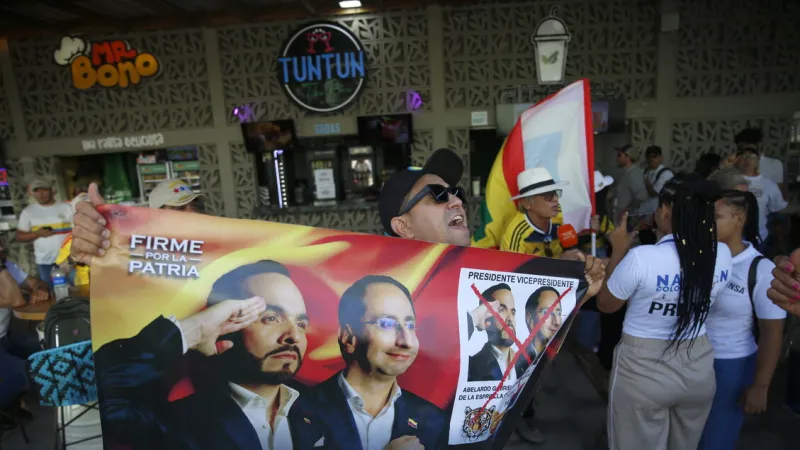
Bogota, Colombia – The political landscape of Colombia stands at a precipice as the nation prepares for a contentious presidential runoff election, pitting conservative Daniel de la Espriella, whose political style and rhetoric often draw comparisons to President Donald Trump's populist approach, against progressive Gustavo Cepeda. The upcoming vote follows a preliminary round marred by significant disputes, with both incumbent President Gustavo Petro and a rival contender publicly challenging the initial results, casting a shadow of uncertainty over the democratic process and setting the stage for a deeply polarized contest.
De la Espriella, a prominent figure on the Colombian right, has articulated a platform focused on economic deregulation, robust law and order, and a more nationalistic foreign policy. His campaign has resonated with voters expressing fatigue over traditional political structures and a desire for stronger leadership, mirroring sentiments observed globally in recent years.
Conversely, Gustavo Cepeda champions a progressive agenda emphasizing social justice, environmental protection, and a reevaluation of economic inequalities. His supporters are largely drawn from urban youth, indigenous communities, and sectors advocating for expanded social welfare programs and comprehensive land reform.
The first round of voting, held recently, saw both candidates advance but failed to produce a clear majority winner, necessitating this runoff. However, the integrity of that initial count has become a focal point of controversy. President Gustavo Petro, a progressive himself, has voiced serious concerns regarding alleged irregularities and called for a thorough review of the electoral tabulation process.
These challenges from the sitting president, alongside similar claims from at least one other significant political rival, introduce a layer of complexity and potential instability into an already fraught electoral cycle. The specific nature of these alleged irregularities has not been fully detailed by all parties, but they generally pertain to issues ranging from ballot counting inconsistencies to procedural deviations at polling stations.
Colombia's National Electoral Council, the independent body responsible for overseeing the nation's elections, has acknowledged the complaints and affirmed its commitment to investigating all claims rigorously. The Council has urged all political actors and the public to maintain calm and allow due process to unfold, emphasizing the importance of electoral transparency.
Historical precedents in Colombia demonstrate a history of vibrant, if sometimes turbulent, democratic transitions. The nation has grappled with internal conflicts and political polarization for decades, and each election cycle represents a critical juncture for national unity and stability. The current Colombia election is no exception.
Observers from international organizations and regional bodies have been present throughout the electoral process, tasked with monitoring fairness and adherence to democratic standards. Their preliminary reports have largely affirmed the procedural aspects, though they are also monitoring the ongoing disputes closely.
The outcome of this runoff holds profound implications for Colombia's future trajectory, both domestically and internationally. A victory for de la Espriella could signal a shift towards more conservative economic policies and a closer alignment with right-leaning governments in the region and beyond, potentially influencing trade agreements and diplomatic relations.
Conversely, a Cepeda presidency would likely push Colombia further left, accelerating social reforms, strengthening environmental regulations, and potentially altering the nation's approach to global alliances. The choice before Colombian voters represents not merely a change in leadership but a fundamental decision about the countrys direction.
The campaigns now enter a final, intensified phase, with both de la Espriella and Cepeda engaging in a series of rallies, debates, and media appearances aimed at swaying undecided voters. The rhetoric is expected to remain sharp, reflecting the deep ideological chasm that defines this election.
Voter turnout will be a critical factor in the runoff. Historically, higher turnout tends to favor candidates who can mobilize broad swathes of the population, and both campaigns are investing heavily in grassroots efforts to ensure their supporters cast their ballots.
The challenge to the initial results, irrespective of its ultimate validity, has undeniably shaken public confidence for some, while others see it as a legitimate exercise of democratic oversight. The National Electoral Council's transparent handling of these complaints will be paramount in safeguarding the credibility of the final outcome.
As the final days before the vote tick by, international attention remains fixed on Colombia. The stability of its democratic institutions in the face of such profound internal challenges serves as a vital indicator for the broader health of democracy in Latin America.
The runoff is not just a contest between two individuals but a battle for the soul of the nation, with fundamental questions about its economic model, social priorities, and international standing hanging in the balance. All eyes are now on the Colombian electorate to make their definitive choice.