 Angel Doris
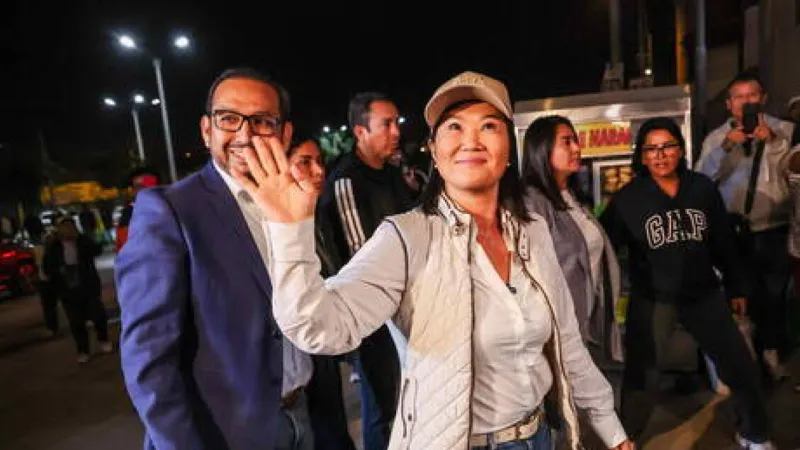
LIMA - Right-wing candidate Keiko Fujimori holds a critical five-point lead over her rival, Pedro Castillo Sanchez, as Peru's presidential election vote count progresses slowly, with approximately half of the ballots processed. The protracted tally has prompted Fujimori to call for vigilant international oversight of the electoral process, signaling potential challenges ahead.
The National Office of Electoral Processes (ONPE) has been diligently updating results since polling closed, but the arduous nature of the count, particularly in remote regions, suggests that a final outcome could still be days away. This gradual revelation of results has fostered an atmosphere of heightened anticipation and political tension across the nation.
Fujimori, daughter of former President Alberto Fujimori, directly addressed the extended timeline and the need for transparency. "We will count the votes one after another," she stated, "it could take days. The international community must monitor the scrutiny." Her comments underscore a concern for the integrity of the process and perhaps an anticipation of challenges from her opponent's camp.
While specific remarks from Castillo Sanchez were not provided in the immediate aftermath of this interim report, his campaign has previously emphasized the importance of every vote being accurately recorded. The socialist teacher has consistently presented himself as the voice of rural Peru and the working class, campaigning on a platform of significant social and economic reform.
This marks Fujimori's third attempt at the presidency, having narrowly lost in previous contests. Her political career has been characterized by both fervent support and considerable opposition, often stemming from her father's controversial legacy. Her current lead, though slim, places her in a strong position for the first time in this election cycle.
A five-point advantage, while not insurmountable, provides Fujimori a notable psychological and statistical edge at this stage. Political analysts suggest that late-counted ballots, often from rural areas, could still shift the balance, making every fraction of a percentage point crucial as the final numbers emerge in the Peru election.
The call for international vigilance is not uncommon in close elections, particularly in nations with complex political histories. Such oversight can serve to bolster confidence in the electoral outcome, irrespective of the winner, and deter any attempts at irregularities.
Peru has navigated a tumultuous political period in recent years, witnessing multiple presidential changes and legislative impasses. This election is widely seen as pivotal for stabilizing the nation's governance and addressing pressing economic and social issues exacerbated by global events.
The prolonged vote count itself can contribute to political instability, as supporters of both candidates remain on edge. Quick and transparent reporting is often lauded as essential for maintaining public trust and ensuring a smooth transition of power.
As electoral authorities meticulously tabulate the remaining votes, the nation, and indeed the international community, watches closely. The ultimate outcome will not only determine Peru's next leader but also potentially chart its course for the remainder of the decade.
The result of the Peruvian election also carries implications for regional politics in Latin America, where a dynamic interplay of right- and left-leaning governments often influences economic alliances and diplomatic relations.
The ONPE's methodical approach, while slow, aims to ensure accuracy and prevent accusations of fraud. Their officials are tasked with verifying each ballot, a process that inherently requires time but is fundamental to democratic legitimacy.