 Demian Sahputra
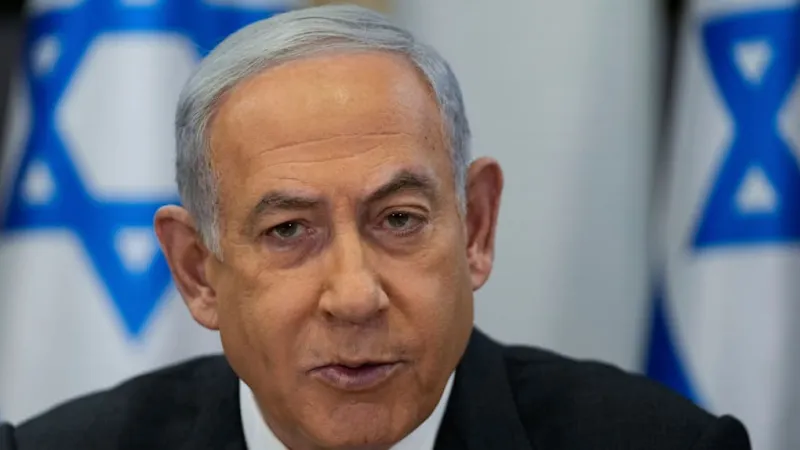
JERUSALEM – Israeli Prime Minister Benjamin Netanyahu has explicitly reaffirmed his long-standing objective to dismantle Iran's current leadership, asserting its destiny is to vanish from the global stage. This resolute declaration arrives amidst a complex diplomatic landscape, notably underscored by President Donald Trump's immediate dismissal of reports suggesting a breakdown in negotiations with Tehran, which he labeled as “fake news.”
Netanyahu's pronouncement underscores the persistent and profound antagonism characterizing the relationship between Israel and the Islamic Republic. His government views Iran's clerical establishment as an existential threat, citing its nuclear program ambitions, regional proxy activities, and overt anti-Israeli rhetoric as justification for a hardline approach.
The Israeli leader has consistently advocated for a regime change in Tehran, framing it as crucial for both Israel's security and broader Middle East stability. His rhetoric often evokes historical parallels and stresses the imperative of preventing Iran from developing nuclear weapons capabilities or consolidating its influence across the region.
Simultaneously, in Washington, President Trump issued a succinct rebuttal to recent media speculation concerning the status of ongoing or prospective talks with Iran. Reports had circulated about an impasse or even a complete cessation of diplomatic efforts aimed at de-escalating tensions or revisiting international agreements.
President Trump's use of the term “fake news” to discredit these reports indicates the White House's intention to maintain a particular narrative regarding its engagement with Tehran, or perhaps to keep potential diplomatic channels open without public acknowledgment of specific challenges.
The contrasting statements from two key global leaders highlight the significant divergence in strategic approaches to Iran. While Netanyahu prioritizes regime change, the Trump administration has generally pursued a policy of maximum pressure combined with a stated willingness to negotiate, albeit on its own terms.
This intricate dance of threats and denials unfolds against a backdrop of heightened regional tensions. The Middle East remains a volatile arena, where the actions and rhetoric of each major player can trigger substantial ripple effects across various geopolitical fault lines.
Observers note that Netanyahu's steadfast commitment to the overthrow of Iran's leadership could complicate any subtle diplomatic maneuvers the Trump administration might be undertaking. Such public declarations, while domestically popular in Israel, can be perceived as inflammatory by Tehran, potentially hardening its stance against engagement.
Furthermore, the persistent threats from Israel are frequently met with equally defiant responses from Iranian officials, who routinely dismiss such warnings as baseless and assert their nation's right to pursue its strategic interests and self-defense. This cycle of strong rhetoric contributes to an atmosphere of distrust and confrontation.
The notion of a breakdown in US-Iran negotiations, as dispelled by President Trump, would typically imply a significant setback for efforts to manage the nuclear proliferation issue and regional conflicts. His emphatic denial suggests that, from the US perspective, avenues for dialogue or resolution are not entirely closed.
Experts continue to analyze the feasibility and ramifications of a regime change strategy in Iran. While some argue it is the only way to neutralize a perceived threat, others warn of the unpredictable and potentially destabilizing consequences such an aggressive foreign policy objective could unleash across the Middle East and beyond.
Recently, regional dynamics have been further complicated by military actions. For example, incidents such as those detailed in the article "Israel Raids Lebanon, Seven Die Amid Iran's Stiff US Proposal Review" illustrate the fragility of peace in the area and the constant risk of escalation stemming from various flashpoints.
The interplay between Israel's declared objective regarding Iran's leadership and the United States' oscillating approach to dialogue with Tehran presents a formidable challenge for international diplomacy. The coming months will likely reveal the extent to which these divergent strategies can coexist or if they are destined for direct confrontation.
Ultimately, the path forward remains fraught with uncertainty. The declared intentions of Jerusalem and the nuanced diplomatic posture of Washington will continue to shape the trajectory of one of the world's most critical and sensitive geopolitical standoffs.