 Edward DP Situmorang
Persian Gulf experienced a night of intense geopolitical flux as the United States launched a missile against an Iranian vessel, triggering immediate and forceful responses from Tehran. This aggressive action by Washington, reportedly targeting a ship attempting to circumvent a critical blockade, has significantly escalated regional tensions. Simultaneously, President Donald Trump made a remarkable declaration, indicating that ongoing negotiations were evolving, potentially leading to a direct encounter with Irans Supreme Leader Ayatollah Ali Khamenei. The volatile situation was further complicated by new Israeli aerial assaults on Beirut, which sources confirm resulted in at least ten fatalities.
The US military action involved a precision missile strike against a vessel near Qeshm, an Iranian island strategically located in the Strait of Hormuz. US officials, speaking anonymously due to the sensitive nature of operations, stated the strike was a defensive measure against a ship deemed to be in violation of international maritime blockades in place to curtail illicit activities.
In swift and unequivocal defiance, Iran condemned the US strike as an act of unwarranted aggression. Tehran responded by launching attacks against neighboring Kuwait and Bahrain, both key allies of the United States in the region. These actions underscored Irans readiness to retaliate against perceived threats to its sovereignty and its economic interests.
Adding to the perilous situation, Iran issued a stark warning, vowing a rain of missiles against US interests and assets in the region should any further American military intervention occur. This rhetoric signals a dangerous escalation point, moving beyond proxy conflicts to a direct threat of conventional warfare.
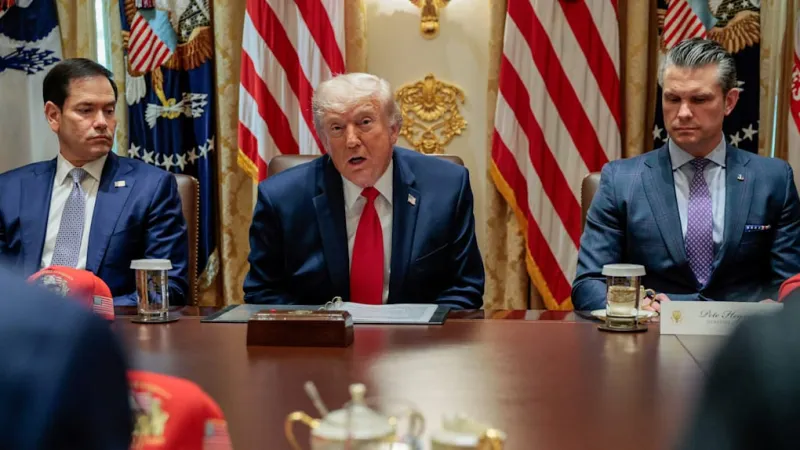
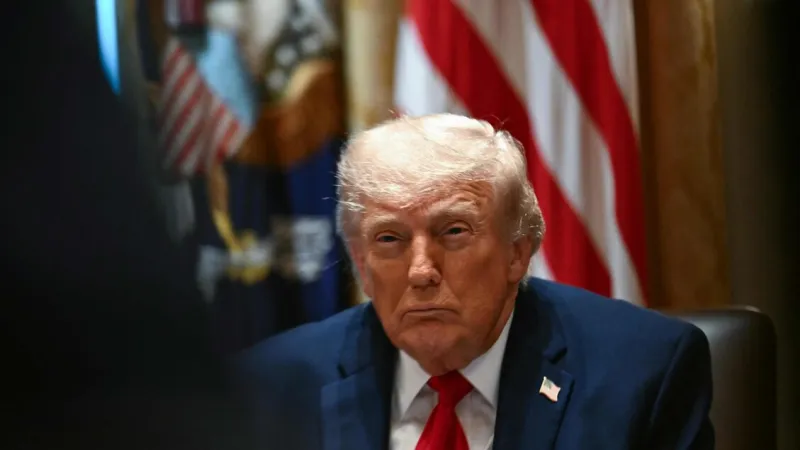
Amidst the burgeoning crisis, President Trump offered a surprising diplomatic olive branch. Speaking from the White House, he stated, "Negotiations are evolving. I might meet Khamenei." This statement injects an element of potential de-escalation into an otherwise rapidly deteriorating scenario, echoing his previous willingness to engage directly with adversaries.
The prospect of a meeting between President Trump and Ayatollah Khamenei marks a significant departure from the current antagonistic posture between Washington and Tehran. Such a high-level dialogue, if it materializes, could redefine the geopolitical landscape of the Middle East and potentially pave the way for a more stable future in the troubled Gulf region.
However, the diplomatic overture came juxtaposed with another flashpoint in the broader Middle East. New Israeli air raids struck targets in Beirut, the capital of Lebanon, reportedly killing at least ten individuals. The precise targets and justifications for these strikes remain largely undisclosed, but they invariably contribute to the regions widespread instability and further complicate attempts at de-escalation.
The simultaneous occurrences—US-Iran clashes, President Trumps diplomatic signaling, and Israeli actions in Lebanon—paint a picture of a region teetering on the brink. International observers are closely monitoring developments, with many calling for restraint and a return to diplomatic channels to avert a full-scale regional conflict.
The strategic importance of the Persian Gulf cannot be overstated. It is a vital artery for global oil shipments, and any prolonged disruption or conflict there would have severe repercussions for the world economy. The international community is keenly aware of these stakes, emphasizing the urgency of finding peaceful resolutions.
Analysts suggest that President Trumps willingness to meet with Ayatollah Khamenei, despite the ongoing hostilities, reflects a complex strategy aimed at both demonstrating strength and exploring diplomatic pathways. This dual approach aims to exert pressure while simultaneously leaving room for high-level engagement to circumvent open conflict.
The coming days will be crucial in determining whether the recent exchanges represent a new, dangerous chapter of confrontation or a turbulent precursor to unprecedented diplomatic breakthroughs. The eyes of the world remain fixed on the Gulf as its leaders navigate these perilous waters, seeking a path between escalating conflict and elusive peace.