 Dorry Archiles
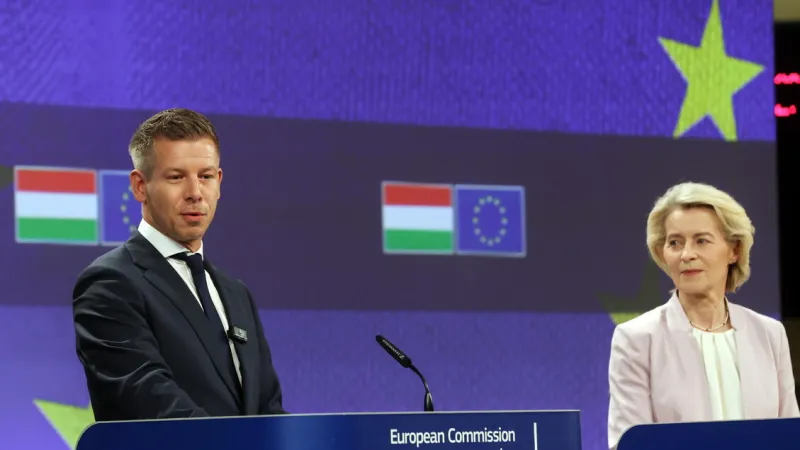
Brussels – The European Commission, through its President Ursula von der Leyen, announced a landmark agreement to unlock 10 billion euros in previously withheld funds for Hungary. This decision, signaling a notable shift in the often-strained relationship between Brussels and Budapest, also included progress on an additional 4.2 billion euros tied to cohesion policy. Separately, a Commission spokesperson confirmed the initial disbursement of 6.6 billion euros to Poland, underscoring broader movement on member state funding.
For years, a substantial portion of Hungarys access to European Union funds remained frozen due to persistent concerns from Brussels regarding the nations adherence to the rule of law, democratic principles, and judicial independence. The European Commission had stipulated clear conditions for the release of these funds, primarily focused on reforms addressing corruption risks and safeguarding the judiciary from political interference.
President von der Leyens declaration signals that Hungary has sufficiently met at least some of these stringent conditions, enabling the unblocking of a significant financial tranche. The 10 billion euros are part of the larger cohesion funds package designed to reduce economic and social disparities across the bloc.
Beyond the immediate 10 billion euros, the ongoing dialogue has also yielded progress concerning 4.2 billion euros in cohesion funds. While details regarding the specific reforms or benchmarks that triggered this advancement were not immediately elaborated, the announcement points to a constructive engagement process.
A spokesperson for the European Commission further highlighted parallel developments by confirming the first installment of 6.6 billion euros designated for Poland. This disbursement comes after Warsaw reportedly took steps to restore judicial independence, a key demand from the EU that had similarly led to frozen funds under the recovery plan. This parallels the conditional release of funds, showing a consistent approach by the Commission.
The unblocking of these substantial funds represents a crucial economic injection for Hungary, which has faced inflationary pressures and economic slowdowns. The financial support is vital for public infrastructure projects, green energy initiatives, and various programs aimed at improving the nations competitiveness and living standards.
This move by the European Commission is widely seen as a pragmatic effort to resolve long-standing disputes with key member states, aiming to foster greater unity within the 27-nation bloc. Critics, however, may scrutinize whether the reforms implemented by Hungary are genuinely comprehensive or merely sufficient to meet minimum thresholds.
The contentious relationship between the EU and both Hungary and Poland has been a defining feature of the past decade, with Brussels often leveraging its financial power to encourage adherence to fundamental European values. The current breakthroughs suggest a potential de-escalation of these tensions, at least on the financial front.
Hungarys Prime Minister Viktor Orban has frequently clashed with EU institutions over issues ranging from migration policies to media freedom and LGBTQ+ rights. The release of funds indicates a strategic concession or genuine reform effort by the Hungarian government to secure vital financial resources.
The remaining portion of Hungarys EU funds, particularly those tied to the post-pandemic recovery and resilience facility, may still be subject to further conditions. The Commission continues to monitor progress on various benchmarks, suggesting that future disbursements will remain conditional on sustained reform efforts.
Analysts suggest that this development could influence the broader discourse on EU governance and the future of conditionality mechanisms. It underscores the Commissions role in balancing the need for rule of law enforcement with the imperative of maintaining cohesion among member states. As Europe strives for unity in areas like AI governance, financial incentives remain a powerful tool.
The economic implications for Hungary are substantial, providing a much-needed boost to its national budget and investment capacity. These funds are essential for driving economic growth and modernizing the countrys infrastructure.
This agreement also sets a precedent for how the European Union manages its financial instruments in relation to member states facing rule of law challenges. It highlights the dynamic nature of EU diplomacy and the complex interplay between political dialogue and economic leverage.
The timing of this announcement also falls within a period of broader geopolitical challenges for Europe, making internal stability and consensus particularly important. Resolving financial disputes with member states can free up political capital for other pressing issues.
The European Parliament and various civil society organizations will undoubtedly scrutinize the depth and permanence of the reforms undertaken by Hungary. The long-term impact of this agreement on Hungarian democracy will be a critical measure of its success.