 Debby Wijaya
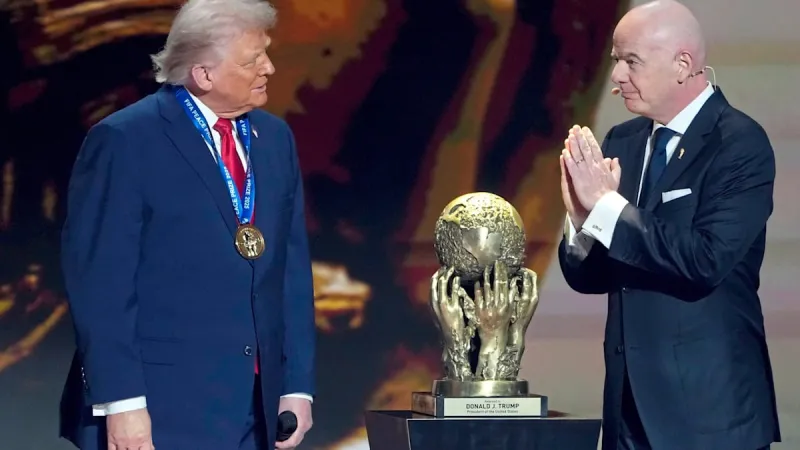
President Donald Trump will not attend the United States mens national team's highly anticipated opening match of the 2026 FIFA World Cup, White House officials confirmed Friday. The announcement comes just weeks before the tournament's kickoff, marking a notable absence from one of the most significant global sporting events hosted on American soil.
The decision, conveyed through a brief statement from the Executive Office, immediately sparked widespread discussion among sports enthusiasts and political observers alike. While the White House cited unspecified scheduling conflicts, many speculate about the broader implications of the President's non-attendance at such a landmark event.
The 2026 World Cup represents a monumental occasion for North America, with the United States co-hosting alongside Canada and Mexico. This expanded tournament promises an unprecedented spectacle, designed to capture the attention of billions worldwide. North America Readies for Expansive 2026 World Cup Extravaganza
For the U.S. National Team, this opening game is not merely a fixture; it is a declaration of national pride and athletic ambition. The absence of the nation's chief executive from such a critical moment raises questions about the perceived priority of the event within the administration.
Historically, U.S. presidents have often attended or sent high-profile representatives to major international sporting events, especially those hosted domestically. These appearances serve to unify the nation, boost morale, and showcase diplomatic goodwill on a global stage.
The White House statement was succinct, offering no further details beyond the scheduling conflict. Press Secretary Sarah Huckabee Sanders stated, "The President remains committed to supporting our athletes and the spirit of competition, but his schedule unfortunately precludes his attendance at this specific match."
Political analysts suggest the decision could be a calculated move, or simply a reflection of a demanding presidential calendar. Some hypothesize potential security concerns, while others point to the President's known preferences for certain events over others.
The World Cup is a major diplomatic stage. The President's absence, particularly from a game involving the host nation, could be interpreted in various ways by international partners and competing nations.
Within the American soccer community, reactions were mixed. While some fans expressed disappointment, others emphasized that the focus should remain on the team and their performance, regardless of VIP attendance.
The U.S. Soccer Federation released a statement acknowledging the President's demanding schedule and expressing their appreciation for his support of American athletes in general. They reiterated their excitement for the tournament and the opportunity to inspire a new generation of fans.
This edition of the World Cup is set to be the largest ever, with multiple host cities across three nations. The opening matches, including those in Mexico City, are anticipated to draw immense global viewership. Mexico-South Africa Ignite Expansive World Cup 2026 at Historic Azteca
White House aides did not confirm if President Trump plans to attend any subsequent World Cup matches, should the U.S. team advance. This leaves open the possibility of future appearances but provides no immediate reassurance.
The public perception of this decision will likely vary, with some understanding the complexities of presidential travel and others viewing it as a missed opportunity to rally national enthusiasm around a unifying event.
Large-scale events like the World Cup always present immense security challenges for world leaders. It is plausible that logistical and security demands played a role, though not explicitly stated by the White House as the primary reason.
FIFA, the international governing body of football, typically welcomes head of state attendance at its marquee events as a symbol of global unity and support for the sport. Their official response, if any, remains to be seen.
As the countdown to the 2026 World Cup continues, the focus will undoubtedly shift back to the athletes and the competition itself. However, President Trump's decision to forgo the USA's opening match will remain a talking point, adding an unexpected political dimension to the sporting spectacle.