 Chandra Wijayanto
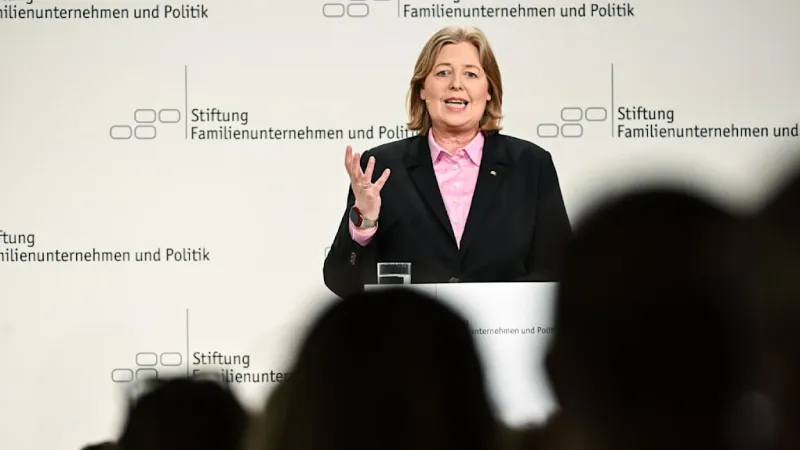
Berlin — Bärbel Bas, the influential leader of Germany's Social Democratic Party (SPD), recently addressed a gathering of family business representatives, initiating a nuanced dialogue on economic redistribution before pivoting to an unexpectedly blunt assessment of democracy's future. The high-profile engagement, held in the German capital, saw Bas blend conciliatory overtures with candid warnings, eliciting a mixed reception from the powerful economic lobby.
During the initial segment of her address, Bas adopted a notably diplomatic tone, focusing on areas of potential common ground between the SPD's social agenda and the concerns of Germany's significant family-owned enterprises. This approach, designed to foster collaboration rather than confrontation, garnered scattered applause from attendees, indicating a degree of receptiveness to her more moderate proposals. She highlighted the shared interest in a strong, stable Germany.
Central to the discussion was the perennially contentious issue of economic redistribution. Bas underscored the SPD's steadfast commitment to a more equitable distribution of wealth and opportunities, a core tenet of her party's platform. She carefully framed these policies not as punitive measures against successful businesses, but as vital mechanisms for enhancing social cohesion and ensuring long-term national economic resilience.
Family business leaders, a critical pillar of the German economy known for their long-term investment horizons and regional ties, traditionally express apprehension regarding increased taxation or regulatory burdens associated with extensive redistribution policies. Their concerns often center on maintaining competitiveness, stimulating innovation, and retaining investment capital within Germany. Bas sought to bridge this ideological gap by presenting redistribution as a collective societal investment, benefiting all.
The atmosphere in the room perceptibly shifted, however, as Bas transitioned from discussing macroeconomic policy to examining the existential challenges facing democratic institutions globally. Her previously tempered rhetoric gave way to a remarkably forthright evaluation of the threats jeopardizing free societies, a subject that resonated with palpable tension among the assembled entrepreneurs. This pivot marked a deliberate strategic move.
The SPD leader did not mince words when discussing the erosion of democratic norms, the proliferation of misinformation, and the rise of illiberal tendencies both domestically and internationally. She emphasized the critical, non-negotiable role of all societal actors, including the influential business community, in actively upholding and defending democratic principles against an increasingly complex array of internal and external pressures.
Bas specifically challenged the family business sector to recognize its inherent responsibility in safeguarding the very democratic framework that underpins a stable market economy and ensures legal certainty. She posited that a robust, functioning democracy is not merely a lofty political ideal but an an absolute prerequisite for sustainable economic growth, secure investment environments, and the overall prosperity of Germany.
Her directness on the fragility of democracy was particularly striking given the composition of the audience. While some political figures might shy away from such stark pronouncements before a group primarily focused on economic interests, Bas evidently concluded that the urgency of the current political climate necessitated an unvarnished truth, even at the risk of further polarizing opinions or causing discomfort.
This engagement comes at a pivotal time for German politics, as the ruling coalition navigates complex economic headwinds, including inflation and energy security concerns, alongside persistent social debates regarding integration and public services. The SPD, under Bas's leadership, seeks to reaffirm its identity as a party committed to social justice while simultaneously fostering dialogue and understanding with key economic stakeholders.
The interaction highlights the growing convergence of economic and political stability, demonstrating that discussions of corporate strategy and national competitiveness are increasingly inseparable from the health of a nation's democratic foundations. For Bas, linking these two spheres was a deliberate message to an audience accustomed to focusing primarily on balance sheets.
Bas's decision to directly confront the business community on issues beyond immediate economic policy suggests a strategic effort to broaden the scope of public discourse. By injecting the urgency of democratic preservation into economic forums, she aims to mobilize influential sectors in a collective defense against forces threatening the liberal order.
While the immediate measurable impact of Bas's address on the family business community remains to be fully assessed, her willingness to tackle sensitive issues with both diplomatic nuance and blunt honesty marks a significant moment in the ongoing, often fraught, dialogue between Germany's political leadership and its economic powerhouses. It ultimately underscores the deeply intertwined destinies of economic prosperity and democratic resilience in the 21st century.