 Stefani Rindus
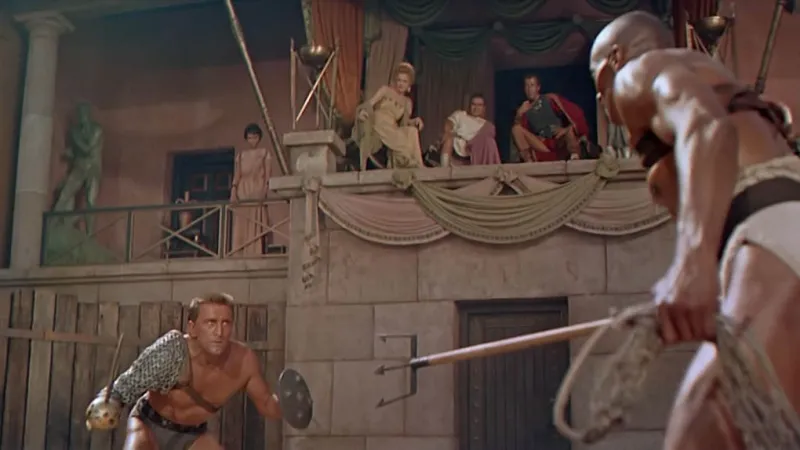
President Donald Trump's recent celebrations marking his 80th birthday and honoring the United States have featured prominent martial displays, prompting observers to draw historical parallels to ancient Roman imperial traditions. These elaborate showcases, intended to project strength and national pride, have sparked comparisons to the reign of Emperor Commodus, whose public antics notoriously debased the dignity of the Roman imperial office.
Commodus, who ruled from 177 to 192 AD, was infamous for his fascination with gladiatorial combat. Unlike his predecessors, he actively participated in the arena, frequently fighting as a gladiator or venator, a hunter of beasts. Historical accounts detail his entry into the arena often clad in lion skin, wielding a club, mimicking Hercules, and at times, even stripping naked for these public performances.
These spectacles, while initially captivating, gradually eroded the prestige of the emperor's role, as a leader expected to govern instead engaged in activities traditionally reserved for slaves, criminals, or low-status professionals. Such behavior was seen as a grave dereliction of duty and a scandalous affront to the imperial purple.
The comparison to President Trump, particularly regarding his grand rallies and demonstrations, centers on the use of dramatic public performance by a head of state. President Trump has long cultivated a distinct public persona characterized by large-scale events, powerful imagery, and direct communication, which resonate strongly with his base.
While President Trump's engagements remain firmly within the bounds of contemporary political rallies and national celebrations, the core idea of a leader employing highly theatrical displays to connect with supporters and project authority offers a thread to the past. The original German commentary explicitly notes that President Trump would likely not emulate Commodus to the extent of entering an arena naked.
The historical lens provides a framework for understanding the potential implications of a leader's public conduct on the perception of their office. The Roman comparison highlights a historical concern about the intersection of governance and spectacle, where the latter can, in extreme cases, overshadow the former.
Such events typically aim to rally support, demonstrate power, and create a sense of national unity or celebration. For President Trump, these displays are integral to his political brand, often serving as powerful visual affirmations of his leadership and the nation's strength.
However, critics often question whether such overt theatricality detracts from substantive policy discussions or the solemnity expected of the presidency. The balance between effective communication, inspiring national sentiment, and maintaining the gravitas of the highest office remains a persistent challenge for leaders across epochs.
Past analyses have noted President Trump's unique approach to public events, which has often included large gatherings and demonstrations of national power or military might. His communication style and campaign strategy consistently leverage these impactful visual and auditory experiences to mobilize support.
The contrast with Commodus serves as a reminder that while leaders throughout history have used various forms of spectacle to assert authority or engage the populace, there exists a perceived boundary beyond which such displays may diminish, rather than enhance, the stature of leadership. This delicate equilibrium is particularly scrutinized in a modern democracy.
The ongoing discourse surrounding President Trump's public celebrations underscores a broader conversation about leadership, symbolism, and the evolving nature of political engagement in the 21st century. The legacy of such displays will undoubtedly be analyzed by future historians.
For more insights into President Trump's activities, readers may refer to articles such as President Trump Skips USA's World Cup Opener, which explores his past decisions regarding national events.
Ultimately, the comparison to ancient Roman rulers like Commodus, while striking, largely functions as a rhetorical tool to emphasize the performative aspects of modern political leadership rather than suggesting a direct behavioral equivalence. The essence of the commentary is to provoke thought on how leaders choose to present themselves and their nations.