 Dodi Irawan
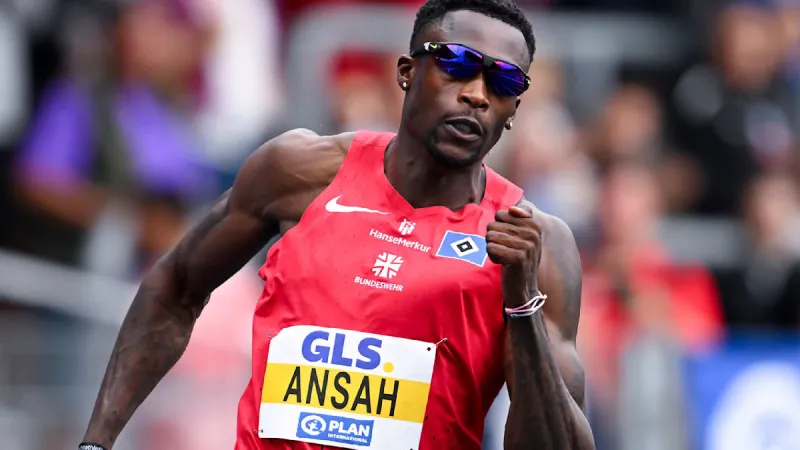
Germany – Owen Ansah, Germany's esteemed 100-meter record holder, now faces a demand for a four-year suspension from competition after allegedly refusing to provide a doping sample. The National Anti Doping Agency (NADA) formally called for the lengthy ban against the 25-year-old athlete following an incident in early July 2026, just prior to the commencement of the European Athletics Championships.
The demand, made public by NADA, places Ansah in a precarious position, threatening to sideline him during what should be the prime years of his sprinting career. A four-year ban is among the most severe penalties in anti-doping regulations, typically reserved for intentional evasion or serious violations of the World Anti-Doping Code.
The incident reportedly occurred when a doping control officer approached Ansah to collect a sample, an essential part of maintaining fair play and integrity in professional sports. Refusing to submit to a doping test is universally regarded as a violation akin to a positive test result, carrying significant ramifications.
NADA, as the primary anti-doping organization in Germany, operates under the stringent guidelines of the World Anti-Doping Agency (WADA) Code. Its mission is to protect clean athletes and ensure a level playing field across all disciplines. The agency's firm stance underscores its commitment to upholding these principles.
Ansah's status as a national record holder in the highly competitive 100-meter dash amplifies the gravity of the situation. His achievements have garnered significant attention, making this doping charge a prominent story within German sports circles and beyond.
This development casts a pall over German athletics, coming as it does during a period where athletes across Europe compete in major events. While the continent recently celebrated athletic achievements, such as Taddeucci securing a bronze at the European Aquatics championships, this doping charge serves as a stark reminder of the ongoing challenges to sports integrity.
According to anti-doping protocols, Ansah will have the opportunity to present his case and appeal NADA's demand. The process typically involves an initial hearing where the athlete can provide an explanation or evidence before a final decision is rendered by a disciplinary panel or tribunal.
The ramifications of a prolonged ban could extend far beyond the track for Ansah, impacting his endorsements, public image, and eligibility for future national and international competitions. Such a suspension can effectively end a career, especially for a sprinter whose peak performance window is often narrow.
The anti-doping landscape constantly evolves, with agencies employing sophisticated methods to detect banned substances and uphold testing protocols. The refusal to provide a sample bypasses these detection methods, prompting the severe standard penalties.
This case highlights the zero-tolerance policy adopted by anti-doping authorities worldwide. Athletes are continuously educated on their responsibilities regarding testing procedures, and ignorance is rarely accepted as a valid defense for non-compliance.
As the sports world awaits further developments, the potential ban of a prominent athlete like Owen Ansah serves as a powerful testament to the unwavering commitment of anti-doping bodies to preserve the credibility and fairness of competitive sports. The outcome will undoubtedly set a significant precedent within German athletics.