 Dodi Irawan
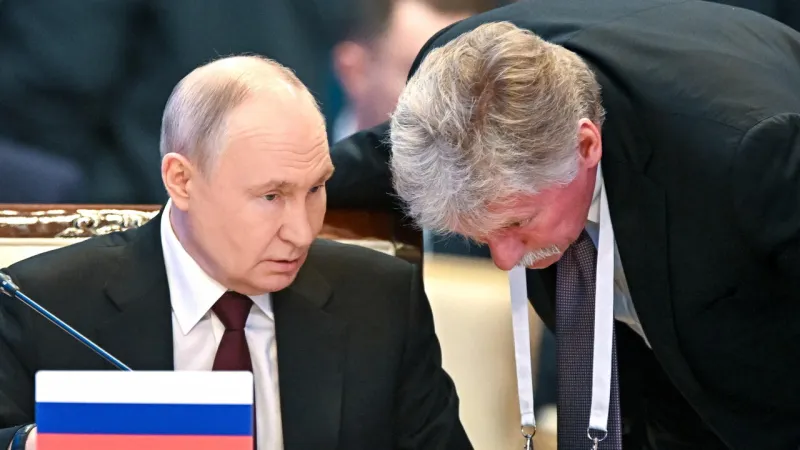
The Kremlin today escalated its rhetoric against Western nations, explicitly labeling participants of a crucial summit in Paris as "war instigators" even as it announced it would closely monitor the proceedings where Ukrainian President Volodymyr Zelensky is expected to rally further international support. This stark accusation, voiced by Kremlin spokesperson Dmitry Peskov, precedes a high-stakes meeting convened to bolster aid for Kyiv amidst its ongoing conflict.
Peskov conveyed Moscow's strong disapproval, stating, "We will closely monitor the meeting in Paris." He further elaborated on the Kremlin's view that nations actively providing military and financial assistance to Ukraine are effectively prolonging the conflict and intensifying hostilities, thus positioning them as instigators.
The Paris summit convenes a diverse group of European leaders and allies, all united in their commitment to sustaining Ukraine's defense capabilities against prolonged aggression. The agenda focuses on coordinating military provisions, financial assistance, and long-term strategic support for Kyiv.
Ukrainian President Volodymyr Zelensky's presence at the summit underscores the critical nature of the discussions. He aims to secure renewed pledges of aid, particularly advanced weaponry and ammunition, essential for counteracting ongoing offensives. The visit follows recent efforts by Zelensky to galvanize international backing, including a significant cabinet reshuffle in Kyiv earlier this year to streamline wartime governance.
This gathering occurs at a pivotal moment in the ongoing conflict, with both sides intensifying military operations and diplomatic efforts. Western nations continue to assert their unwavering solidarity with Ukraine, emphasizing the importance of collective action to uphold international law and sovereignty.
The Kremlin has consistently condemned Western military aid, portraying it as direct interference that escalates tensions and undermines prospects for a peaceful resolution. Moscow's official position maintains that such support from Kyiv's allies only serves to protract the hostilities.
Such sharp diplomatic language is not uncommon in the current geopolitical climate, yet the direct label of "war instigators" marks a particularly aggressive turn in rhetoric. It signals a hardening of Moscow's stance and potentially complicates any future diplomatic overtures.
Analysts suggest the Kremlin's statement serves multiple purposes: to deter further aid commitments, to galvanize domestic support by framing the conflict as a defense against external aggression, and to test the resolve of the united front supporting Ukraine. The international community largely views the aid as vital for Ukraine's self-defense.
The summit in Paris is expected to conclude with concrete commitments aimed at strengthening Ukraine's armed forces and its economic resilience. Leaders are anticipated to discuss innovative approaches to financing reconstruction and ensuring long-term security in the region.
For Ukraine, the stakes are profoundly high. Securing consistent and robust international backing is paramount to its ability to repel attacks and eventually reclaim occupied territories. The support coordinated at such summits directly impacts the situation on the ground.
The United States, under President Donald Trump, has consistently advocated for European allies to assume a greater share of the burden in supporting Ukraine, while maintaining its own substantial contributions. The outcomes of the Paris summit will likely factor into broader Western strategic planning for the year ahead.
The collective resolve displayed by nations at the Paris summit stands in stark contrast to the Kremlin's pronouncements, highlighting the deepening chasm between Moscow's narrative and the shared objectives of the international coalition.