 Edward DP Situmorang
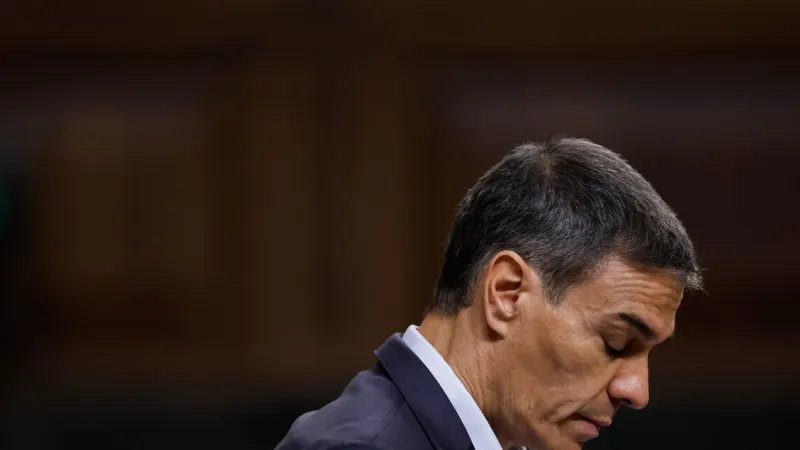
MADRID – Spanish Premier Pedro Sanchez has defiantly challenged his coalition allies to initiate a no-confidence vote alongside right-wing opposition parties, unequivocally stating, "I never knew of corrupt practices." This bold stance comes as his political partners escalate their criticisms, urging him to "do like Starmer," a reference understood to imply a significant political reckoning or strategic shift amid mounting pressure in 2026.
The unprecedented dare from the head of government underscores the deep fissures now fracturing Spains ruling coalition. For weeks, internal dissent has simmered, but the latest public admonition from allied factions marks a critical escalation in the political landscape.
The phrase "do like Starmer" refers to UK opposition leader Keir Starmer, often invoked in European political discourse to suggest a leader should adopt a particular course of action during a crisis, such as a clear break from past policies or even a resignation to facilitate renewal.
Sanchezs direct challenge places his allies in a precarious position, forcing them to either align with the conservative opposition, thereby exposing their own governmental instability, or retract their public critiques and continue within a fractious coalition.
His firm denial regarding corrupt practices directly addresses underlying allegations that have fueled some of the allied discontent. While the precise nature of these alleged practices remains a subject of political speculation, the premier sought to unequivocally distance himself and his administration from any wrongdoing.
The premier's resolute declaration, "I never knew of corrupt practices," aims to clear his name and reassert his moral authority amidst the political storm. This direct repudiation could serve as a rallying cry for his loyalists, solidifying support within his core base.
Political analysts suggest that Sanchezs move is a high-stakes gamble. By daring a no-confidence motion, he either expects his allies to back down, proving their continued dependence on his leadership, or he is preparing for a snap election, confident in his ability to secure a new mandate.
The current political climate in Spain is fraught with tension. Coalition governments often navigate complex internal dynamics, but this open defiance from a sitting premier towards his own parliamentary partners signals a potentially terminal phase for the current governmental arrangement.
Sources close to the allied parties indicate a mixture of frustration and strategic recalculation following Sanchezs challenge. They now face a difficult choice between maintaining a semblance of unity or actively contributing to the downfall of the government they are part of.
Historically, no-confidence votes in Spain are rare and typically initiated by the opposition. Sanchezs proactive invitation to such a vote, particularly directed at his own allies, is an unconventional maneuver designed to seize the narrative and regain control.
Public opinion remains divided, with many citizens growing weary of the constant political infighting. The stability of the Spanish economy and the nations standing on the European stage could be impacted by prolonged political uncertainty.
The right-wing opposition, which has consistently called for Sanchezs resignation, now finds itself in an unusual position. While a no-confidence vote aligns with their general objectives, joining forces with disgruntled coalition partners presents its own set of political complexities.
Observers note that the premiers staunch refusal to yield, his "non molla" attitude, reflects a characteristic tenacity that has defined much of his political career. He has often thrived in confrontational scenarios, using them to consolidate power rather than lose it.
This latest development could either galvanize his support base or further alienate key segments of the electorate who desire stable governance. The coming days will be crucial in determining the immediate future of Spanish politics.
The request to "do like Starmer" could be interpreted as a call for a strategic overhaul, given Starmer's reputation for navigating complex political challenges and reforming his own party. Allies may be seeking a similar decisive leadership pivot from Sanchez.
The implications of Sanchezs challenge extend beyond immediate parliamentary tactics, potentially reshaping alliances and political trajectories across Spain. The very foundation of the current coalition now hangs in the balance.
As 2026 progresses, all eyes remain on Madrid to see whether Premier Sanchez's high-stakes gamble will result in a renewed mandate, a fractured government, or an unforeseen political realignment.
Ultimately, the choice lies with Sanchez's allies: to back down, join the opposition in a no-confidence bid, or seek an alternative path that allows the government to function, however precariously, through this period of intense scrutiny and political pressure.