 Demian Sahputra
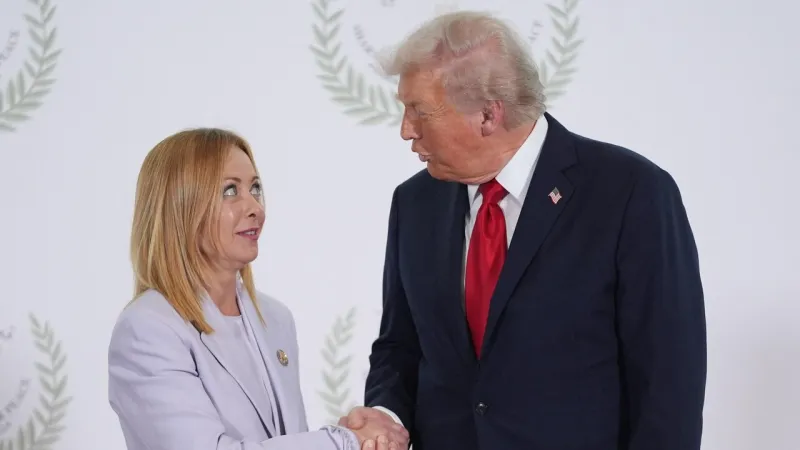
ROME – Italian Prime Minister Giorgia Meloni stated in a recent interview with The New York Times that she initially believed her working relationship with President Donald Trump would be “easier” given their ideological commonalities. However, she candidly acknowledged that the actual course of events diverged from these early anticipations.
Meloni, who leads Italy's right-wing Brothers of Italy party, shares several conservative principles with President Trump's political platform. These convergences often pertain to issues such as national sovereignty, immigration controls, and a critical stance towards multilateral bureaucracy.
Her expectation of a more seamless collaboration stemmed from this perceived alignment, suggesting that shared worldviews might translate into straightforward policy coordination and diplomatic efforts between Rome and Washington.
Despite the ideological kinship, the intricate machinery of international diplomacy and the distinct national interests of two sovereign nations ultimately presented complexities that nuanced these initial hopes. Governing on a global stage often demands pragmatic compromises that transcend partisan affiliations.
While both leaders champion policies emphasizing national-first approaches, the practical implementation of these principles in diverse international contexts can give rise to unforeseen points of divergence. This is particularly true concerning multilateral alliances and broader geopolitical strategies.
Meloni's leadership within the European Union adds another layer of intricacy. Italy's foreign policy must meticulously balance its national priorities with the collective solidarity of the EU, a dynamic President Trump has historically approached with a degree of skepticism. This tension can complicate bilateral efforts.
Discussions surrounding NATO contributions, strategic defense initiatives, and support for global security efforts, such as the situation in Ukraine, exemplify areas where a broad agreement on fundamental principles may not directly translate into identical operational strategies or financial commitments.
The robust and multifaceted economic relationship between the United States and Italy also requires careful navigation. Policy decisions concerning trade tariffs, investment agreements, or industrial subsidies can become contentious, even among allies, when national economic protectionism enters the discourse.
Meloni's candid reflections, as conveyed through The New York Times, offer a rare glimpse into the personal calculations of a world leader confronting the complex realities of global governance. Her openness underscores the substantial difference between shared political philosophy and the pragmatic, often challenging, demands of statecraft.
This acknowledgment by the Italian Prime Minister highlights the sophisticated dance of international relations, where personal rapport and ideological alignment, while valuable, are ultimately secondary to pressing national imperatives and overarching geopolitical realities.
The implications of Meloni's insights extend to the broader transatlantic relationship, signaling that even among ideologically aligned leaders, effective governance necessitates constant negotiation, strategic adaptation, and a deep understanding of each nation's unique pressures.
Her statement serves as a potent reminder that the mechanisms of global leadership frequently present unforeseen challenges and require nuanced approaches, regardless of any initial expectations for effortless partnership.