 Dorry Archiles
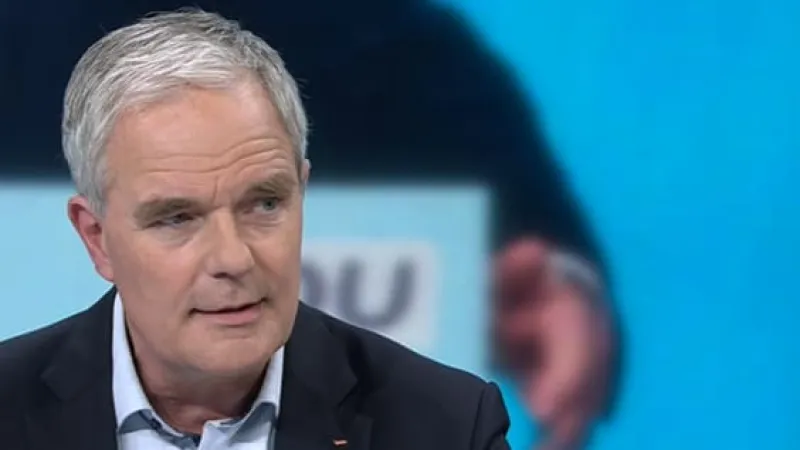
BERLIN - Burkard Dregger, a prominent Christian Democratic Union (CDU) politician, has staunchly defended Berlin's Governing Mayor Kai Wegner amidst a swirling controversy over the mayor's contentious remarks regarding a January power outage. Dregger asserted that some critics are clearly pursuing personal vendettas, thereby diverting attention from crucial issues facing the German capital.
The debate intensified following Wegner's statements earlier this year concerning the widespread electricity disruption that plunged parts of Berlin into darkness. Critics from various political factions seized upon his comments, interpreting them as either dismissive or inadequate in addressing the gravity of the incident.
Dregger articulated his dismay, stating, "It deeply disturbs me that the essential questions of Berlin's future are receding into the background." His remarks underscore a growing frustration within parts of the CDU regarding what they perceive as politically motivated attacks rather than substantive policy critique.
The January incident caused significant disruption, affecting thousands of households and businesses. While utilities worked swiftly to restore power, the event sparked a broader discussion about Berlin's aging infrastructure and its resilience against unforeseen failures, making any mayoral comment highly sensitive in a city grappling with such fundamental challenges.
Berlin's political landscape is often characterized by a dynamic and sometimes fractious environment, with coalitions frequently navigating complex internal and external challenges. Wegner, as Governing Mayor, operates at the epicenter of these often-polarized discussions, where public scrutiny is constant.
Dregger's strong accusation of "personal scores to settle" suggests a deeper layer to the criticism. It implies that opponents are not merely questioning policy, but rather leveraging any opportunity to undermine Wegner's authority or settle long-standing political grievances. This is a common tactic in competitive urban politics, especially when high stakes are involved.
Such accusations, while offering a defense, also highlight the challenges Wegner faces in uniting various political forces and maintaining focus on his administrative agenda. Public perception can be significantly swayed by the narrative of political infighting, potentially distracting from governance.
The essential questions Dregger refers to likely encompass critical areas such as infrastructure modernization, sustainable energy policies, affordable housing solutions, public transport improvements, and economic development strategies for the city. These are weighty concerns that demand undivided political attention and collaborative efforts.
While Dregger did not specify individuals, the history of Berlin politics features numerous instances of intense rivalries and factional disputes that can resurface during times of public scrutiny or policy debate. These underlying currents often shape how controversies are perceived and prosecuted by the public and media alike.
The media's coverage of such disputes plays a crucial role in shaping public opinion. The framing of Wegner's statements and Dregger's defense contributes to the broader narrative surrounding the mayor's leadership and the stability of the city government, influencing voter sentiment.
Dregger's intervention can be seen as a direct plea for a return to constructive dialogue, urging political actors to prioritize governance over partisan battles. This plea resonates in a city grappling with complex urban challenges that require collective effort and bipartisan cooperation for effective resolution.
When political disagreements devolve into accusations of personal animosity, public trust in the ability of elected officials to effectively govern can erode. Citizens expect their leaders to address pressing issues with solutions, not to engage in continuous political skirmishes that seem detached from daily realities.
The CDU's backing of Wegner, exemplified by Dregger's public support, signals a solidification of the party's stance behind its leading figure in Berlin. This demonstration of party unity aims to project strength and stability amidst external criticism, reinforcing Wegner's mandate.
The challenge for Berlin's political class lies in distinguishing legitimate critiques of policy and performance from what Dregger describes as personal score-settling. A healthy democracy relies on robust debate, but it must remain focused on the common good and tangible progress.
The power grid, as demonstrated by the January outage, represents a critical vulnerability for any major metropolis. Any perceived misstep in managing or communicating about such incidents can quickly become a significant political liability, highlighting the high stakes involved in public utilities.
To regain momentum and public confidence, Wegner's administration will likely need to redouble its efforts in transparent communication and demonstrate tangible progress on the "essential questions" Dregger mentioned. This approach would prove that the city's future remains its paramount concern.
While Dregger's remarks offer a pointed defense, the underlying tensions surrounding Wegner's leadership and the power outage comments are unlikely to dissipate quickly. The political scrutiny in Berlin remains intense, demanding a steady hand and clear vision from its leadership.
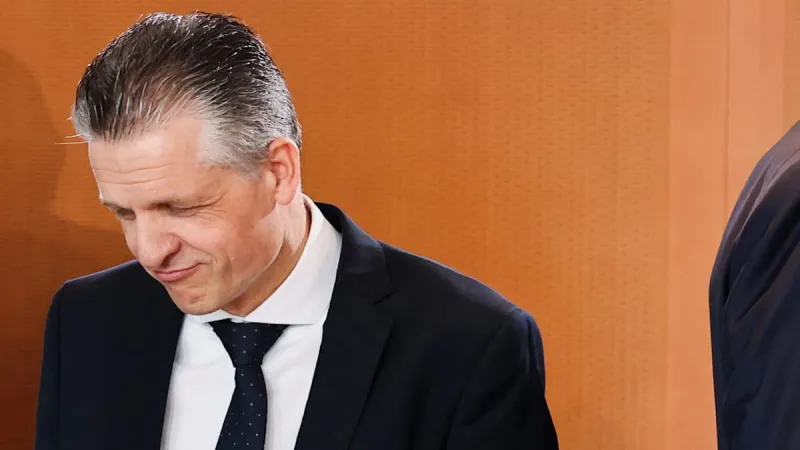
Caption: Burkard Dregger, a Christian Democratic Union (CDU) politician, speaks at a press conference, staunchly defending Berlin's Governing Mayor Kai Wegner against criticism and calling for focus on the city's future in 2026.