 Dorry Archiles
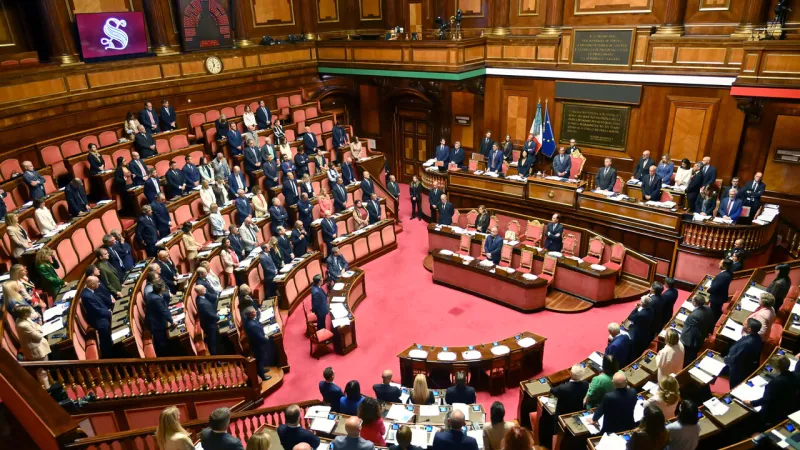
Rome Emma Bonino, a pivotal figure in Italian and European politics for over half a century, passed away, leaving a profound void in the nation's political landscape. Known for her tireless advocacy for civil rights and democratic reforms, Bonino's death has prompted a wave of condolences from across the political spectrum, led by Prime Minister Giorgia Meloni.
Her passing marks the end of an era defined by unwavering commitment to progressive ideals and a fearless challenge to established norms. Bonino, a leading voice of the Radical Party, was instrumental in shaping key social legislation and pushing Italy towards a more open and inclusive society.
Born in 1948, Bonino began her activist career in the early 1970s, quickly becoming a prominent face of the Radical Party. Her initial focus revolved around fiercely contested issues such as abortion rights and divorce, often putting her at odds with traditional institutions and the Catholic Church.
She faced arrest and legal challenges for her outspoken views and direct actions, including advocating for women's reproductive freedom before it was legally sanctioned. These early struggles forged her reputation as a resilient and uncompromising champion for individual liberties.
Bonino's influence extended far beyond Italy's borders. She served as a Member of the European Parliament, a European Commissioner for Humanitarian Aid, and later as Italy's Minister of Foreign Affairs, consistently leveraging these platforms to advance human rights, democracy, and international justice.
Prime Minister Giorgia Meloni expressed deep sorrow at the news, stating, "For decades a strong voice of politics, a staunch defender of freedoms, who fought for her ideals with courage and passion. Emma Bonino leaves an indelible mark on the history of our country." Meloni's statement underscored the respect Bonino commanded even from political adversaries.
Other prominent political figures echoed Meloni's sentiments. Former Prime Minister Enrico Letta praised her "extraordinary political battle for civil rights," while President of the Republic Sergio Mattarella hailed her as a "protagonist of Italian political life for over fifty years."
Bonino was known for her intellectual rigor, sharp wit, and uncompromising integrity. She approached every debate with a clarity of purpose that often disarmed opponents and inspired supporters, embodying a unique blend of radicalism and institutional savvy.
Her career was a testament to the power of persistent advocacy. She championed causes ranging from the global abolition of capital punishment and nuclear disarmament to the fight against hunger and female genital mutilation, demonstrating a truly global perspective on human dignity.
Domestically, Bonino played a crucial role in bringing discussions about drug policy reform, euthanasia, and fundamental civic freedoms into the mainstream, often initiating conversations that others were reluctant to address. Her impact on policy and public discourse is chronicled in numerous analyses, including Emma Bonino: Decades of Unyielding Activism Shaped Italy and Europe, which highlights her enduring legacy.
As a leading figure in the European Union, Bonino was a staunch proponent of deeper integration and a more robust European foreign policy focused on humanitarian intervention and human rights. She believed passionately in Europe's role as a force for good in the world.
Throughout her various roles, whether as a senator, minister, or international envoy, Bonino remained true to her radical roots. She consistently challenged complacency and pushed for uncomfortable truths to be confronted, ensuring that marginalized voices were heard.
Her resilience was particularly evident during her public battle with cancer, which she faced with characteristic candor and strength. Even during personal adversity, she continued to engage in political debate and maintain her public commitments.
The absence of Emma Bonino's distinctive voice will undoubtedly be felt keenly in both Italian and European political arenas. Her legacy will continue to inspire generations of activists and politicians dedicated to social justice and the defense of fundamental freedoms.