 Chandra Wijayanto
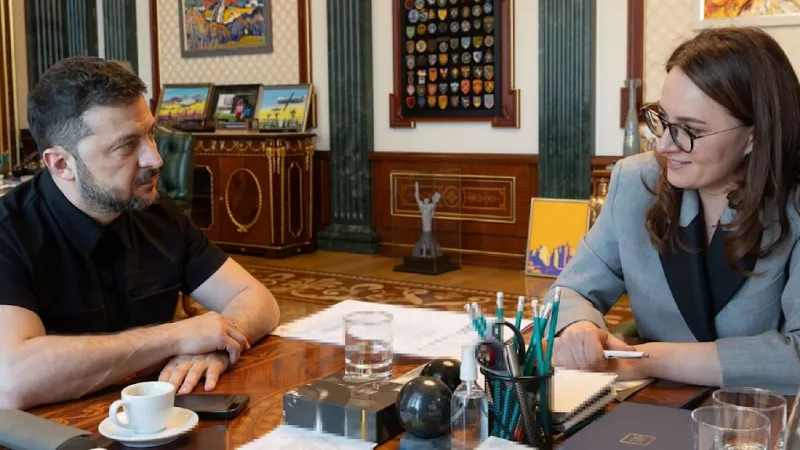
Kyiv – Ukrainian President Volodymyr Zelensky on Monday announced a significant government reshuffle, confirming the imminent departure of Prime Minister Yulia Svyrydenko from her post. The unexpected move, aimed at reassigning the briefly serving premier to a pivotal diplomatic role, marks a strategic realignment within the leadership of the war-torn nation as it navigates complex international partnerships.
Ms. Svyrydenko, who served as Prime Minister for a relatively short tenure, will transition to lead a new and vital sector focused on relations with a crucial international partner. While the specific partner remains undisclosed, analysts suggest it underscores the imperative of Ukraine to strengthen strategic alliances amidst ongoing geopolitical challenges.
The decision to undertake a major government reshuffle at this juncture highlights the resolve of President Zelensky to optimize the effectiveness of his administration. Such a significant change in leadership, particularly the replacement of the Prime Minister, often signals a shift in national priorities or an effort to bolster governmental performance.
The political landscape of Ukraine has seen numerous cabinet changes throughout its history, especially during periods of heightened national stress. These shifts are typically justified by the need for fresh perspectives or enhanced operational efficiency.
The ongoing conflict with Russia continues to demand exceptional agility and strategic foresight from the leadership in Kyiv. The reliance of the nation on substantial international support makes the effective management of diplomatic ties paramount. This government reshuffle could be interpreted as a proactive measure to ensure robust engagement with global allies.
Observers speculate the designated key partner could be the United States, given its critical role in providing military and financial aid, or a major European Union member state. Elevating a figure like Svyrydenko to such a portfolio indicates the strategic weight Zelensky places on these bilateral relationships.
President Zelensky has a history of decisive leadership changes, reflecting a dynamic approach to governance in critical times. These previous actions, such as when Zelensky Dismissed Prime Minister Amid Cabinet Reshuffle, illustrate the ongoing adaptation of the nation to wartime necessities and evolving political landscapes.
The upcoming government reshuffle could pave the way for a renewed focus on specific policy areas, or it might signal an effort to consolidate power within the presidential administration. The exact nature of the new leadership team will shed more light on the strategic direction of Ukraine.
Both domestic and international communities will be closely observing the subsequent appointments. Stability in the leadership of Kyiv is crucial for maintaining donor confidence and ensuring continued assistance vital for the defense and reconstruction efforts of Ukraine.
As Ukraine enters a critical phase of its national struggle, the calculated moves by President Zelensky to reconfigure his government underscore the urgent need for robust, adaptive leadership capable of navigating both internal challenges and complex global dynamics.
The creation of a designated portfolio for managing relations with a key partner suggests an intention to elevate specific diplomatic channels. Such a high-profile assignment for the outgoing Prime Minister could mean more direct oversight and strategic alignment on bilateral issues with a critical ally.
While the immediate focus of this government reshuffle appears to be external relations, the broader impact on domestic policy cannot be overlooked. A new prime minister typically brings fresh perspectives and potentially different approaches to internal governance, economic strategy, and social reforms, even under wartime conditions.
The mention of the relatively brief period of Ms. Svyrydenko as Prime Minister also raises questions about the internal dynamics that precipitated this rapid change. Fast turnovers in high office can sometimes indicate disagreements over policy, performance evaluations, or simply a strategic decision to repurpose talent.