 Angel Doris
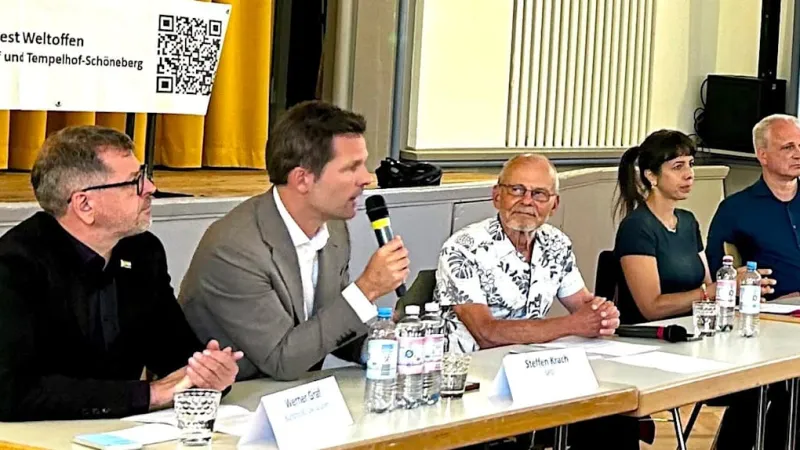
Berlin's southwest witnessed a striking moment in the run-up to the Berlin election, as a Christian Democratic Union direct candidate, while debating complex political issues, found himself apologizing to the audience for even broaching the subject of migration. The extraordinary concession occurred during a forum where leading candidates were primarily discussing a potential ban on the Alternative for Germany (AfD) party, yet the public's anxieties pivoted firmly toward more immediate concerns.
The debate, held amidst the intense scrutiny leading up to the state polls, brought together prominent figures from various parties. Among them, a spirited exchange unfolded between Social Democratic Party (SPD) politician Krach and a Left Party candidate, who sparred vigorously over the feasibility and implications of prohibiting the AfD, a topic often polarizing in German politics.
However, the political candidates soon realized their primary agenda did not fully align with the public's most pressing concerns. As the discussion progressed, the atmosphere in the hall indicated a palpable shift in audience focus, moving away from the abstract legalities of a party ban and towards the tangible realities affecting daily life in the German capital.
It was during this evolution of the debate that the CDU candidate, whose name was not immediately released but represented a direct constituency, articulated his views on migration. His remarks, though part of a broader platform, evidently met with a defensive posture, either from internal party pressure or the perceived sensitivities of the issue within the current political climate.
The culmination of this tension came when the candidate offered an apology to the gathered attendees for addressing migration. This moment underscored a deep political quandary: the perceived necessity for leaders to discuss an issue of public concern versus the apprehension of how such discussions might be received or exploited.
The public's intense focus on migration is not an isolated phenomenon. Across Germany, the topic continues to dominate headlines and policy discussions. Recent reports indicate that authorities are grappling with the complexities of integration and resource allocation, prompting calls for significant policy adjustments. This sentiment echoes proposals such as those highlighted in the article, "German Police Urge Merz for Sweeping Asylum Law Reforms," indicating a national urgency.
This incident in Berlin illuminates the persistent tension between the political class's preferred narratives and the electorate's lived experiences. While top-down discussions about banning a political party might seem like a fundamental debate, the grassroots reality often revolves around practical challenges, with migration being a foremost issue for many citizens.
The CDU, a party that has historically sought to balance conservative principles with pragmatic governance, finds itself at a critical juncture. The national leadership, under figures like Friedrich Merz, has often navigated complex internal dynamics, as explored in "Merz Seeks Unity Amid Persistent CDU Fractures After Frei Election." Local candidates are acutely aware of how national discourse on issues like migration can impact their local campaigns.
The reluctance, or even apology, regarding the migration debate reflects a broader trepidation among some politicians to confront what they perceive as politically fraught subjects head-on. This cautious approach risks alienating voters who expect their representatives to directly address the issues they care most about, regardless of their contentious nature.
As the Berlin election draws nearer, this episode serves as a stark reminder of the shifting priorities among the electorate. Political strategists will undoubtedly dissect the implications of this event, recognizing that the public's agenda, particularly on sensitive topics like migration, often transcends the predetermined talking points of electoral campaigns.
Ultimately, the forum in southwest Berlin demonstrated that while candidates may arrive with specific agendas, the true pulse of the constituency often dictates the direction of the discourse. The public's demand for genuine engagement on issues like migration remains a powerful force that politicians must acknowledge and address, rather than avoid.