 Edward DP Situmorang
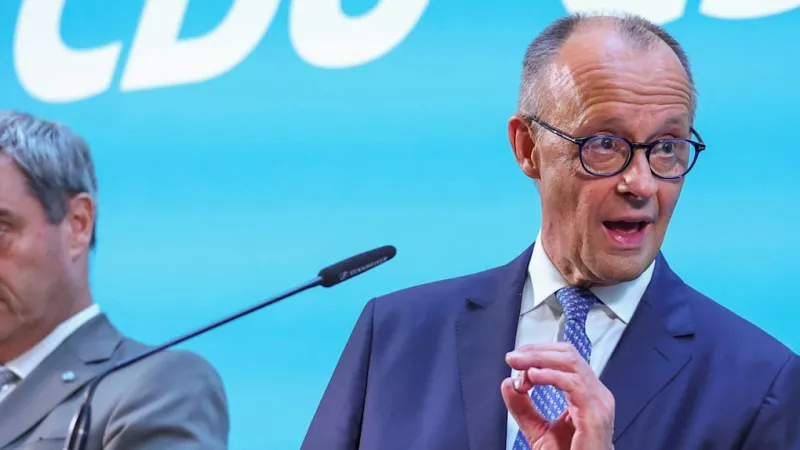
BERLIN – German Chancellor Merz has publicly articulated a vision of renewed vigor for the nation's conservative political landscape, attributing this momentum to the recent election of Thorsten Frei as the new parliamentary group leader for the CDU/CSU Union. His pronouncements, however, arrive as deep-seated internal divisions continue to simmer within the Christian Democratic Union itself, prompting the Chancellor to emphasize the urgent need to address what he termed "healing wounds" within the party. The influential role of the Bavarian Christian Social Union (CSU) and its leader Markus Söder in this complex internal dynamic remains a significant factor, as outlined by Söder himself.
Chancellor Merz, who holds the nation's highest office, expressed his conviction that Frei's ascent to leadership ushers in a period of "new tailwind" for the broad conservative-social democratic alignment often referred to as Schwarz-Rot. This optimistic outlook contrasts sharply with palpable discontent brewing within his own CDU ranks, where calls for internal cohesion are increasingly vocal.
The election of Thorsten Frei, a seasoned politician with a reputation for strategic acumen, was intended by many as a step towards consolidating power and projecting a unified front. Merz's endorsement of Frei underscores the Chancellor's hope that this leadership change will quell dissent and fortify the Union's parliamentary strength.
Despite Merz's rhetoric of forward momentum, sources within the CDU indicate that the party remains fraught with internal strife. The underlying tensions encompass ideological disagreements, questions regarding future policy directions, and lingering doubts about the party's overall trajectory under Merz's chancellorship.
These internal pressures are not new. Reports have previously highlighted significant challenges to Merz's authority, with some factions questioning his leadership. Merz Faces Party Revolt: CDU Leadership Challenged Amid Chancellorship Doubts explored the extent of this discontent, suggesting the Chancellor's position has been under scrutiny even prior to Frei's election.
The CSU, the CDU's sister party in Bavaria, plays a pivotal role in the Union's collective strength. CSU leader Markus Söder's articulate assessment of the situation carries considerable weight, often reflecting broader conservative sentiment and occasionally acting as a bellwether for the Union's internal health. His current stance is viewed as crucial in either reinforcing or undermining Merz's attempts at reconciliation.
The Chancellor's choice of phrase, "healing wounds," directly acknowledges the deep scars left by past disputes and potential power struggles. It is a tacit admission that the party's recent history has been marked by significant internal friction requiring deliberate reconciliation efforts.
While Frei's election was intended to invigorate the Union's parliamentary work, some analysts suggest that the enduring unpopularity surrounding Chancellor Merz could complicate Frei's efforts. Merz's Unpopularity Clouds Thorsten Frei's CDU Leadership Role delved into how the Chancellor's approval ratings could impact the new parliamentary leader's ability to unite the party effectively.
The ongoing party struggles pose a significant challenge to Chancellor Merz's leadership, potentially distracting from the government's broader legislative agenda and its ability to address pressing national and international issues. The stability of Merz's administration relies heavily on a cohesive and supportive parliamentary group.
Even Merz's biographer has had to weigh in on the persistent calls for his ouster. Merz Biographer Dismisses Calls for Chancellor's Ouster Amid Party Strife highlighted the external and internal pressures on the Chancellor, underscoring the severity of the rifts Merz is now trying to mend.
The outcome of these internal CDU dynamics will undoubtedly influence Germany's political trajectory in the coming years. A strong, united CDU/CSU Union is vital for maintaining governmental stability and effectively navigating the complex domestic and global challenges facing the nation.
As Chancellor Merz endeavors to foster a spirit of unity and overcome entrenched differences, the political landscape within Germany's leading conservative party remains a delicate balance of newfound leadership and persistent internal dissent, demanding vigilant observation from both political analysts and the German populace.