 Robert Andrison
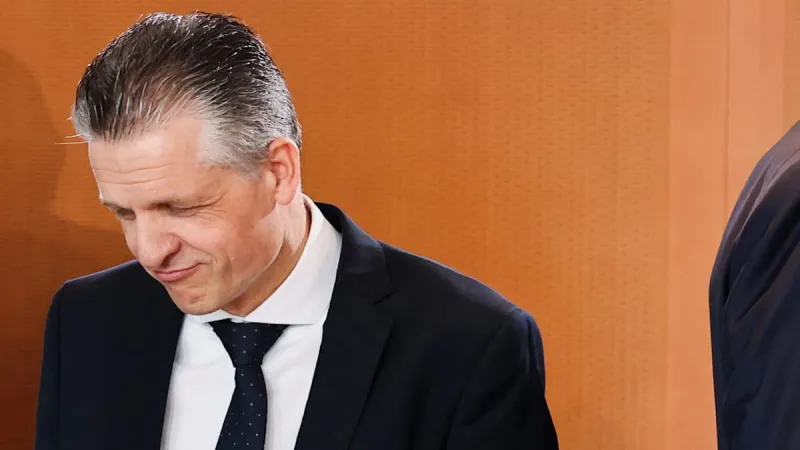
BERLIN – The Christian Democratic Union (CDU) faces escalating internal discord following the dismissal of former Transport Minister Patrick Schnieder and the subsequent election of Thorsten Frei as the parliamentary group leader. This tumultuous period has ignited speculation that the party is enduring a severe test, with columnist Hans-Ulrich Joerges declaring that the "endgame of Friedrich Merz has begun," raising questions about how Merz's widespread unpopularity could undermine Frei's new mandate.
The sudden shake-up within the CDU ranks comes at a critical juncture for Germany's opposition, particularly as national elections loom. Schnieder's unexpected departure, details of which remain scant, has created a vacuum filled by Frei, a move seen by some as a strategic realignment but by others as a symptom of deeper instability within the party.
Joerges's blunt assessment underscores a growing sentiment within political circles that Friedrich Merz's tenure as CDU leader is increasingly precarious. His leadership, often characterized by a polarizing style, has frequently drawn criticism and sparked internal dissent, as noted in previous analyses like the one detailing how Merz Faces Party Revolt: CDU Leadership Challenged Amid Chancellorship Doubts.
Thorsten Frei, now tasked with leading the CDU/CSU parliamentary group, steps into this role amidst considerable internal party tension. His ability to consolidate power and effectively champion the party's agenda will inevitably be scrutinized through the lens of Merz's public perception and intra-party standing. The question of whether Frei will be unfairly disadvantaged by Merz's perceived unpopularity is central to the ongoing narrative.
Merz's path to leadership has been fraught with challenges, marked by repeated attempts to secure the party chairmanship and a consistent struggle to resonate with a broader electorate. His leadership style has been a recurring point of contention, leading to internal upheavals that have often mirrored past difficulties within the party, with observers pointing to parallels with previous periods of internal strife, as highlighted in reports such as Merz's Leadership Style Triggers Party Revolt, Echoing Past Merkel Failures.
The current situation threatens to exacerbate existing divisions within the CDU. A parliamentary group leader typically serves as a bridge between the party executive and the Bundestag faction, requiring strong internal support. If Frei is perceived as a proxy for a struggling Merz, his authority and effectiveness could be compromised, further fracturing party unity.
Public opinion polls have consistently indicated a fluctuating and often challenging landscape for the CDU under Merz. While the party remains a significant force, its inability to consistently outperform its rivals, coupled with the rising influence of parties like the AfD, creates an environment where leadership stability is paramount. The broader political trends in Germany, where the AfD has notably Extended Lead Over Union As German Left Surges Past SPD, add another layer of complexity to the CDU's internal struggles.
Frei's immediate challenge will be to establish his own independent standing while navigating the complex allegiances within the party. Success for Frei will involve proving his capabilities beyond the shadow of Merz, fostering a sense of cohesion within the parliamentary group, and projecting a unified image to the public.
For Friedrich Merz, the stakes are arguably higher than ever. The perception of an "endgame" suggests a dwindling window to consolidate his authority or face significant pressure to step aside. His political future, and by extension the CDU's trajectory, hinges on his ability to either reassert control or strategically cede influence without precipitating a full-blown party crisis.
The internal machinations of the CDU are not isolated events; they reverberate across the German political landscape. A strong, stable opposition is crucial for democratic discourse. Continued instability within the CDU could embolden other parties, reshaping alliances and electoral strategies as the country looks toward future federal elections.
Despite the apparent turmoil, some analysts suggest that this period of introspection could also pave the way for a much-needed renewal within the CDU. If handled deftly, the challenges to Merz's leadership and Frei's ascent could lead to a re-evaluation of party strategy and a more unified vision for the future, moving beyond the current internal friction.