 Dorry Archiles
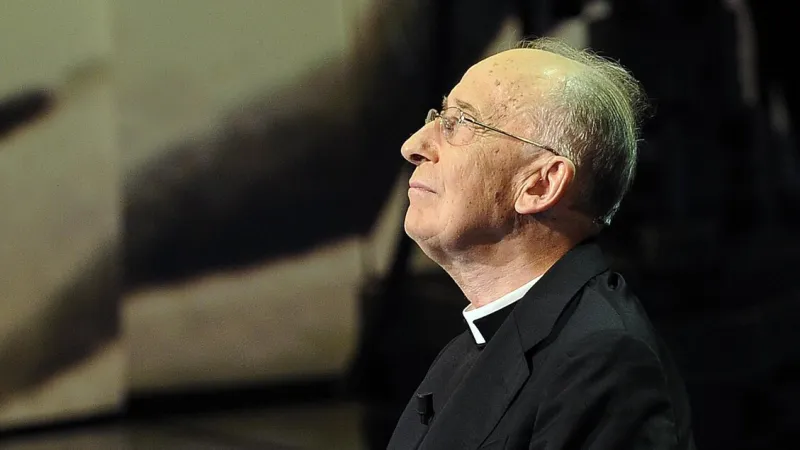
ITALY – Cardinal Camillo Ruini, the influential cleric widely regarded as the gray eminence of Italian Church and political life for his unwavering stance on Catholic doctrine and significant national presence, has died at the age of 95. His passing marks the end of an era dominated by a formidable intellectual and pastoral leader who shaped the direction of Catholicism in Italy for decades.
Appointed president of the Italian Episcopal Conference, or CEI, on June 28, 1991, by Pope John Paul II, Cardinal Ruini quickly established himself as a powerful voice. He was known for his firm adherence to what the Vatican termed non-negotiable values, principles central to Catholic social teaching concerning human life, the family, and educational freedom.
Born in Sassuolo, Italy, in 1931, Ruini embarked on an academic and ecclesiastical career that saw him rise through various significant roles. He was ordained a priest in 1954 and pursued advanced studies, earning doctorates in philosophy and theology. His intellectual rigor became a hallmark of his ministry, preparing him for the weighty responsibilities he would later undertake.
His tenure at the helm of the CEI, which lasted until 2007, was characterized by a concerted effort to assert the Churchs moral authority in a rapidly secularizing society. Under his leadership, the CEI became a formidable force in public discourse, engaging with legislative debates on issues ranging from bioethics to civil unions.
Cardinal Ruini enjoyed a close and trusted relationship with Pope John Paul II. He was seen as a faithful executor of the pontiffs vision for a robust, evangelizing Church, particularly in Western Europe. This alignment allowed him significant latitude in articulating and defending Catholic positions within the Italian context.
His influence continued during the papacy of Benedict XVI, who respected Ruinis theological acumen and commitment to doctrinal orthodoxy. Even after stepping down from the CEI presidency, he remained an active and respected voice within the College of Cardinals, often consulted on matters of faith and ethics.
While revered by conservatives and traditional Catholics, Cardinal Ruinis strong positions occasionally drew criticism from more liberal segments of the Church and from secular political forces. His unyielding stance on certain social issues often placed him at odds with contemporary trends, sparking lively public debates across Italy.
Beyond his ecclesiastical duties, Cardinal Ruini profoundly impacted Italian politics. He consistently engaged with national leaders, advocating for the protection of Catholic values in legislative processes. His interventions often guided public opinion and influenced policy outcomes, reflecting the deep intertwining of Church and state in Italy. The broader implications of such engagement for national identity and policy continue to be discussed by various Italian broad coalition leaders.
His legacy includes a generation of bishops and priests who benefited from his intellectual guidance and pastoral leadership. He instilled a sense of mission and clarity regarding the Churchs role in upholding moral truths, emphasizing evangelization and formation within the Church itself.
Cardinal Ruini also served as the Vicar General for the Diocese of Rome from 1991 to 2008, a role that positioned him as the Popes principal assistant in governing the Eternal Citys diocese. This position further solidified his standing as a central figure in the universal Church.
His commitment extended to promoting lay involvement in the Church, albeit within a framework that emphasized fidelity to Church teaching. He believed in empowering the laity to transform society from within, guided by Catholic principles.
Ultimately, the passing of Cardinal Ruini serves as a reminder of a period when the Catholic Church, particularly in Italy, exerted considerable public and moral authority. His life exemplified a dedication to faith and the courageous articulation of deeply held beliefs in an evolving world. He leaves behind a legacy of steadfast conviction that will continue to resonate within the Church and beyond.