 Demian Sahputra
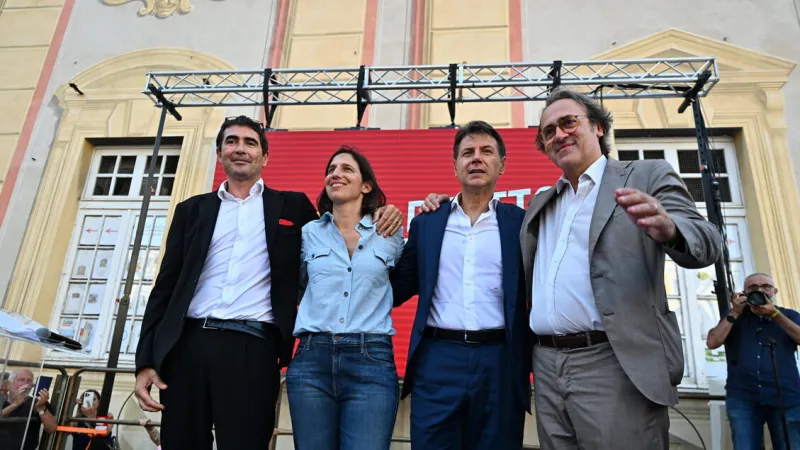
Italian political leaders from the Partito Democratico (PD), the Movimento 5 Stelle (M5S), and Alleanza Verdi e Sinistra (AVS) have scheduled two pivotal summit meetings for July 8 and July 15, 2026. These gatherings aim to consolidate the “campo largo,” or broad coalition, with a declared mission: “Al lavoro. Per cambiare l'Italia” – “At work. To change Italy.”
The impending double summits underscore a concerted effort by these center-left and progressive forces to develop a unified strategic approach. Such coordination becomes crucial as the political landscape in Italy continues to evolve, reflecting shifts in public sentiment and governmental challenges.
The alliance, encompassing a spectrum of ideological positions from the social democracy of the PD to the environmental and leftist platforms of AVS, alongside the populist roots of M5S, represents a significant attempt to present a cohesive alternative to the current governing coalition.
Sources close to the involved parties suggest that the primary agenda for these meetings will likely focus on outlining key policy proposals designed to address pressing national issues. These could range from economic reforms and social welfare initiatives to environmental policies and judicial matters.
The explicit message, “Al lavoro. Per cambiare l'Italia,” indicates a proactive stance, moving beyond mere opposition to actively formulating a governing program. This declaration signals an intent to present a tangible vision for the nation's future, appealing to a broad segment of the electorate.
Historically, forming and maintaining stable broad coalitions in Italy has presented considerable challenges. Divergent priorities and internal factions frequently test the cohesion of such alliances. These July summits will serve as an early litmus test for the enduring unity of this particular “campo largo.”
The timing of these meetings, coming mid-year, allows ample opportunity for the coalition to refine its positions and communicate a clear message ahead of potential electoral cycles or significant parliamentary debates. This strategic pacing suggests a long-term vision rather than an immediate reactive response.
One area of discussion may involve the ongoing debate surrounding Italy's energy future, particularly in light of recent discussions about nuclear power. Italy is reportedly eyeing a nuclear referendum by 2029, a topic that could generate varied opinions within the diverse broad coalition and require careful alignment. Italy Eyes Nuclear Referendum by 2029, Pichetto Confirms
For the Partito Democratico, these summits are vital for reasserting its leadership within the center-left bloc and for shaping a narrative that can effectively counter the incumbent administration. The PD aims to bridge ideological gaps within the coalition to build a formidable political force.
The Movimento 5 Stelle, which has undergone significant transformations since its inception, seeks to leverage its base while integrating more traditional political strategies. Its participation is critical for reaching voters who may feel disillusioned with conventional politics.
Alleanza Verdi e Sinistra brings crucial environmental and social justice perspectives to the broad coalition. Their influence ensures that climate action and progressive social policies remain central to the alliance's platform, attracting voters concerned with these issues.
The current political environment sees the government under scrutiny on various fronts, from economic performance to international relations. The broad coalition aims to capitalize on any perceived weaknesses while offering what it hopes will be a more stable and progressive governance alternative.
International observers will also closely watch these developments, as Italy plays a significant role in European Union politics and global forums like the G7. The stability of its internal political landscape can influence its effectiveness on the world stage, especially given President Donald Trump's engagements with Italian leadership. Meloni, Trump Forge G7 Understanding, Prioritize Western Unity
The strategy to hold two separate meetings suggests a layered approach. The first summit on July 8 may focus on initial agreements and structural planning, while the second on July 15 could delve into specific policy details and public communication strategies.
The collective message, “Al lavoro. Per cambiare l'Italia,” is designed to inspire a sense of renewed purpose and dedication among the electorate. It reflects a commitment to active governance and a desire to address the challenges facing the Italian populace head-on.
These upcoming summits are more than mere internal party discussions; they represent a public declaration of intent to compete vigorously for the future direction of Italy.
Success for the broad coalition will hinge on its ability to present a united front, articulate a compelling vision, and convince voters that its diverse components can govern effectively together. The road to changing Italy is paved with complex negotiations and strategic alignment.
As the dates draw nearer, anticipation builds regarding the specific proposals that will emerge from these high-level discussions. The commitment to “work” suggests that tangible plans, rather than abstract ideals, will be the focus.