Gabriella
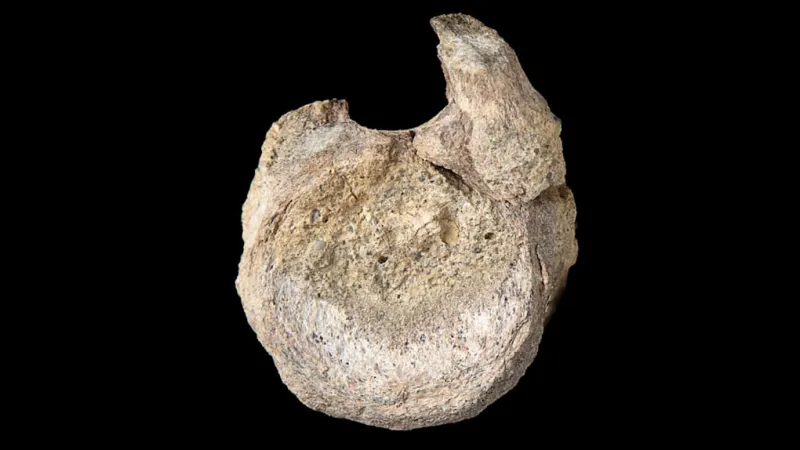
For four decades, an unassuming fossil lay overlooked in a research collection, a silent testament to time. Now, scientists have revealed that this long-forgotten bone, discovered on the frigid continent of Antarctica 40 years ago, is an extraordinary dinosaur relic, poised to redefine our understanding of prehistoric life in polar regions. Its recent, meticulous examination has unearthed a groundbreaking paleontological discovery.
The bone, initially deemed insignificant, spent decades stored in a drawer, its true identity hidden until modern analytical techniques and renewed scientific interest brought it to light. This discovery challenges previous assumptions about the biodiversity and geographic spread of dinosaurs, particularly in extreme environments.
While dinosaur fossils have been found in Antarctica before, each new specimen provides crucial data. The continent was not always the icy expanse it is today; during the Mesozoic Era, it boasted a much milder climate, supporting diverse flora and fauna. This fossil adds another piece to that complex puzzle.
The initial finding occurred during a scientific expedition to the Antarctic Peninsula, a region known for its geological significance. Researchers collected numerous samples, and this particular bone was cataloged but not thoroughly investigated due to various constraints, including the sheer volume of specimens and technological limitations of the era.
The recent re-examination involved advanced imaging techniques, microscopic analysis, and comparative anatomy. Paleontologists utilized sophisticated 3D scanning and comparative databases of known dinosaur species to ascertain the bone's origin and characteristics, a process impossible with the technology available four decades ago.
Preliminary analyses suggest the bone belongs to an indeterminate dinosaur species, possibly a type of ornithopod or even a previously unknown lineage adapted to polar conditions. Its robust structure indicates an animal capable of thriving in a challenging environment that, while warmer than today, would still have experienced seasonal extremes.
"This finding underscores the importance of revisiting historical collections with fresh eyes and new technology," stated Dr. Alistair Finch, a lead paleontologist on the research team, in an exclusive interview. "What was once an overlooked fragment now offers profound insights into Antarctica's ancient ecosystems."
The presence of such a creature further supports the theory of Gondwanan land bridges, allowing dinosaurs to migrate between continents that are now separated by vast oceans. This geological connectivity played a pivotal role in the global distribution of species during the age of dinosaurs.
Paleontological work in Antarctica is notoriously difficult, hampered by extreme weather, logistical complexities, and the sheer remoteness of dig sites. Each successful recovery represents a monumental effort, and discoveries like this are often decades in the making.
Researchers plan further studies to pinpoint the exact species and age of the dinosaur, potentially involving molecular analysis if viable organic material can be extracted. The find serves as a powerful reminder of the hidden treasures still waiting to be uncovered, even in established collections.
The journey of this Antarctican dinosaur bone from a frozen landscape, to a dusty drawer, and finally to scientific prominence, highlights the serendipitous nature of discovery and the long timelines often involved in unraveling Earth's ancient past.
While this discovery focuses on ancient life, the study of genetic information, for example, is also rapidly advancing, with scientists deciphering the Genetic Blueprint of Aging Deciphered, Revolutionizing Longevity Prediction, demonstrating how foundational scientific work can lead to paradigm shifts across disciplines.