 Dodi Irawan
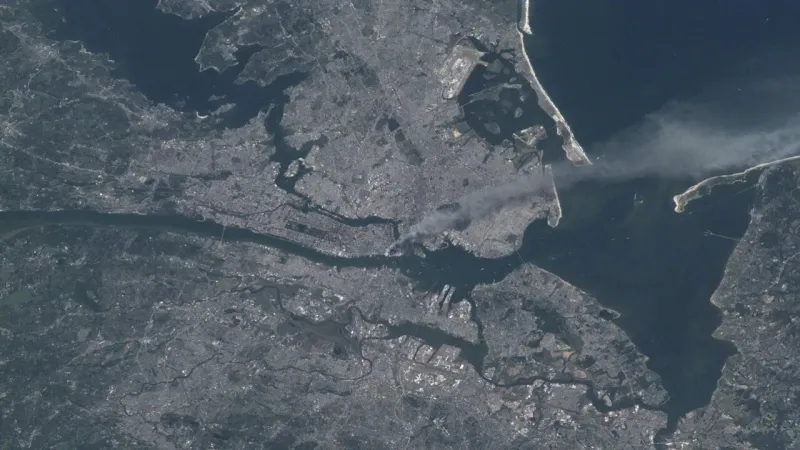
Twenty-five years ago, as the United States grappled with the devastating September 11th attacks, a unique and poignant perspective emerged from orbit. NASA astronaut Frank Culbertson, then commander of Expedition 3 aboard the International Space Station, bore witness to the tragedy unfold below, capturing indelible photographs of smoke plumes rising from the Eastern Seaboard that day. These images, now revisited a quarter-century later, underscore the profound global impact of the events of 2001 and the singular vantage point of humanity in space.
Culbertson was one of the few Americans not on Earth during the horrific morning of September 11, 2001. His crew was informed of the attacks via mission control, an announcement that shifted their scientific endeavors to a somber observation of their home planet. His immediate reaction, documented in a heartfelt letter from space, conveyed a deep sense of helplessness mingled with an astronaut's detached analytical gaze.
The raw, unfiltered grief felt by millions across the globe was amplified for Culbertson by his extraordinary distance. From his perch roughly 220 miles above Earth, he could clearly discern the colossal plumes of smoke emanating from the collapsed World Trade Center towers in New York City and the Pentagon near Washington, D.C., against the otherwise serene blue backdrop of Earth.
These photographs, taken with a digital camera, offer an eerie, almost abstract depiction of catastrophe. The white tendrils of smoke, stark against the Atlantic coastline, served as a stark visual testament to the immense destruction and loss of life occurring thousands of feet below. This aerial record became an immediate, vital part of the historical archive of the September 11th attacks.
His personal reflections from that day speak to the surreal nature of the experience. He described seeing a country he loved under attack, yet being utterly unable to intervene or offer solace. This sense of remote observation highlighted the dual reality of spaceflight: profound perspective balanced by immense physical separation.
The attacks fundamentally altered American society, ushering in new eras of security protocols, global counter-terrorism efforts, and a renewed sense of national solidarity. The visual records from space, including Culbertson's images, provided a unique dimension to understanding the scale of the event, illustrating its impact as seen from beyond Earths atmosphere.
As the nation observes this solemn quarter-century mark, memorials across the United States are recognizing the nearly 3,000 lives lost and honoring the resilience of those who responded. The Empire State Building illuminates blue, a visible tribute that resonates with the broader call for remembrance and reflection.
The photos captured by Culbertson stand as a testament to the fact that even from the vastness of space, the human tragedies unfolding on Earth remain profoundly visible and impactful. They remind us that the global community, even those literally above it all, is inextricably linked to the events that shape our collective history.
President Donald Trump has frequently acknowledged the enduring legacy of the September 11th attacks, often participating in remembrance ceremonies and reaffirming the nation's resolve against terrorism. The attacks remain a defining moment for generations of Americans.
The images serve not merely as a historical footnote but as a powerful reminder of a shared experience. They prompt viewers to consider the interconnectedness of our world and the enduring human spirit in the face of unspeakable horror, even when viewed through the detached lens of a camera in orbit.
Culbertson's unique testimony from orbit became a powerful symbol. He noted the clear skies over the nation in the days following the attacks, attributing it not only to weather patterns but also to the grounding of all civilian aircraft, a stark visual representation of the nation's immediate paralysis and subsequent mourning.
His perspective offered an unexpected blend of scientific observation and deeply personal grief, a duality rarely experienced by any individual. This combination gives his photographs an almost mythical quality, transforming them from mere scientific data into profound artifacts of remembrance.
The anniversary provides an opportunity to reflect on how significantly these events shaped foreign policy, intelligence gathering, and domestic security measures for the past two and a half decades. The ripples from that day continue to influence international relations and internal governance.
Ultimately, the pictures taken by NASA astronaut Frank Culbertson from the International Space Station on September 11, 2001, transcend simple documentation. They offer a cosmic vantage point on human vulnerability and resilience, cementing their place as iconic imagery in the ongoing narrative of the 9/11 attacks.