 Angela Stefani
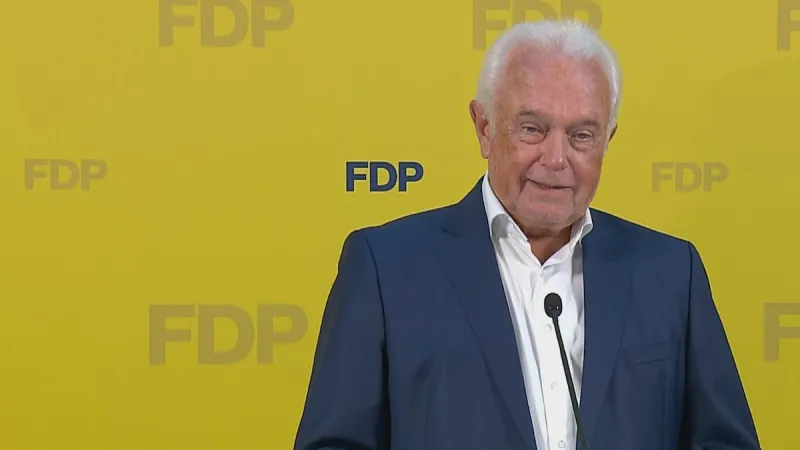
Berlin FDP Chairman Wolfgang Kubicki publicly denounced his party's significant electoral defeat in the recent Saxony-Anhalt state election as a "bitter day," simultaneously directing sharp criticism at the Union parties over their current strategic direction within the federal government in 2026.
Kubicki's remarks came in the immediate aftermath of the vote count, reflecting the profound disappointment felt within the Free Democratic Party ranks. He articulated a sentiment of deep regret for the outcome, acknowledging the comprehensive nature of the setback for his political faction.
"It is a bitter day for the entire party and also a bitter day for me," Kubicki stated, his words underscoring the personal and collective impact of the election results. This direct quote highlights the gravity with which the FDP leadership views their performance.
Beyond expressing internal party dismay, Kubicki shifted focus to external factors, specifically targeting the governing approach of the Union. His critique pointed to perceived flaws and strategic missteps that he believes are undermining public trust and effectiveness at the national level.
The FDP leader explicitly questioned the Union's trajectory within the current federal government coalition. This interrogation suggests a growing internal discord among Germany's mainstream parties, particularly concerning the shared vision for the nation's future.
The Saxony-Anhalt election itself proved to be a pivotal moment, with preliminary results indicating a complex political landscape. Analysts had closely watched the race, especially after Pollsters Fumble Saxony-Anhalt Election: CDU Crushes AfD Expectations, making the outcomes even more scrutinized.
For the FDP, the election represented a struggle to maintain relevance in a regional parliament often characterized by strong performances from established parties and, more recently, populist movements. Their inability to secure a stronger mandate raises questions about their broader appeal.
Kubicki's strong stance against the Union indicates a potential fracture or at least significant tension within the federal coalition. Such public criticism from a senior partner is rare and signals underlying disagreements that may surface more prominently in the coming months.
The Union, comprising the CDU and CSU, faces increasing pressure to justify its policies and demonstrate effective governance. Kubicki's challenge comes at a time when the federal government grapples with various domestic and international issues, ranging from economic stability to social cohesion.
Political observers suggest that Kubicki's outspokenness might be an attempt to differentiate the FDP within the coalition, aiming to reclaim a distinct liberal voice that may have been diluted by the exigencies of governing alongside larger partners. This strategy could be crucial for the FDP's long-term viability.
The immediate aftermath of the Saxony-Anhalt election will undoubtedly involve intense internal party discussions for the FDP. Leaders will likely scrutinize campaign strategies, policy platforms, and public messaging to identify areas for improvement before future electoral contests.
Furthermore, the criticisms leveled against the Union could precipitate broader debates within the federal government itself. The need for a unified front, particularly on pressing legislative agendas, becomes paramount, yet these public disagreements complicate consensus-building.
The political reverberations from Saxony-Anhalt extend beyond state lines, influencing national discourse. Election results in individual states frequently serve as barometers for the mood of the electorate regarding federal policies and the performance of national parties.
With the next federal election cycle on the horizon, the performance of all parties in regional polls carries amplified weight. Each victory or defeat is analyzed for its implications for the broader political landscape and the potential formation of future governing alliances.
Kubicki's remarks underscore the dynamic and often contentious nature of coalition politics in Germany. While cooperation is essential for stable governance, distinct party identities and policy priorities inevitably lead to friction, especially following electoral setbacks.
The coming weeks will likely see responses from Union officials to Kubicki's critique, potentially escalating the intra-coalition debate. How these tensions are managed will be crucial for the stability and perceived effectiveness of the federal government in 2026.
This latest development adds another layer of complexity to Germany's political environment, highlighting the ongoing challenges faced by parties attempting to navigate a fragmented electorate and maintain coherent governmental policy.
The FDP's path forward will depend significantly on its ability to articulate a clear vision and re-establish voter confidence, while simultaneously engaging constructively, or critically, with its federal partners.