 Robert Andrison
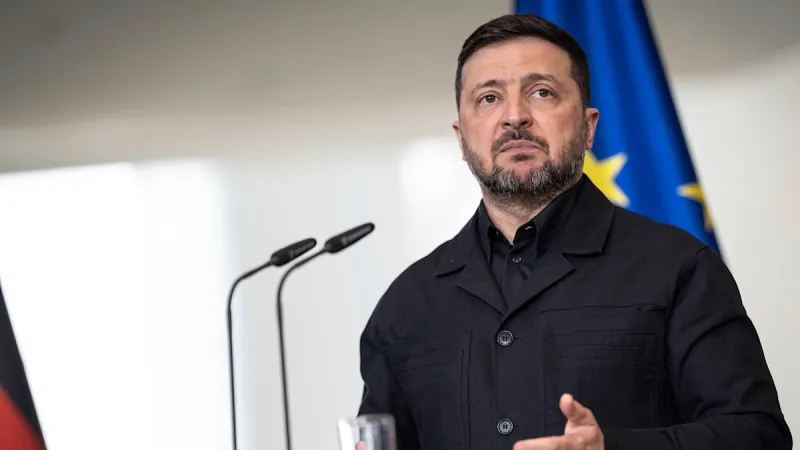
Ukrainian President Volodymyr Zelenskyy today extended a provocative invitation for direct, high-stakes negotiations with Russian President Vladimir Putin on United States soil. The dramatic proposal, made during the ongoing Group of Seven (G7) summit in Evian, France, aims to fundamentally unblock stalled Ukraine peace efforts in the protracted conflict.
The G7 gathering, hosted in the picturesque French resort town, has prominently featured the lingering conflict in Ukraine on its agenda. Discussions among world leaders have largely centered on bolstering support for Kyiv while exploring diplomatic avenues to de-escalate hostilities that have ravaged Eastern Europe for years.
Zelenskyy's call for a direct meeting in the United States represents a significant strategic shift, suggesting a desire for a neutral, influential mediator. Observers note that such a venue inherently brings President Donald Trump into the diplomatic calculus, potentially leveraging Washington's significant geopolitical weight to broker a resolution.
Past attempts at high-level dialogue between the warring nations have largely faltered, marred by deep mistrust and irreconcilable demands. Numerous rounds of talks, often held in third countries, yielded minimal breakthroughs, reinforcing the perception that direct engagement at the highest level might be the only path forward.
The Ukrainian president emphasized the urgency of the situation, underscoring that conventional diplomatic channels have proven insufficient to halt the violence and restore territorial integrity. His proposal signals a willingness to engage personally, bypassing layers of diplomatic bureaucracy that have historically bogged down negotiations.
While the immediate reaction from the Kremlin remains to be seen, Moscow has historically shown reluctance towards direct summits that could be perceived as capitulation or a loss of strategic advantage. Previous overtures for personal meetings have often been met with preconditions or outright rejection from the Russian side.
The proposal positions President Donald Trump as a potentially pivotal figure. His administration has consistently advocated for a decisive end to the conflict, and a US-hosted summit could align with his stated foreign policy objectives. Sources close to the White House indicate a willingness to explore all avenues for peace.
Indeed, the notion of President Trump influencing such a high-stakes encounter has been a topic of speculation, as highlighted in previous analyses such as Zelenskyy Urges Putin to Meet in US, Tapping Trump Influence, which explored the dynamics of a potential presidential role.
Securing an agreement for such a summit would require extensive preparatory diplomacy, addressing critical logistical and substantive challenges. Key issues would include agenda formulation, security protocols, and the crucial question of what concessions each leader would be willing to entertain.
The international community is keenly watching developments from Evian, recognizing the profound implications of any direct talks between Kyiv and Moscow. A successful summit could fundamentally alter the geopolitical landscape, while a failure could plunge the region into deeper uncertainty.
Diplomatic experts suggest that the sheer audacity of Zelenskyy's offer might compel a response, even if initially cautious. The spotlight is now firmly on Moscow and Washington to see if this bold proposition can transform into a tangible step towards a lasting peace.
The ongoing G7 discussions are expected to continue dissecting the viability of various peace frameworks, but Zelenskyy's direct challenge has undoubtedly shifted the focus squarely onto the potential for a direct, presidential-level intervention on American soil to finally achieve comprehensive Ukraine peace efforts.