 Edward DP Situmorang
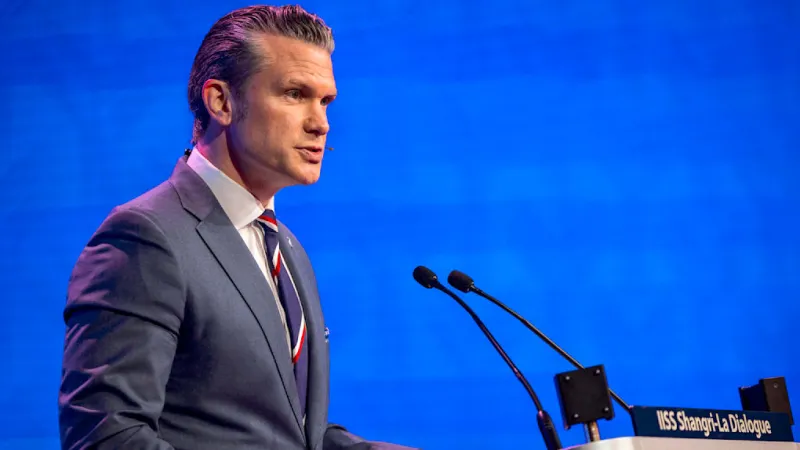
SINGAPORE – United States Secretary of Defense Pete Hegseth issued a stern warning against China's escalating hegemonic ambitions in the Indo-Pacific region while simultaneously criticizing European allies for their insufficient defense commitments during the annual Shangri-La Dialogue. The pronouncements underscore Washingtons resolve to maintain a crucial power balance in a strategically vital global theater.
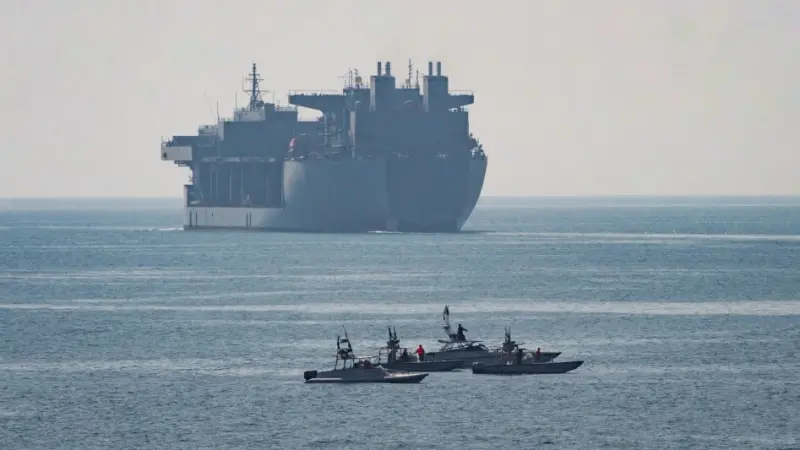
Addressing a gathering of defense ministers and security experts from across the globe, Secretary Hegseth articulated a clear American stance against any nation seeking to destabilize international norms through military expansion or coercive economic practices. He emphasized that Beijing's actions, particularly in the South China Sea, pose a direct challenge to regional sovereignty and global trade routes.
The Indo-Pacific, spanning from the west coast of the United States to the Indian Ocean, represents a critical nexus for global commerce and security. Its waterways are conduits for an immense volume of international trade, making stability in the region paramount for worldwide economic prosperity and geopolitical equilibrium.
Shifting his focus to transatlantic relations, Secretary Hegseth did not mince words regarding European defense spending. He contended that many European nations continue to underinvest in their military capabilities, relying heavily on American guarantees for their collective security. This imbalance, he suggested, diverts crucial resources that could otherwise be dedicated to more pressing global challenges, including Indo-Pacific security.
The Secretary's remarks echoed long-standing calls from Washington for greater burden-sharing among NATO members and other allies. He urged European partners to fulfill their commitments to robust defense budgets, stressing that a stronger, more self-reliant Europe would ultimately benefit the broader alliance structure and global stability.
This dual message aligns with President Donald Trump's administration's strategic emphasis on allies taking greater responsibility for their own security. The President has consistently advocated for a recalibration of defense partnerships, demanding that nations benefiting from US protection contribute proportionally to the collective defense effort.
Hegseth cited China's rapid military modernization, its construction of artificial islands with military facilities, and its frequent incursions into disputed territories as evidence of a calculated strategy to assert dominance. He asserted that these actions undermine the rules-based international order that has fostered decades of peace and prosperity.
The potential consequences of unchecked Chinese hegemony, Hegseth warned, extend beyond the Indo-Pacific. A regional power shift could embolden authoritarian regimes elsewhere and destabilize international relations, impacting everything from supply chains to human rights.
Despite the critical tone directed at Europe, Hegseth reaffirmed the United States unwavering commitment to its allies and partners in the Indo-Pacific, including Japan, South Korea, Australia, and the Philippines. He underscored Washingtons dedication to freedom of navigation and overflight, as well as adherence to international law in the region.
The comments serve as a renewed impetus for European leaders to seriously reevaluate their defense strategies and spending. Recent events, such as Russian drone strikes on Romanian territory, have already highlighted vulnerabilities within European security frameworks, adding urgency to Hegseth's admonitions.
Observers noted that the blunt delivery of Hegseth's message, while characteristic of the Trump administration's foreign policy approach, aims to provoke concrete action rather than merely express concern. The Shangri-La Dialogue, known for its candid discussions, provided an ideal forum for such direct engagement.
Ultimately, the US strategy, as articulated by Secretary Hegseth, seeks to fortify a multipolar world where no single power can unilaterally dictate terms. This vision necessitates both a robust American presence and a more equitable distribution of defense responsibilities among its allies, particularly concerning Indo-Pacific security.