 Chandra Wijayanto
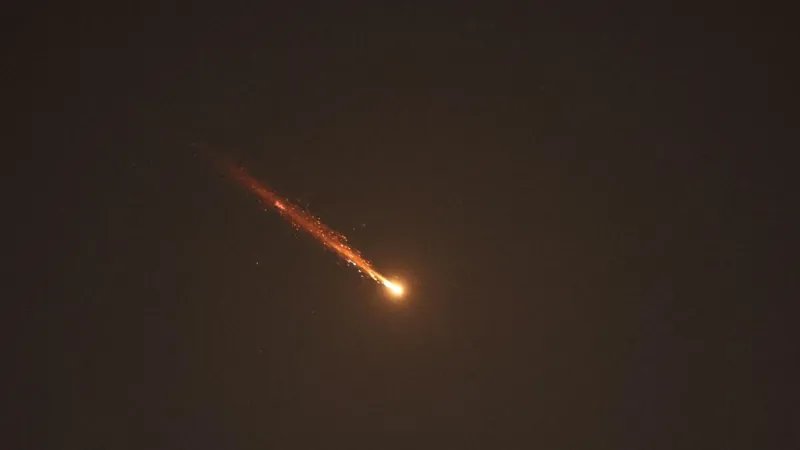
Tehran, Iran – The Israeli military announced it carried out strikes against targets within Iran, a significant escalation that unfolded even as President Donald Trump reportedly urged Prime Minister Benjamin Netanyahu to avoid further retaliatory action. This direct military response follows a period of heightened regional tensions and previous cross-border aggressions, according to an announcement disseminated by the Israeli Defense Forces via Telegram.
The precision operation, confirmed by Israeli authorities, marks a critical juncture in the long-standing shadow war between the two nations, now overtly spilling into direct confrontation. Details regarding the specific targets hit in the Iranian capital remain limited, though preliminary reports suggest a focus on military infrastructure.
The White House had reportedly communicated President Trump's strong advice to Jerusalem prior to the Israeli operation. Sources close to diplomatic channels indicated that President Trump underscored the need for de-escalation, cautioning against actions that could ignite a broader regional conflagration.
Despite the American appeal for restraint, the Israeli war cabinet, led by Prime Minister Netanyahu, evidently determined that a decisive response was imperative. Israeli officials have consistently maintained their right to self-defense against perceived threats, particularly in the wake of recent missile and drone attacks attributed to Iran.
This latest development comes against a backdrop of increasing hostility. Just weeks prior, Iran launched a volley of missiles at Israeli territory, prompting widespread alarms and drawing international condemnation. This prior Iranian assault was itself a response to an earlier Israeli strike on an Iranian diplomatic compound.
The recent Iranian missile barrage had prompted global concern regarding a full-scale regional conflict. That incident, which saw Iran launch missiles at Israel, involved multiple layers of air defense systems being activated across Israel and its allies.
International reactions to Israel's strike are anticipated to be swift and varied. Key allies, including the United States, will likely reiterate calls for calm, while adversaries will almost certainly denounce the action. The United Nations Security Council is expected to convene an emergency session to address the spiraling crisis.
Analysts warn that this direct exchange of blows between Israel and Iran risks pushing the Middle East further towards an unpredictable and potentially devastating conflict. Energy markets are already showing volatility, reflecting investor anxieties over stability in the oil-rich region.
Iranian state media has yet to issue a comprehensive official statement regarding the reported Israeli strikes on Tehran. However, unofficial channels and social media accounts affiliated with the Islamic Revolutionary Guard Corps have begun circulating defiant messages, signaling a likely strong counter-response.
The decision by Israel to proceed with strikes despite President Trump's cautionary advice highlights the complex dynamics of the US-Israel strategic alliance. While the United States remains Israel's staunchest ally, differences in tactical approaches to regional security challenges occasionally emerge.
The cycle of aggression and retaliation has deep historical roots, yet the current escalation represents a dangerous departure from previous proxy confrontations. Direct engagement between these two regional powers could destabilize the entire geopolitical landscape.
Regional observers note that such actions could embolden other non-state actors operating within the Middle East, further complicating efforts towards peace and security. Previous incidents, like the Middle East escalation where Israel struck Beirut and Iran retaliated, illustrate the interconnected nature of regional conflicts.