 Stefani Rindus
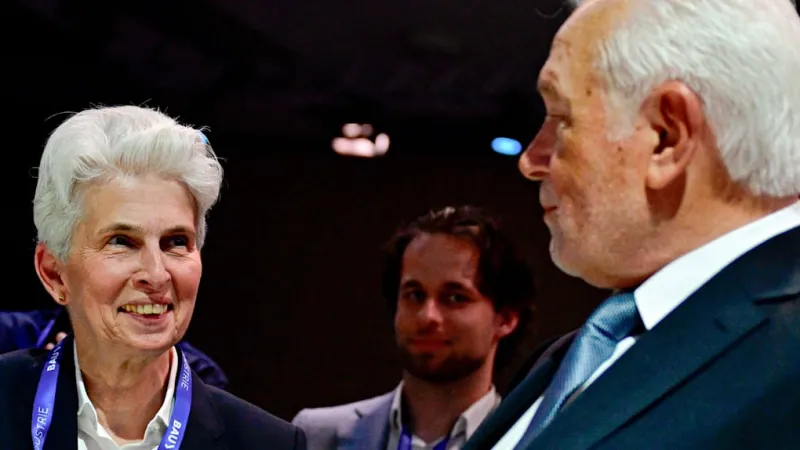
Berlin – Marie-Agnes Strack-Zimmermann, a prominent voice within Germany's Free Democratic Party (FDP), has issued a pointed warning to newly elected party leader Wolfgang Kubicki, emphasizing the urgent need for him to acknowledge and accommodate the party's diverse internal factions. Her remarks underscore persistent tensions within the FDP following Kubicki's ascendancy, suggesting a delicate power balance that demands careful navigation from the new leadership.
Strack-Zimmermann explicitly stated that "Wolfgang knows it is 60:40," a clear indication that a significant portion, though a minority, of the party membership remains wary or critical of his new leadership. This percentage implies that Kubicki's mandate is not absolute, and neglecting the concerns of a substantial segment could further exacerbate internal divisions.
The declaration from Strack-Zimmermann highlights the ongoing internal strife that characterized Kubicki's path to leadership. His election, while ultimately successful, was not a unanimous coronation but rather the culmination of a robust power struggle within the party ranks, as previously reported.
Observers note that the FDP has frequently grappled with ideological cleavages, traditionally balancing its liberal-economic wing with more socially progressive elements. The current power struggle under Kubicki's new leadership appears to be a resurgence of these fundamental differences.
Strack-Zimmermann, a highly visible figure often associated with a more assertive, internationalist stance, has positioned herself as a guardian of pluralism within the FDP. Her public statements are frequently interpreted as reflecting the sentiments of those who fear a potential narrowing of the party's strategic direction under Kubicki.
This warning places significant pressure on Kubicki to demonstrate an inclusive leadership style. His ability to bridge the divides and genuinely integrate all party streams will be critical for the FDP's cohesion and its public image moving forward. The future viability of the party as a united political force hinges on his response to these calls for balance.
The FDP, a key player in Germany's political landscape, has experienced fluctuating fortunes in recent years, often battling for relevance and voter confidence. Internal dissent, particularly from influential figures like Strack-Zimmermann, poses a direct challenge to the stability and effectiveness of its leadership.
Such open criticism from within the party is not unprecedented in German politics, but it invariably signals a period of heightened internal negotiation. It forces the leadership to address grievances publicly, potentially diverting attention from external political challenges.
Political analysts suggest that the handling of these internal FDP tensions will be closely watched by rival parties and coalition partners alike. A fragmented FDP could weaken its bargaining power in future government formations or policy debates.
The party's performance in upcoming regional and national elections will serve as a crucial barometer of Kubicki's success in unifying the FDP. Should the internal rifts persist or widen, it could significantly hamper the party's ability to present a cohesive vision to the electorate.
For the moment, the ball is firmly in Kubicki's court. He must now navigate these explicit demands for inclusivity and demonstrate a leadership capable of fostering unity rather than deepening existing divisions. His response will define the early chapters of his tenure as FDP leader.
The "60:40" dynamic cited by Strack-Zimmermann is a stark reminder that party leadership in a liberal democracy is often about managing complex internal coalitions, not simply commanding a majority. This particular challenge for the FDP leadership resonates deeply within the German political system, where coalition building and consensus are paramount.
The criticism also arrives as the broader German political landscape faces numerous domestic and international pressures, from economic transformations to geopolitical shifts. A strong, unified FDP could contribute significantly to these discussions, while a divided party risks marginalization. The party's ability to articulate a clear Germany's Essential Liberal Vision, as questioned by some external critics, depends heavily on its internal coherence.