 Dorry Archiles
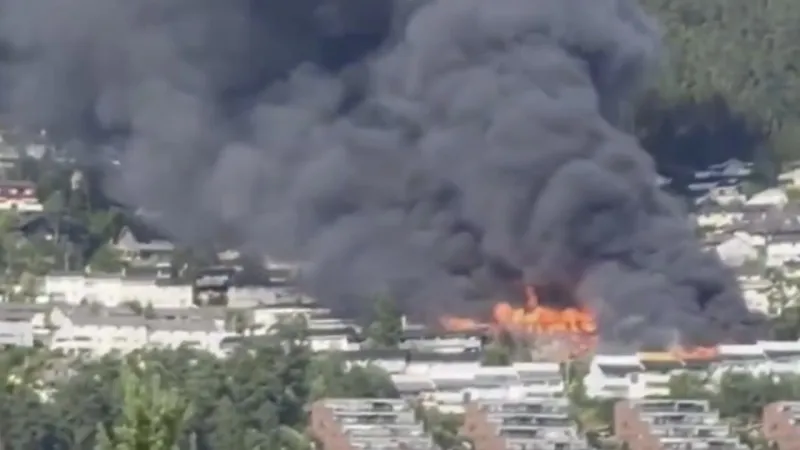
A massive wildfire near Oslo, Norway, remains uncontained, though police officials assert immediate risks to populated areas have diminished, even as the blaze continues its relentless advance toward critical forested regions. The ongoing conflagration has prompted significant emergency response efforts as firefighters battle the expanding fire front.
Norwegian police confirmed that while the overall threat level has been reassessed and some immediate dangers reduced, the challenge of fully containing the extensive Norway wildfire persists. Local media outlets, however, report a concerning development: the primary fire front is now actively moving towards dense woodlands, raising fears of a more protracted and destructive incident.
The immense scale of the blaze has consumed considerable acreage across the rural landscape bordering the capital. Emergency services have mobilized substantial resources, including ground crews and aerial support, in an arduous attempt to establish firebreaks and douse the flames.
"We have made progress in securing residential areas and critical infrastructure," stated a spokesperson for the local police force, whose name was not immediately released. "However, the volatile nature of the fire means it is not yet fully under control, and our focus is shifting to preventing its spread into deeper forest territories."
Concerns are particularly high regarding the valuable ecological systems within these forests. An uncontrolled spread could devastate wildlife habitats and contribute to significant air quality issues for nearby communities. The current dry conditions and unpredictable wind patterns are exacerbating the difficulty of containment.
Firefighting teams are working around the clock, deploying water bombers and establishing strategic perimeters. The terrain, often rugged and difficult to access, poses an additional challenge for responders attempting to reach the heart of the inferno.
Environmental experts have highlighted the increasing frequency and intensity of wildfires in Scandinavia, attributing this trend partly to prolonged periods of drought and higher temperatures. This specific Norway wildfire underscores the escalating vulnerability of the regions natural landscapes.
Authorities have urged residents in affected peripheral areas to remain vigilant and follow all evacuation orders or precautionary advisories. While no mass evacuations have been reported, preparedness remains a key directive from civil defense units.
The long-term ecological impact of this event will be significant. Beyond immediate destruction, soil degradation and erosion risks will persist for years, affecting the biodiversity and regenerative capacity of the burnt areas. Restoration efforts will likely span decades.
As the battle against the blaze continues, the national attention remains fixed on the efforts to safeguard Norways pristine natural heritage. Officials maintain a cautious optimism, emphasizing that every hour brings new tactical adjustments in their relentless fight against the encroaching flames.