 Chris Robert
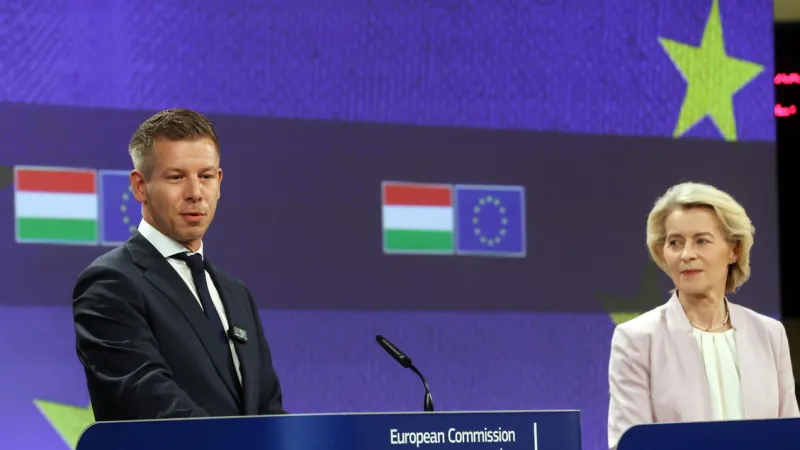
BRUSSELS – The European Union has reached an agreement in principle to release 16 billion euros in long-withheld funds to Hungary, signaling a conditional thaw in relations despite persistent concerns over rule of law and democratic backsliding. This pivotal decision, following protracted negotiations, carries a clear directive for Budapest to continue its judicial and anti-corruption reforms. The announcement also coincided with Hungarys commitment to host its annual Pride parade, a development many observers view as a significant conciliatory gesture.
The substantial sum, part of the EUs recovery and cohesion funds, was frozen previously due to the European Commissions assessment that Prime Minister Viktor Orbans government had failed to uphold fundamental EU values. These breaches included persistent issues with judicial independence, public procurement transparency, and a lack of robust anti-corruption measures.
The formal understanding underscores the EUs delicate balancing act between enforcing its core principles and navigating the geopolitical realities of a member state whose cooperation is often vital for unanimity on key policy decisions. The conditional release means that while the funds are accessible, Hungary remains under intense scrutiny regarding its reform progress.
Crucially, the agreement mandates specific commitments from Budapest to strengthen the rule of law. These reforms are expected to ensure greater transparency in public spending, reinforce the independence of the judiciary, and enhance the effectiveness of the anti-corruption framework. Brussels maintains that these structural changes are not merely bureaucratic hurdles but essential safeguards for democratic governance.
The timing of Hungarys decision to greenlight the Pride parade has not gone unnoticed. For years, the Hungarian government has been criticized for policies perceived as anti-LGBTQ+, leading to heightened tensions with Brussels and various international bodies. The move to permit the parade is interpreted by some as a direct response to EU pressure, aimed at demonstrating a shift towards greater inclusivity and compliance with European norms.
However, critics remain wary, suggesting that such gestures might be tactical rather than indicative of fundamental ideological shifts. They argue that Budapest often offers concessions under financial duress, only to revert to its previous stance once the immediate pressure subsides. The EU Commission has emphasized that its monitoring mechanisms will remain vigilant.
The withheld funds represented a significant portion of Hungarys expected EU allocations, impacting various sectors of its economy, from infrastructure projects to research and development initiatives. Their release is expected to provide a much-needed boost to the Hungarian economy, which has grappled with inflationary pressures and other economic challenges.
For Prime Minister Orban, securing these funds represents a notable diplomatic victory, allowing his government to access crucial resources. Yet, the accompanying strict conditions mean that Budapest must navigate a complex path between national sovereignty claims and adherence to EU standards.
The EUs approach to Hungary reflects a broader challenge facing the bloc: how to ensure adherence to democratic principles without unduly penalizing a member state or risking internal fragmentation. This ongoing dialogue shapes the future of EU cohesion and the enforcement of its founding values.
Further tranches of funding will likely depend on demonstrable and sustained progress in implementing the agreed-upon reforms. The European Commission has indicated that it will establish clear benchmarks and regular reporting mechanisms to assess Hungarys compliance comprehensively. This sustained oversight is intended to prevent any backsliding on commitments.
This agreement, while offering a pathway for the release of crucial funds, serves as a stark reminder of the EUs determination to uphold its fundamental values. The onus now rests squarely on Hungary to prove its genuine commitment to the reforms necessary for a fully democratic and rule-of-law-abiding member state.