 Robert Andrison
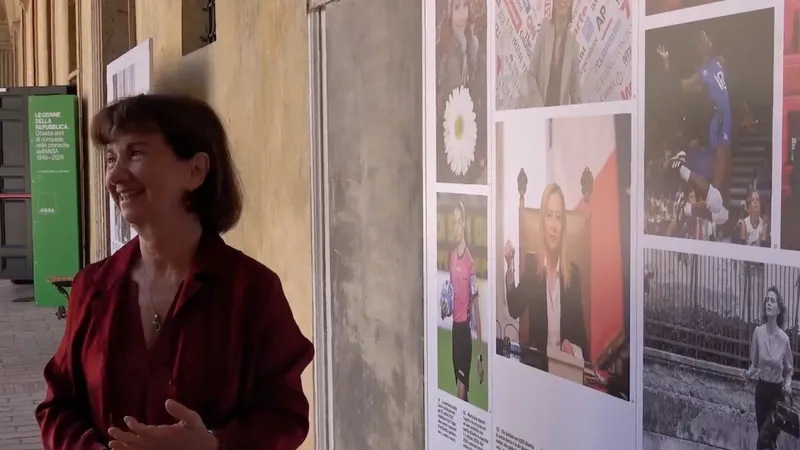
ROME – Italian Minister for Family, Natality and Equal Opportunities, Eugenia Roccella, recently offered a poignant reflection on the unexpected trajectory of women's political empowerment, declaring that a female premier was an unimaginable prospect during her youth as a feminist activist. Her comments, made in the context of the "Le donne della Repubblica" initiative, underscored the profound journey of collective and individual struggles that paved the way for such a significant milestone in Italy's history.
Roccella, a veteran figure in Italian discourse, emphasized the historical depth of this achievement. She stated, "When I was a young feminist activist, I never would have imagined a woman prime minister." This declaration encapsulates the formidable barriers and deeply entrenched societal norms that once characterized Italian politics, making the current reality a testament to decades of persistent advocacy.
The initiative "Le donne della Repubblica," a project dedicated to chronicling the contributions of women to the Italian Republic, served as the backdrop for the minister's insights. It highlights not only prominent political figures but also countless unsung heroines whose efforts, often behind the scenes, have incrementally reshaped the nation's social and political fabric.
The journey for Italian women in politics has been a protracted one, marked by significant societal resistance and legislative hurdles. From gaining suffrage in 1946 to gradually increasing representation in parliamentary bodies, each step has been hard-won. Roccella's personal experience, spanning from the fervent feminist movements of the 1970s to her current ministerial role, offers a unique vantage point on this evolution.
Her observations resonate deeply with the broader narrative of women's rights in Italy, which has seen progress in various spheres, including education, employment, and reproductive rights. These advancements, however, were seldom linear, often necessitating arduous campaigns and overcoming considerable opposition.
The minister alluded to the "collective and individual struggles" that define this progression. Collective efforts involved organized movements, public demonstrations, and legislative lobbying by women's groups and allied political forces. Individual struggles encompassed the daily battles faced by women striving for recognition, equality, and leadership in their respective fields.
The advent of a woman at the helm of the Italian government, a reality in 2026, symbolizes a powerful breaking of the glass ceiling. It challenges historical perceptions of leadership and serves as a beacon of possibility for future generations of Italian women. This shift represents more than just a change in leadership; it signifies a profound cultural and political reorientation.
While acknowledging the monumental nature of this achievement, Roccella's comments also implicitly invite contemplation on the ongoing challenges. Despite a female premier, disparities in political representation persist at various levels of government, and gender equality remains an aspiration requiring continued vigilance and commitment.
The discussion around "Le donne della Repubblica" extends beyond parliamentary seats and ministerial portfolios. It encompasses women's indelible impact on every aspect of national life, from cultural development to economic innovation. Recognizing these diverse contributions is crucial for a holistic understanding of Italy's progress.
The minister's reflection also serves as a reminder that political milestones are rarely the end of a journey, but rather significant markers within an ongoing process of societal transformation. The presence of a female premier, once a distant dream, is now a tangible reality, urging a continued focus on equitable representation and opportunity.
This historical moment holds particular significance for young Italian women and girls, who now grow up with the visible example of a woman occupying the nation's highest political office. Such representation can inspire greater ambition and participation, fostering a new era of leadership.
The conversation around women in leadership also ties into broader European political trends. Across the continent, women are increasingly assuming prominent roles, yet the path to true parity often requires sustained effort and systemic changes. For instance, recent events have seen significant shifts, such as when European Parliament VP Picierno quit PD, citing a reformist void, highlighting the dynamic nature of political careers for women.
As Italy navigates its contemporary political landscape, discussions spurred by figures like Minister Roccella reinforce the importance of historical context. Understanding where society has come from provides perspective on current achievements and the work that still lies ahead for comprehensive gender equality.