 Chris Robert
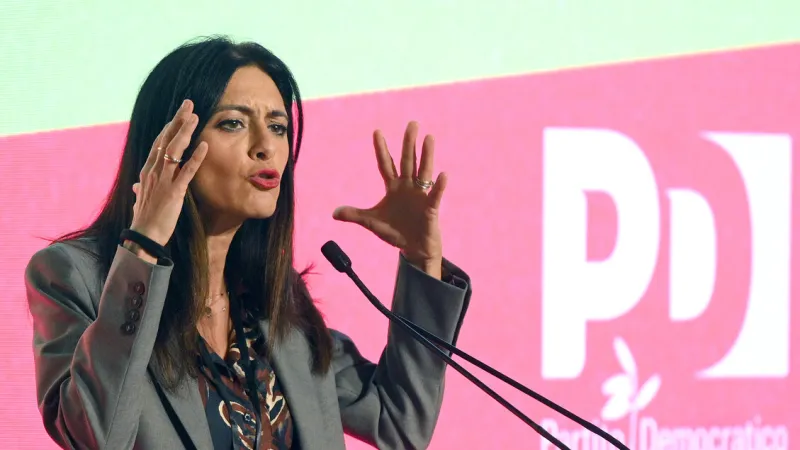
ROME – Pina Picierno, a prominent Vice-President of the European Parliament, has announced her immediate departure from Italy's Democratic Party (PD), declaring in an interview with Il Foglio that “the home of reformers is no longer there.” This high-profile defection signals a significant ideological realignment within Italian politics, with sources close to Picierno indicating her intent to join the European Democratic Party (PDE) and the Renew Europe group.
Picierno elaborated on her decision, asserting that the Democratic Party, under its current trajectory, has diverged fundamentally from the reformist ideals and principles she has championed throughout her extensive political career. Her exit underscores growing ideological rifts and internal debates over the party's future direction.
Elly Schlein, Secretary of the Democratic Party, publicly expressed her disappointment regarding Picierno's unexpected departure. “Disappointed, I do not share her interpretation of the party,” Schlein stated, acknowledging the internal challenge posed by such a senior figure leaving the party ranks.
Sources familiar with Picierno's plans confirmed her intention to align with the European Democratic Party (PDE), a centrist European political party that advocates for a stronger, more integrated Europe. This move is expected to be followed by her joining the Renew Europe group within the European Parliament.
Renew Europe is a liberal, pro-European political group recognized for its commitment to market-oriented policies and deeper European integration. Picierno's shift from the Progressive Alliance of Socialists and Democrats (S&D) group, where the PD is affiliated, to Renew Europe is poised to bolster its centrist faction.
The Democratic Party has grappled with various internal debates and shifts in recent years, particularly concerning its strategic positioning and core ideological identity. This defection emerges at a time when the party has been actively seeking to redefine its purpose and appeal under its current leadership.
Picierno's departure is anticipated to have broader ramifications for the intricate landscape of Italian politics. It could potentially influence the balance of power within the center-left opposition and might necessitate a reevaluation of future electoral strategies by the PD and its allies.
Within the European Parliament, her move represents a shift of influence between major political families. It could subtly affect voting dynamics and the formation of majorities on key European legislative initiatives, particularly those requiring broad consensus across the political spectrum.
A veteran politician, Picierno has held significant roles at both the national and European levels, consistently advocating for progressive policies within a distinct reformist framework. Her decision, therefore, is perceived not as a casual switch but as a principled stand rooted in deep-seated convictions about political values and party direction.
Political realignments and defections are not uncommon across Europe, as established parties contend with evolving electorates, complex national challenges, and dynamic geopolitical shifts. Picierno's move can be contextualized within this broader trend of politicians seeking more ideologically resonant political homes.
Analysts suggest that while one individual defection may not cripple a major party, it undeniably highlights a need for introspection within the PD regarding its ability to appeal to its diverse factions. The move might also encourage other disaffected members to critically reassess their own political affiliations.
Picierno's deliberate choice of words, emphasizing the loss of a “reformist home,” is particularly significant. It frames her departure not merely as an opportunistic change of allegiances but as a principled decision founded on core political values and a perceived deviation from them by the party.
Secretary Schlein now faces the pressing challenge of unifying the Democratic Party and demonstrating that it can indeed accommodate a broad spectrum of views while maintaining a coherent political identity, especially as Top Italian Ministers Confront Parliamentary Scrutiny During Question Time.
This political maneuver could also be interpreted as a strategic realignment ahead of future European or national elections. Politicians often position themselves within groups they believe offer greater influence or more accurately reflect their platforms and long-term objectives.
The Italian political scene, known for its inherent fluidity and frequent shifts, may yet witness further individual or small-group defections as parties continually calibrate their stances in a complex national and international environment.