 Edward DP Situmorang
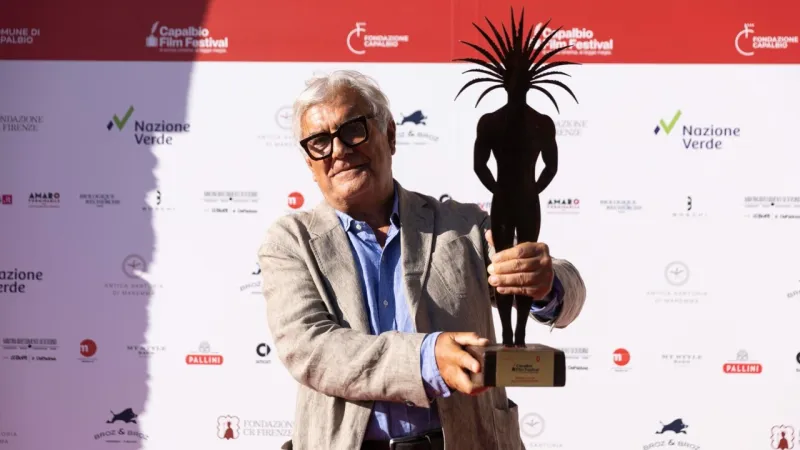
Capalbio witnessed a significant cultural announcement recently as Giancarlo De Cataldo, the acclaimed former magistrate and prolific author, revealed ambitious plans for an opera adaptation of his celebrated novel Romanzo Criminale and a new investigative project centered on the historical figure Giacomo Matteotti. The revelations followed an award ceremony in the Tuscan town, where De Cataldo was honored for his enduring contributions to literature and jurisprudence. His remarks underscore a continued commitment to exploring pivotal narratives through diverse artistic and analytical lenses.
For De Cataldo, the transformation of Romanzo Criminale into a lyrical work represents a deeply personal aspiration. He described the project as "a dream come true," indicating the profound resonance this particular adaptation holds for him. The novel, renowned for its gritty portrayal of Rome's criminal underworld in the 1970s, captivated audiences as both a book and a television series, establishing itself as a modern Italian classic.
The decision to transpose such a dark and complex narrative to the opera stage presents a unique challenge and opportunity. Opera, traditionally known for its dramatic intensity and emotional depth, offers a new medium to explore the themes of power, loyalty, betrayal, and consequence that permeate De Cataldo's original work. The author expressed his excitement about witnessing how the raw energy of his narrative will translate into the grandeur of operatic performance.
This lyrical venture is expected to draw a broad audience, potentially introducing new generations to the operatic form while satisfying existing fans of Romanzo Criminale. The adaptation aims to merge the visceral storytelling synonymous with De Cataldo with the rich traditions of Italian opera, creating a contemporary cultural event that bridges artistic genres.
Beyond the operatic stage, De Cataldo also unveiled his latest historical endeavor: a new project dedicated to Giacomo Matteotti. This initiative signals a return to historical inquiry, a domain where De Cataldo has previously demonstrated keen insight and meticulous research, particularly in examining the complex interplay of law, politics, and power.
Giacomo Matteotti, an Italian socialist politician, stands as a pivotal figure in early 20th-century Italian history, whose abduction and murder in 1924 by fascist squads sent shockwaves across the nation and exposed the brutal tactics of the nascent Mussolini regime. Matteotti's unwavering opposition to fascism and his courageous denunciation of electoral fraud solidified his legacy as a martyr for democracy.
De Cataldo's decision to focus on Matteotti underscores the enduring relevance of the politician's story in contemporary discourse. The author did not specify the format of this new project, whether it will be a novel, a historical essay, or another form of media. However, the announcement alone generated considerable interest among historians and political commentators.
This engagement with Matteotti's legacy aligns seamlessly with De Cataldo's broader body of work, which frequently delves into the dark underbelly of power, the complexities of justice, and the socio-political forces that shape historical events. His unique perspective as a former prosecutor often infuses his narratives with a rigorous attention to detail and a profound understanding of human motivation and culpability.
The recognition De Cataldo received in Capalbio serves as a testament to his multifaceted career. Honored for both his judicial career and his literary achievements, the award celebrates a writer who has consistently challenged societal norms and illuminated difficult truths through his compelling storytelling. Such accolades reinforce his standing as one of Italy's most significant cultural figures.
The simultaneous announcement of these two distinct yet thematically linked projects — the Romanzo Criminale opera and the Matteotti inquiry — highlights De Cataldo's versatile intellectual curiosity and his dedication to cultural production. These endeavors promise to offer fresh perspectives on both fictionalized crime and historical injustice, further solidifying his unique position in Italian arts and letters.
The opera adaptation is still in its nascent stages, with details regarding producers, composers, and librettists expected to emerge in the coming months. However, the initial announcement alone has sparked considerable anticipation within Italy's cultural circles, eager to see how the gritty realism of Romanzo Criminale will be translated into a new, elevated art form.
Similarly, the Matteotti project is poised to ignite renewed academic and public interest in a critical, often tragic, chapter of Italian history. De Cataldo's reputation for thorough research suggests that his contribution will offer fresh insights or a compelling reinterpretation of the events surrounding Matteotti's assassination and its broader implications for Italian democracy.
The author's journey from the courtroom to the literary spotlight has been marked by a consistent exploration of societal fault lines and the human condition under duress. Whether through the lens of organized crime or historical political assassinations, De Cataldo's narratives invariably provoke thought and critical reflection on justice, power, and morality.
The convergence of these projects—one a dramatic reimagining of a modern crime epic, the other a deep dive into a historical political murder—underscores De Cataldo's commitment to examining the shadows of human experience. His work consistently seeks to understand the origins and consequences of violence, both individual and systemic.
In an era often characterized by fleeting attention spans, De Cataldo's dedication to substantial, long-form narratives and intricate historical analyses stands out. These projects reinforce his role as a cultural anchor, providing thoughtful commentary and artistic endeavors that resonate deeply within the Italian consciousness and beyond.
The Capalbio event, therefore, was not merely an occasion for recognition but a platform for announcing future intellectual and artistic pursuits. De Cataldo's declarations signal a vibrant continuation of his creative output, promising audiences and readers alike new opportunities to engage with complex narratives crafted by a master storyteller.