Chris Robert
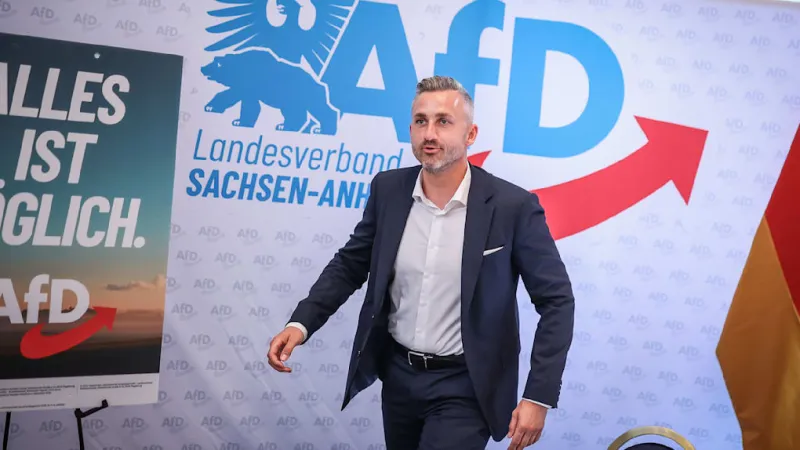
BERLIN – A broad coalition of German scientific and labor organizations, including the influential German Research Foundation, has issued a stark warning against the AfD’s proposed university reforms in the lead-up to state elections. The alliance contends that the Alternative for Germany party's agenda for higher education in states like Saxony-Anhalt directly threatens academic freedom, particularly concerning co-determination rights, Gender Studies, and the overall direction of research.
The Wissenschafts-Bündnis, or Science Alliance, represents a significant cross-section of Germany's academic and societal landscape. Its members collectively voice profound concern that the far-right AfD's political ambitions for higher education institutions could undermine the foundational principles of independent inquiry and open discourse.
These proposed changes, highlighted by the alliance, extend beyond mere administrative adjustments. They seek to fundamentally reshape how universities operate, influencing everything from student and faculty participation in governance to the very subjects deemed acceptable for academic pursuit. Gender Studies, in particular, has been a frequent target of criticism from the AfD, seen by the party as ideologically driven rather than scientifically rigorous.
The core of the alliance's apprehension lies in the potential erosion of university autonomy. German universities traditionally enjoy a significant degree of self-governance, a principle viewed as essential for fostering innovation, critical thinking, and the pursuit of knowledge free from political dictates. Interfering with co-determination rights, which allow academic staff and students a say in university affairs, represents a direct challenge to this established autonomy.
The Deutsche Forschungsgemeinschaft (DFG), Germany's largest research funding organization, echoed these sentiments, stating unequivocally that it perceives the freedom of science to be under direct threat. The DFG's pronouncement carries substantial weight within the scientific community, emphasizing the gravity of the situation.
The AfD has steadily gained traction in German politics, especially in the eastern states, where it often campaigns on nationalist and culturally conservative platforms. Its increasing influence, particularly ahead of crucial state parliamentary elections, has amplified concerns across various sectors, including education and research.
Academic freedom stands as a cornerstone of democratic societies, enabling scholars to explore, question, and disseminate findings without fear of retribution or censorship. Historically, Germany has rebuilt its academic institutions on this very principle following periods of authoritarian rule, making any perceived threat to it particularly resonant.
Should these policies come to fruition, experts warn of severe repercussions. Germany's reputation as a leading hub for scientific research and innovation could suffer, potentially deterring top international talent and hindering collaborative projects. The quality and diversity of research could also diminish under politically prescribed directives.
This internal debate within Germany mirrors broader global discussions surrounding political interference in academia. Similar concerns have been raised by scholars worldwide regarding governmental attempts to influence university curricula, research funding, and administrative appointments. The article Jurist Olivier Beaud: Bureaucracy Imperils Academic Freedom, Demands Urgent Reform discusses how bureaucracy also imperils academic freedom.
The timing of this urgent warning, preceding significant state elections, underscores the alliance's intent to galvanize public and political discourse. They aim to safeguard the independence of German higher education against what they describe as an authoritarian political agenda.
For Germany's scientific landscape, the stakes are undeniably high. The ongoing debate will determine whether universities retain their traditional role as bastions of independent thought or become subject to heightened political control, potentially altering the trajectory of German research and intellectual development for years to come. The integrity of scientific inquiry, many believe, hinges on the outcome of these electoral battles and the public's response to the alliance's grave warning.