 Angela Stefani
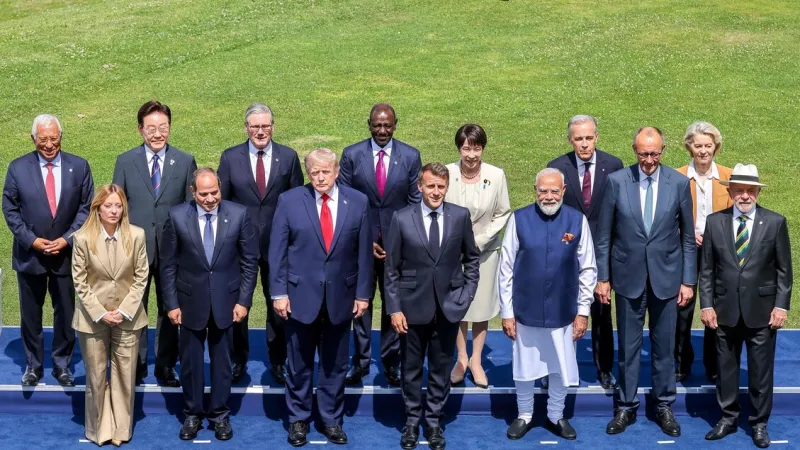
WASHINGTON – The Group of Seven (G7) nations stands poised to impose fresh sanctions on Russia, escalating collective pressure as President Donald Trump publicly urged Russian President Vladimir Putin to “make a deal” amid ongoing geopolitical tensions. This diplomatic offensive follows Russia's categorical rejection of a proposed summit on US soil, highlighting a widening chasm between Western powers and Moscow.
Leaders of the worlds leading industrial democracies conveyed their firm resolve following high-level discussions, signaling a united front against Moscows recent actions. The readiness for new economic penalties underscores a continued strategy of deterrence and seeks to compel a shift in Russian foreign policy.
From Washington, President Trump delivered a pointed message to the Kremlin. He stated unequivocally, “Putin must make a deal,” emphasizing the urgency for a diplomatic resolution to complex international challenges involving Russia. This declaration adds significant weight to the G7s concerted efforts.
The G7s renewed focus on Russia comes during a period of sustained global instability. Previous discussions, such as those at the G7 Summit in Evian, saw President Trump acknowledge momentum in resolving issues, particularly concerning Ukraine. However, the current stance indicates those efforts have not yielded sufficient progress.
In a defiant move, Russia formally declined an invitation for a potential summit in the United States. This refusal signals Moscows reluctance to engage in high-level bilateral talks under perceived Western duress, preferring instead to maintain its current strategic posture.
The G7, comprising Canada, France, Germany, Italy, Japan, the United Kingdom, and the United States, has historically utilized sanctions as a primary tool to exert pressure on Russia, particularly since the 2014 annexation of Crimea. These measures have targeted key sectors of the Russian economy, including finance, energy, and defense, with varying degrees of impact.
The broader international community watches these developments closely. The European Union, a significant economic bloc, often aligns with G7 policies regarding Russia. Incidents like the one involving the death linked to a Russian pavilion protest further underscore the strained relationship between Moscow and Western political entities.
Should new G7 sanctions be implemented, analysts predict potential reverberations across global markets. While designed to impact Russia, such measures often carry secondary effects on international trade and energy prices, prompting careful consideration by member states regarding their scope and enforcement.
Despite differing national interests within the G7, a consistent theme has been the importance of presenting a united front to Moscow. This collective approach aims to maximize leverage, ensuring that any future agreement with Russia reflects the international communitys adherence to established norms and principles.
The current diplomatic stalemate suggests a protracted period of tension between the G7 and Russia. While President Trump advocates for a direct resolution, Moscows rejection of a summit indicates that any path to an agreement will require significant concessions or a fundamental shift in diplomatic strategies from either side.
President Trumps direct call for President Putin to “make a deal” aligns with his characteristic approach to foreign policy, often favoring direct negotiation and transactional diplomacy. This contrasts with more traditional multilateral strategies sometimes employed by other G7 leaders.
The underlying issues fueling the G7s pressure on Russia remain complex, with the ongoing situation in Ukraine frequently at the forefront of discussions. The need for a durable resolution there is a consistent driver for Western diplomatic efforts.
While united on the broad goal of pressuring Russia, individual G7 members may approach the specifics of sanctions and diplomatic engagement with nuanced perspectives, shaped by their unique economic ties and geopolitical priorities with Moscow. These internal deliberations contribute to the complexity of crafting a unified policy.