 Chandra Wijayanto
BRUSSELS – European Parliament Vice-President Pina Picierno has unequivocally declared that the killing of activist Skrepetsky is directly connected to his outspoken protest against the Russian pavilion in Venice. The senior lawmaker concurrently issued a fervent call for the immediate establishment of a comprehensive European network designed to safeguard political dissidents and opposition figures across the continent. This urgent pronouncement highlights escalating concerns over the safety of those challenging authoritarian narratives, particularly amidst ongoing geopolitical tensions.
Picierno emphasized the grave implications of Skrepetsky's death, framing it as a direct threat to the foundational values of free speech and dissent within democratic societies. Her statement, delivered with considerable gravity, underscored the imperative for European institutions to act decisively in protecting individuals who courageously voice opposition to repressive regimes.
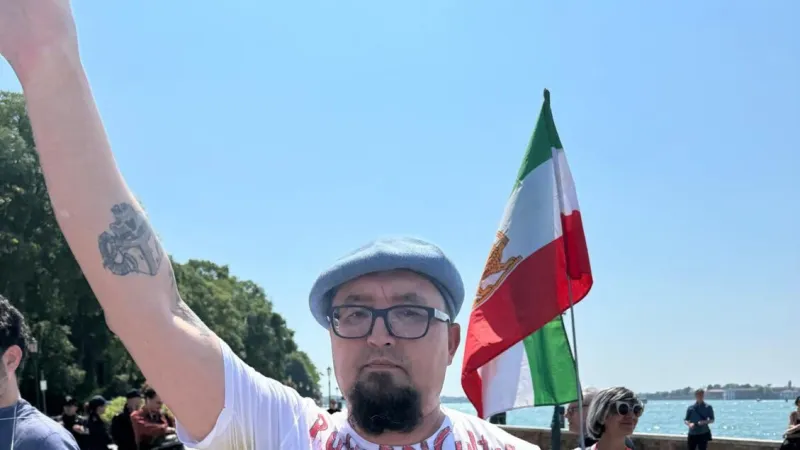
Skrepetsky reportedly participated in a high-profile protest targeting the Russian pavilion at the Venice Biennale, a globally renowned cultural event. His actions sought to draw international attention to specific political grievances and policies, presumably related to Russia's actions on the international stage. Such public demonstrations often become flashpoints for political expression and attract significant scrutiny.
The proposed European network for dissident protection, as articulated by Vice-President Picierno, would serve as a critical infrastructure to monitor threats, provide legal and logistical support, and potentially offer asylum or safe passage to individuals facing persecution. This initiative seeks to bridge existing gaps in transnational protection mechanisms.
The call for enhanced protections arrives at a time when political dissidents, journalists, and activists, particularly those critical of powerful states, face increasingly sophisticated forms of intimidation, surveillance, and violence. The digital age has also introduced new vectors for harassment and disinformation campaigns targeting opposition voices.
Historically, Europe has grappled with the challenge of safeguarding those who flee political repression. Cases of exiled figures experiencing threats or attacks on European soil have periodically surfaced, underscoring the limitations of current national and international safeguards. This tragic backdrop lends further urgency to Picierno's proposal.
The backdrop of President Donald Trump's administration engaging in complex diplomatic maneuvers, including discussions around Ukraine at summits like the G7, further illustrates the fraught international landscape. The ongoing conflict in Ukraine has intensified global awareness of the risks faced by individuals who challenge established powers. For instance, discussions at recent gatherings such as the G7 Summit in Evian have frequently touched upon the need to uphold democratic principles and protect human rights amidst international pressure.
Such a network would likely involve collaboration among intelligence agencies, law enforcement bodies, human rights organizations, and diplomatic missions across member states. Its mandate would extend beyond physical protection to include legal advocacy, psychological support, and assistance with resettlement for those at extreme risk.
Implementing such an expansive and cross-border network presents significant logistical and political hurdles. Member states would need to agree on standardized protocols for threat assessment, information sharing, and rapid response, while respecting national sovereignties and legal frameworks. Funding and operational oversight would also require robust agreement.
The European Parliament is expected to discuss Picierno's proposal, gauging the level of support from various political factions. While the principle of protecting human rights generally resonates, the specifics of a binding, transnational protection mechanism could trigger debates over national security prerogatives and resource allocation.
Picierno underscored that the creation of such a network is not merely a pragmatic response to isolated incidents but a reaffirmation of Europe's commitment to its core values of democracy, liberty, and the rule of law. Failing to protect dissidents, she argued, would erode the very principles the European Union purports to uphold.
Beyond safeguarding individual lives, the establishment of robust European dissident protection mechanisms sends a powerful message to authoritarian regimes that the international community will not tolerate the silencing of critical voices, even beyond their own borders. This collective stance could deter future acts of aggression against dissidents.
Future steps involve formalizing Picierno's proposal into a concrete initiative, potentially leading to a resolution or legislative framework within the European Parliament. Advocacy groups and civil society organizations are anticipated to lend their weight to the campaign for this vital protective infrastructure.
The alleged killing of Skrepetsky serves as a stark reminder of the extreme perils faced by those who dare to speak truth to power. Vice-President Picierno's urgent call reflects a growing recognition within European leadership that proactive and unified measures are indispensable in defending democratic values globally.