Gabriella
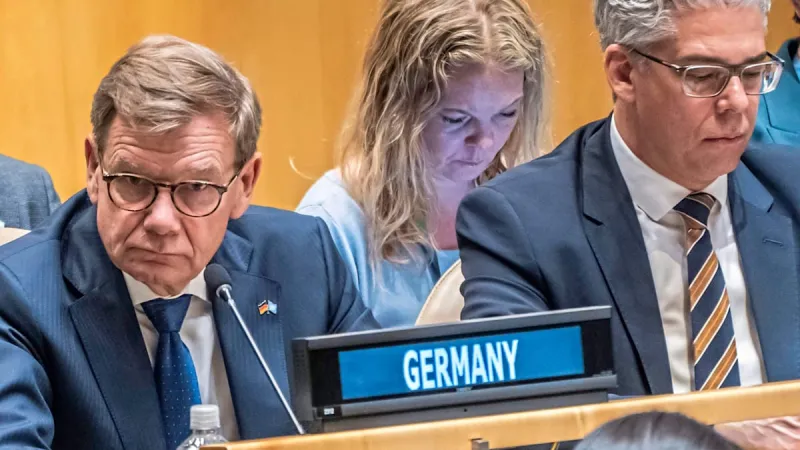
New York – Germany experienced a notable diplomatic defeat recently when its campaign to secure a non-permanent seat on the powerful United Nations Security Council (UNSC) ultimately failed. The unexpected outcome, determined by a vote within the United Nations General Assembly, represents a significant blow to Berlin's aspirations for enhanced global influence and its long-standing commitment to multilateral institutions.
The ballot, held at the UN headquarters, saw Germany fall short of the required votes, dashing its hopes of joining the 15-member body that holds primary responsibility for maintaining international peace and security. This marks a surprising turn for a nation that consistently positions itself as a key player in global governance and diplomatic efforts.
While specific vote tallies were not immediately detailed by UN officials, the consensus within diplomatic circles described the result as a profound disappointment for German representatives and their government. The defeat is particularly striking given Germany's substantial financial contributions to the UN and its active participation in numerous peacekeeping missions and humanitarian initiatives worldwide.
Observers had largely anticipated Germany would secure one of the rotating two-year terms, especially considering its strong economic standing and its advocacy for a more robust, rules-based international order. The failure raises questions about the efficacy of its diplomatic outreach and the broader geopolitical climate influencing such critical decisions.
Among the nations vying for the coveted seats, competition proved fierce. Related reports indicate that countries such as Austria successfully secured a position, further highlighting the unexpected nature of Germany's setback. (For more on this, see: Germany Faces Crushing UN Security Council Defeat Amid Austrian Triumph).
The United Nations Security Council comprises five permanent members – China, France, Russia, the United Kingdom, and the United States – and ten non-permanent members elected for two-year terms by the General Assembly. Securing a seat offers a nation a unique platform to shape international policy, participate in crucial debates, and influence resolutions on global conflicts and crises.
German officials had articulated a vision for their term that focused on climate security, human rights, and the prevention of conflicts. Foreign Minister Annalena Baerbock has frequently emphasized Germany's dedication to strengthening international cooperation and addressing urgent global challenges through multilateral channels.
This diplomatic misstep could prompt an internal review within Berlin regarding its international strategy and the mechanisms it employs to garner support for its candidacies. Such failures, though not uncommon in competitive UN elections, often lead to a re-evaluation of diplomatic priorities and alliance building.
Political analysts suggest the outcome reflects shifting dynamics within the General Assembly, where traditional alliances might be giving way to new blocs or individual national interests. The extensive lobbying efforts required for a UNSC seat demand not only a strong platform but also sustained, robust bilateral engagement with a diverse array of member states.
Previous attempts by major European powers to secure or maintain influence within the UN have met with varying degrees of success. Germany has historically sought to play a significant role on the world stage, often advocating for a permanent seat on an expanded Security Council – an ambition made more challenging by this recent electoral defeat.
The broader implications extend beyond merely a lost seat. It potentially signals a need for Germany to recalibrate its approach to global diplomacy, particularly in an era marked by heightened geopolitical tensions and evolving international partnerships. The result offers a moment for reflection on how nations secure support for their highest international aspirations.
This outcome also fuels domestic political discussions in Germany, with some commentators likely to scrutinize the government's foreign policy effectiveness. The bid's failure could spark broader debate on Germany's perceived standing and influence within the complex landscape of international relations. (For further context, read: Germany's UN Security Council Bid Fails, Sparks Political Fallout).
Moving forward, Berlin will likely need to redouble its efforts to demonstrate its value and commitment to the international community through other avenues, seeking to rebuild momentum and reinforce its diplomatic credibility. The path to a future Security Council seat, should Germany pursue it again, will undoubtedly require a more strategically nuanced and persuasive campaign.
Ultimately, the failure to secure a UN Security Council seat serves as a stark reminder that even well-established global actors face formidable challenges in navigating the intricate and often unpredictable landscape of international diplomacy and elections.