 Stefani Rindus
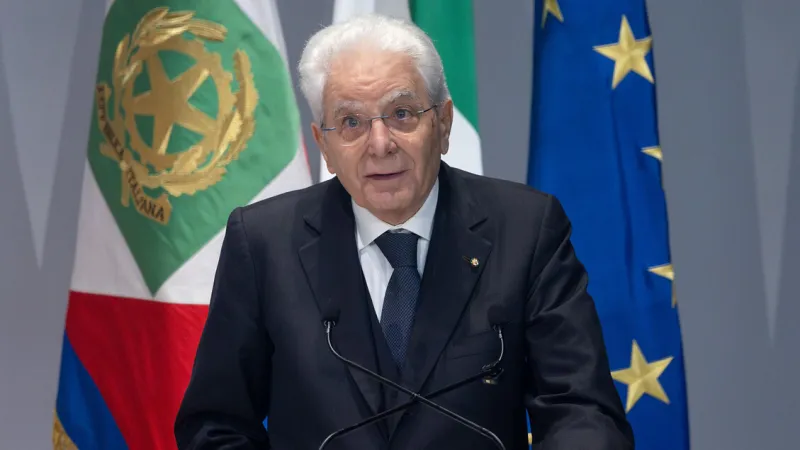
The Italian President, Sergio Mattarella, recently convened at Rome's Palazzo Bachelet to address the profound significance of the rule of law, advocating for its unwavering adherence as the bedrock of a stable and just society. His remarks underscored the principle's critical importance in navigating contemporary challenges and preserving democratic integrity.
President Mattarella highlighted the rule of law not merely as a legal framework but as a fundamental ethos underpinning civil coexistence and state legitimacy. He articulated how this principle ensures that all individuals, regardless of their status, are subject to the same laws, thereby preventing arbitrary power and promoting equality before the law.
The event, focused on this essential governmental concept, drew attention to the continuous effort required to uphold and strengthen democratic institutions. Mattarella stressed that the rule of law is a dynamic process, necessitating constant vigilance and adaptation to evolving societal needs without compromising its core tenets.
His speech resonated with broad implications for both national governance and Italy's position within the international community. Adherence to the rule of law is a cornerstone of Italy's republican constitution and a prerequisite for its standing among global democracies.
The discourse at Palazzo Bachelet implicitly acknowledged the complex interplay between legislative authority, judicial independence, and executive accountability. These pillars, Mattarella suggested, must function in concert to maintain a robust system of checks and balances crucial for preventing abuses of power.
Mattarella's emphasis on legal principles arrives at a time when discussions surrounding justice and legal application frequently dominate public discourse in Italy. Recent judicial proceedings, such as the court's affirmation of life sentences in high-profile cases, highlight the public's keen interest in the justice system's efficacy and fairness.
The President also touched upon the principle of accountability, asserting that no one stands above the law. This sentiment is particularly salient in a political landscape where public officials, including those in high office, face scrutiny and legal challenges, reflecting the system's commitment to equal application of justice. For example, ongoing investigations concerning figures like Italian Senator Silvestro demonstrate this commitment.
The forum served as a reminder that the rule of law extends beyond national borders, influencing international relations and global cooperation. Italy, as a member of the European Union and various international bodies, contributes to a global order where respect for legal norms is paramount.
Mattarella's address reinforced the idea that public trust in institutions hinges significantly on the consistent and transparent application of law. Erosion of this trust, he warned, could lead to societal fragmentation and undermine democratic foundations.
The discussions at Palazzo Bachelet will likely inform ongoing legislative debates and judicial reforms, providing a high-level endorsement for initiatives aimed at enhancing legal certainty and procedural fairness. The presidency's intervention serves as a moral compass for the nation's legal and political trajectory.
The event at Palazzo Bachelet highlighted a unifying theme across political divides: the fundamental importance of an impartial and effective legal system for the welfare of all citizens. President Mattarella's consistent advocacy for these principles underscores his role as a guarantor of the Italian Constitution.
His message serves as a timely reminder to legislative bodies, administrative apparatuses, and the judiciary alike about their shared responsibility in preserving the integrity of the state. The long-term stability and prosperity of Italy are inextricably linked to the strength of its legal framework.