 Robert Andrison
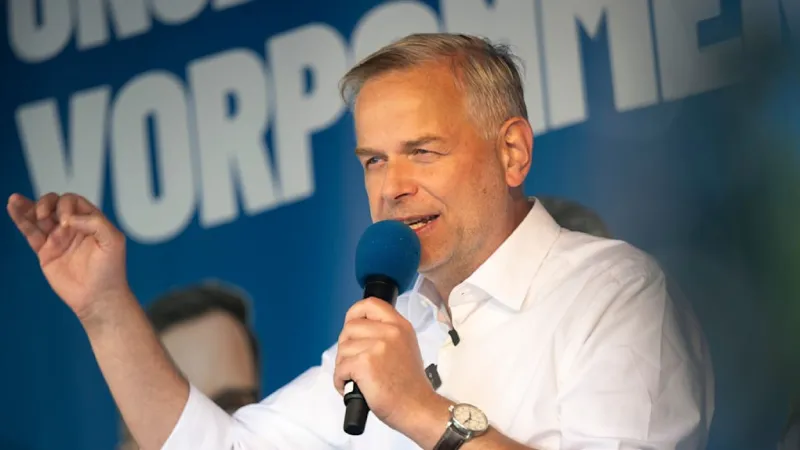
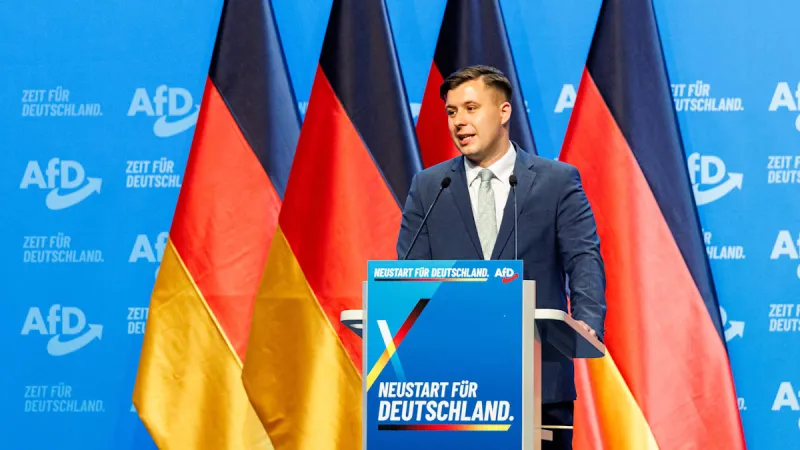
In Stralsund, Mecklenburg-Vorpommern, AfD lead candidate Leif-Erik Holm publicly declared the party's ambitious goal of forming a sole government in the state, asserting this outcome could be propelled by a potent electoral wave originating from Saxony-Anhalt. The declaration came during the party's recent campaign kick-off, outlining a strategic path reliant on regional political momentum.
Holm's pronouncement at the rally underscored a significant escalation in the AfD's electoral strategy within the eastern German states. He directly linked the party's prospects in Mecklenburg-Vorpommern to its past performances, particularly emphasizing a perceived surge from Saxony-Anhalt.
The reference to Saxony-Anhalt is crucial, as the AfD has consistently polled strongly in that state, often challenging established parties for dominance. While not achieving a sole majority in past elections, their considerable gains have reshaped the political landscape there, demonstrating a capacity for substantial voter mobilization.
This strategy suggests the AfD aims to replicate and amplify the conditions that led to their strong showing in neighboring states, anticipating a spillover effect of voter sentiment and support across regional borders. Such a phenomenon, often termed a coattail effect or regional political current, is a recognized element of German federal state elections.
Achieving a sole government would represent an unprecedented breakthrough for the AfD, which has historically been excluded from mainstream coalition formations across Germany. It would grant the party direct, unshared executive power in a federal state, allowing it to implement its full policy agenda without compromise.
Political analysts are scrutinizing Holm's audacious claim, with many questioning the feasibility of any single party securing an absolute majority in Germany's traditionally multi-party political system. Recent polling data for Mecklenburg-Vorpommern, while showing robust AfD support, does not yet indicate a clear path to outright majority rule.
Opposing parties have swiftly condemned the AfD's declared aspiration, characterizing it as a threat to democratic pluralism and an attempt to consolidate power. They argue that the AfD's platform runs contrary to the consensual politics often seen as a bedrock of German governance.
The political landscape of Mecklenburg-Vorpommern itself presents unique challenges. While economically diverse, the state has grappled with demographic shifts and varying regional priorities, often leading to fragmented electoral outcomes. Historically, coalitions have been the norm, reflecting the need for broad consensus in governance.
Holm's emphasis on a specific percentage mark as a target for a sole government, though not explicitly detailed in the public statement, indicates a data-driven approach to their campaign. This calculated ambition aims to rally the party's base and attract undecided voters by projecting an image of strength and inevitability.
The potential implications of an AfD-led sole government in a federal state extend beyond its borders, potentially impacting national political discourse and strategies. It could embolden the party's federal ambitions and force other major parties to recalibrate their approaches to the populist right.
The AfD's rising influence across Germany has been a consistent feature of the political discussion throughout 2026. From municipal councils to state parliaments, the party has steadily increased its footprint, often by capitalizing on voter dissatisfaction with established parties and national policy decisions.
This latest campaign declaration by Leif-Erik Holm therefore marks a significant moment in the unfolding political narrative of Germany's populist movement. It signals a move from merely gaining parliamentary representation to actively pursuing unshared executive authority.
The forthcoming election in Mecklenburg-Vorpommern is poised to be a pivotal contest, not only for the state itself but also for its broader ramifications on the trajectory of German politics. Observers will watch closely to see if the AfD can indeed harness the 'Sog' or momentum from other regions to achieve its ambitious objective.