 Angela Stefani
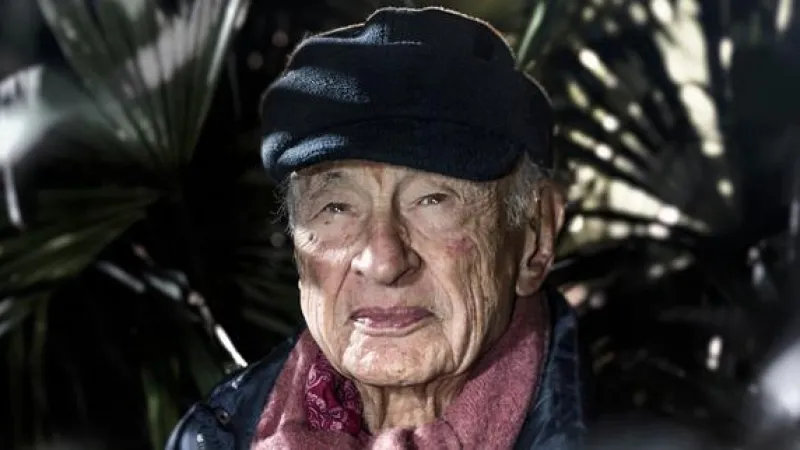
PARIS – Edgar Morin, the profoundly influential French sociologist, philosopher, and former resistance fighter, passed away Friday, May 29, 2026, in Paris at the age of 104. His passing marks the end of an era for intellectual discourse, as confirmed by his wife to the French newspaper “Le Monde.” Morin dedicated his extensive life to understanding the intricacies of history and society, relentlessly engaging with the evolving complexities of his time.
Born Edgar Nahoum in 1921, Morin was a towering figure whose intellectual journey spanned more than eight decades. He was renowned for his commitment to what he termed “complex thought,” a holistic approach advocating for the interconnectedness of all knowledge and disciplines. This philosophy aimed to transcend fragmented understanding, instead fostering a comprehensive grasp of human reality.
Morin was not merely an academic; he was a popular intellectual and a steadfast humanist, deeply shaped by his experiences as a member of the French Resistance during World War II. His active participation in the fight against occupation forged a lifelong dedication to human dignity and freedom, themes that permeated his extensive written works and public addresses.
Throughout his career, Morin consistently positioned himself as an agitator of ideas, challenging conventional wisdom and encouraging critical self-reflection within society. His body of work explored diverse fields, including sociology, philosophy, political science, ecology, and anthropology, always seeking to bridge gaps between them.
His groundbreaking concept of “complex thought” urged individuals and institutions to move beyond reductionist analyses, recognizing that reality is multi-dimensional, uncertain, and interdependent. He argued against overly simplistic explanations for societal phenomena, advocating for a nuanced understanding that embraces contradictions and ambiguities.
Morin’s intellectual quest was particularly focused on the human condition in the face of modern challenges. He believed that the major crises of our age—environmental degradation, technological advancement, and socio-political turbulence—demand a new way of thinking capable of grasping their inherent complexity.
Beyond his academic contributions, Morin was a fervent advocate for an “insurrection des consciences,” or an awakening of consciences. He called upon individuals to resist apathy and conformism, urging them to actively participate in shaping a more just and humane future. This call resonated with his deep humanistic convictions.
His influence extended far beyond France, with his works translated into numerous languages and inspiring generations of scholars and activists worldwide. He was a frequent commentator on global events, offering insights that were both profound and accessible, always rooted in his unique analytical framework.
The news of his death prompted tributes from across the intellectual and political spectrum, highlighting his enduring legacy as a thinker who challenged, inspired, and elucidated the profound challenges of contemporary existence. His longevity allowed him to witness and analyze nearly an entire century of human history, from the horrors of war to the promises of technological innovation.
Morin often stressed the need for a global citizenship and a planetary consciousness, believing that humanity must unite to address shared destinies. His vision for a more integrated and reflective society remains highly pertinent as global challenges continue to intensify. For instance, discussions around education often touch on the need for integrated learning, a concept Morin championed, which can be seen in debates like the recent Basque Math Exam Controversy Divides French Education Authorities, where methods of teaching and evaluation are scrutinized.
His passing leaves a void in the intellectual landscape, but his extensive bibliography and the principles of “complex thought” he meticulously developed will continue to serve as a vital guide for those seeking to understand and navigate an increasingly intricate world. Edgar Morin’s life was a testament to the power of relentless inquiry and unwavering humanism.