 Dodi Irawan
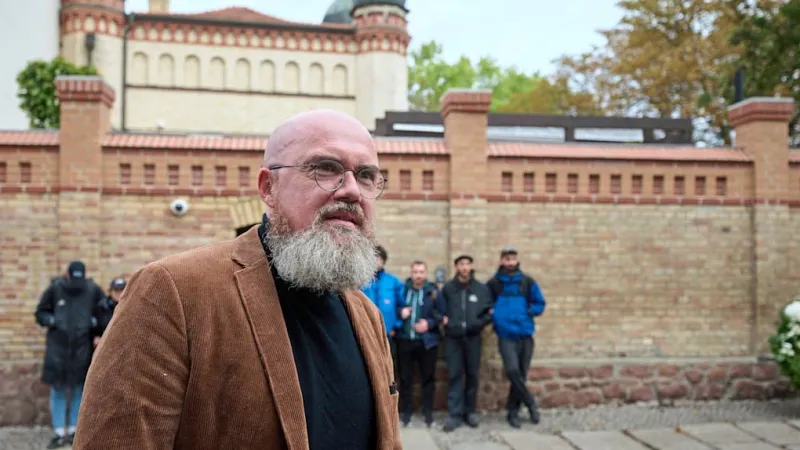
Halle, Germany – Authorities in Halle have initiated an investigation into Jewish students following a recent blockade targeting Hans-Thomas Tillschneider, a prominent politician from the far-right Alternative for Germany (AfD) party. The incident occurred during a solemn remembrance ceremony, prompting police to pursue suspicions of insult against the demonstrators who sought to prevent Tillschneider's participation.
The blockade unfolded amidst an event dedicated to commemorating historical atrocities, a context that lends particular gravity to the confrontation. Students reportedly positioned themselves to obstruct Tillschneider's access, leading to a direct clash with the politician and subsequent police intervention.
Law enforcement officials confirmed that the investigation focuses on allegations of insulting behavior. While specific details regarding the exact nature of the alleged insults remain under wraps, the mere initiation of such a probe involving individuals from the Jewish community at a remembrance site has ignited considerable debate.
Hans-Thomas Tillschneider, a member of the Saxony-Anhalt state parliament, represents the AfD, a party frequently criticized for its rhetoric on immigration, national identity, and historical revisionism. His presence at the remembrance ceremony itself has been a point of contention for many, particularly those who perceive the AfD as undermining the values such commemorations uphold.
The AfD has steadily gained traction in German politics, often on a platform critical of mainstream policies and immigration. However, its leaders and members, including Tillschneider, have faced accusations of downplaying Germany's Nazi past and promoting nationalist views that alarm minority groups and anti-fascist organizations.
The remembrance ceremony in Halle holds profound significance, marking a pivotal moment in history that calls for reflection and a commitment to combating intolerance. The choice of location and event for the protest underscores the students' desire to confront what they view as a dangerous political ideology at a place of moral importance.
Activists involved in the blockade stated their actions were a direct response to Tillschneider's political positions and the AfD's overall trajectory. They argued that allowing a figure from the AfD to participate unhindered in a remembrance ceremony was a disservice to the memory of the victims and a betrayal of the ceremony's purpose.
The legal ramifications for the students, should the investigation lead to charges, could range from fines to more severe penalties depending on the specific legal interpretation of the alleged insult. German law includes provisions against public insult, particularly when it targets individuals or groups based on their protected characteristics.
This incident is not isolated, reflecting a broader trend of escalating tensions between anti-fascist groups, student activists, and members of the AfD across Germany. Protests and confrontations have become increasingly common as the AfD attempts to solidify its presence in public life.
Critics of the police action question whether investigating students for a blockade at a remembrance site, especially Jewish students, sends the correct signal regarding the protection of freedom of expression and the right to protest against perceived extremism. Others argue that laws must be upheld irrespective of the political context.
The incident also highlights the complex interplay between freedom of assembly, freedom of speech, and the legal limits placed on protest in Germany. Authorities must navigate these sensitive issues while upholding both civil liberties and public order.
For the Jewish community in Germany, this incident adds another layer of complexity to their experiences. While many appreciate the state's efforts to remember historical atrocities, the involvement of Jewish students in an investigation stemming from a protest against a far-right politician creates a delicate situation.
The outcome of the police investigation will undoubtedly be closely watched by political observers, human rights organizations, and the general public, serving as a barometer for how Germany balances its commitment to remembrance, free expression, and the rule of law in the face of rising political polarization.
The situation in Halle further illustrates the ongoing struggle within German society to define its collective memory and confront the resurgence of right-wing nationalism.