Dodi Irawan
Borkum, Germany – A 69-year-old surfer miraculously survived nearly 19 hours adrift in the treacherous, stormy waters of the North Sea off the German island of Borkum, enduring a harrowing night before rescue workers located him Friday morning. The dramatic maritime incident saw an extensive search operation unfold across the dark, wind-swept expanse, culminating in a successful recovery against formidable odds.
The elderly man was reported missing Thursday afternoon after failing to return from a surfing excursion. Strong winds and rapidly deteriorating weather conditions quickly transformed the popular surfing spot into a perilous environment. As darkness descended, hopes for his safe return began to wane among concerned family members and local authorities.
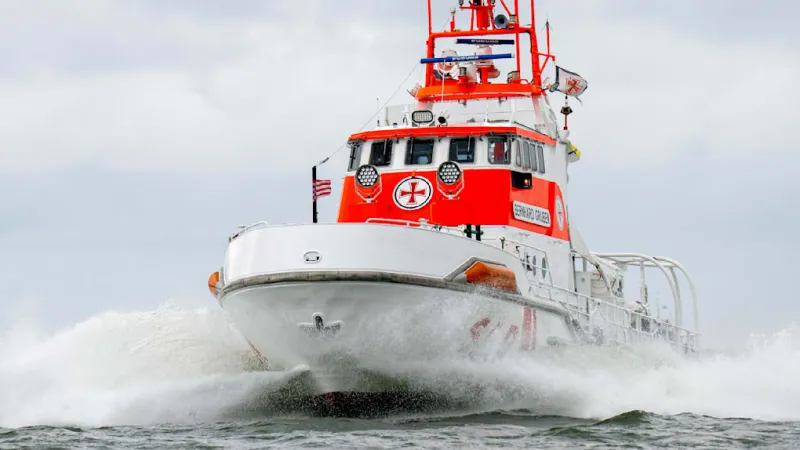
An immediate and widespread search was launched involving multiple agencies. Rescue vessels from the German Sea Rescue Service (DGzRS) and federal police ships were dispatched to comb the vast maritime area. The operation was hampered by the fierce gales and poor visibility characteristic of a North Sea squall.
Further intensifying the search, helicopters from both the German Navy and private rescue organizations joined the effort. Their powerful spotlights pierced the dense darkness, methodically scanning the churning waves. The coordination between sea and air assets became crucial in the challenging conditions.
For nearly 19 excruciating hours, the surfer battled the elements, clinging to his board. The sustained exposure to the cold North Sea waters and relentless wind presented severe risks of hypothermia and exhaustion, making his survival increasingly improbable with each passing hour.
The breakthrough came shortly after dawn on Friday. A search crew, operating in an area far from where he was initially expected, spotted a faint silhouette on the horizon. It was the missing 69-year-old, still with his surfboard, a testament to his resilience and the flotation device that served as his lifeline.
Upon reaching him, rescuers found the man severely exhausted and hypothermic but conscious. He was immediately pulled aboard a rescue vessel and provided with emergency medical attention. His sheer will to survive, combined with the robust design of his equipment, likely played critical roles in his extraordinary endurance.
The North Sea is renowned for its unpredictable and often brutal weather patterns. Maritime experts frequently warn of its sudden shifts, which can quickly turn a calm day into a life-threatening situation for even experienced seafarers and water sports enthusiasts. This incident starkly underscores those dangers.
Such intense meteorological events are not uncommon in coastal regions globally, highlighting the inherent risks. Readers may recall incidents like the rare double waterspout that struck Sicily, or another double waterspout unleashing chaos in Trapani, both involving severe marine weather, although this surfer's survival story offers a more positive outcome than some.
The news of the surfers rescue brought immense relief to the community of Borkum and the broader region. Local officials expressed their gratitude to the tireless efforts of the rescue teams, acknowledging the dedication and bravery required to conduct such operations in extreme conditions.
Authorities are expected to review the incident, likely reinforcing calls for enhanced safety measures for those engaging in water sports, particularly in challenging environments. Wearing appropriate gear, informing others of ones itinerary, and carrying communication devices are standard recommendations that often prove lifesaving.
This incident adds another remarkable chapter to the annals of human resilience against the elements. It serves as a stark reminder of both the unforgiving power of nature and the indomitable spirit that can emerge in the face of imminent peril.
The 69-year-old surfer, whose identity has not been released, is currently recovering, undoubtedly with an extraordinary tale to tell. His survival against nearly insurmountable odds stands as a testament to the effectiveness of maritime search and rescue operations and the sheer human will to live.