 Stefani Rindus
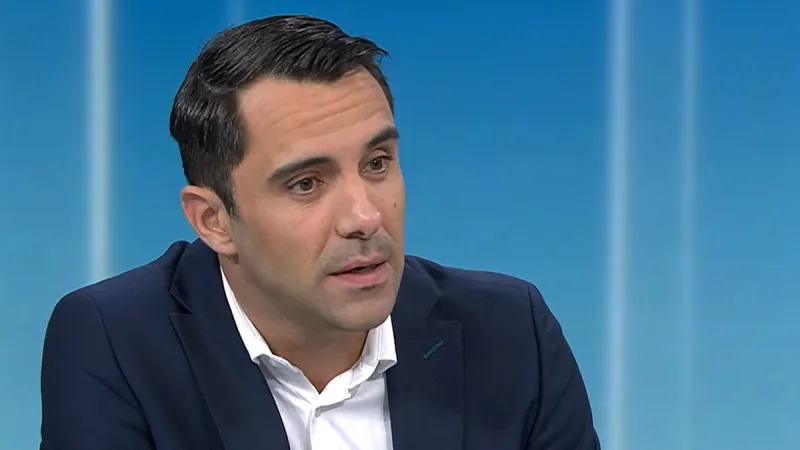
BERLIN – Daniel Peters, the Christian Democratic Union (CDU) lead candidate for Mecklenburg-Vorpommern, recently voiced confidence in the comprehensive reform program spearheaded by CDU leader Friedrich Merz, yet simultaneously cast blame upon the Social Democratic Party (SPD) for potential political difficulties. Peters’ remarks, delivered during a segment on “WELT – Die Stimme am Morgen,” underscore growing inter-party tensions within Germany’s evolving political landscape as 2026 unfolds.
Peters articulated strong support for the direction set by his party’s national leader. He stated, “I find that the Chancellor addresses the right issues,” a comment made within the broader context of praising the CDU’s forward-looking agenda. This statement, however, was quickly followed by pointed criticism directed at the SPD, currently a key player in Germany's federal coalition government, signaling friction over policy implementation and national priorities.
The CDU reform program, championed by Friedrich Merz, aims to modernize Germany across various sectors, addressing economic challenges, social policies, and environmental concerns. Peters’ endorsement reflects a unified front within the CDU behind Merz's vision, which seeks to reinvigorate the party’s platform and appeal to a broader electorate. The program is perceived as a critical roadmap for the party’s future electoral success.
Peters specifically accused the SPD, a significant force in German federal politics, of creating obstacles that could make the path of these reforms “bumpy.” This direct attribution of potential policy hurdles to a partner in government highlights a fundamental disagreement over strategic direction or the pace of necessary changes, indicating a deepening rift in political cooperation.
The Social Democratic Party, traditionally a dominant force in German politics, currently plays a pivotal role in the federal government. Peters’ criticism is particularly salient given the current political climate, where consensus and cooperation are often essential for legislative progress. His remarks suggest a perceived lack of alignment or outright resistance from the SPD regarding core components of the CDU’s proposed reforms.
Such public commentary from a senior CDU official like Peters reflects broader anxieties within the party regarding the effectiveness of governance and the ability to implement a transformative agenda. It signals a strategic move to define clear distinctions between the parties, potentially positioning the CDU as the principal driver of necessary change, while portraying the SPD as an impediment.
Friedrich Merz, as the national leader of the CDU, has consistently advocated for a robust reform agenda designed to strengthen Germany’s economic competitiveness and social cohesion. Peters' affirmation of Merz's leadership and policy choices reinforces the internal party discipline and determination to pursue these goals, even in the face of political contention.
The dynamics between the CDU and SPD have historically shaped German politics, ranging from grand coalitions to fierce electoral rivalries. Peters' recent remarks add another chapter to this complex relationship, characterizing the current inter-party interactions as fraught with challenges, particularly when it comes to steering the nation through an era of significant global and domestic pressures.
For citizens in Mecklenburg-Vorpommern, Peters' home state, these national political squabbles carry local implications. State elections often mirror federal trends, and a clear articulation of party differences by a lead candidate can influence voter sentiment and local political alliances, potentially impacting the state’s governance and its relationship with the federal administration.
The statement by Peters on “WELT – Die Stimme am Morgen” serves as an early indicator of the battles ahead in Germany’s political arena. It highlights the growing pressure on all parties to deliver tangible results, particularly as the nation navigates complex economic shifts and geopolitical uncertainties. The focus on the CDU reform program under Merz and the pointed critique of the SPD underscores the intense political jockeying for influence and public support as the country progresses through 2026.
This political friction is not isolated; it resonates with a broader European trend where traditional coalition dynamics are constantly tested by new challenges and shifting public expectations. The ability of Germany's leading parties to overcome these internal obstacles will be crucial for the nation's stability and its standing on the international stage.
The call for reform and the subsequent blame game over implementation reflect a common thread in modern democratic governance: the tension between aspirational policy goals and the pragmatic realities of coalition politics. Peters' commentary frames this tension starkly, drawing attention to the SPD's role in the perceived sluggishness of governmental action.
His assertion that “the Chancellor addresses the right issues” while simultaneously criticizing the SPD suggests a nuanced political position. It could imply an acknowledgment of certain federal policies while simultaneously decrying the broader political will or specific actions of the Chancellor's party in advancing other critical agendas, especially those aligned with the CDU's vision.
This public stance also acts as a clarion call to the CDU’s base, signaling commitment to their core principles and a proactive approach to national governance. It aims to mobilize support by differentiating the CDU’s reformist zeal from what is portrayed as the SPD’s obstructive tendencies.
The political discourse surrounding the CDU reform program under Merz and the SPD’s role in its perceived hurdles will likely intensify. As Germany faces various domestic and international pressures, the ability of its political parties to forge consensus or articulate clear, differentiated paths forward will be under intense scrutiny. Peters' intervention adds a significant voice to this ongoing national debate.